



Best and Worst Foods for Heartburn Relief
- Foods That May Help with Acid Reflux
- Eating vegetables, whole grains, lean proteins, and non-acidic fruits like bananas and melons can support digestion and reduce reflux symptoms.
- Low-fat dairy or dairy alternatives, egg whites, and herbal teas like ginger or chamomile may be gentler on the stomach.
- Drinking water and eating smaller, slower meals can help prevent pressure buildup and acid backflow.
- Foods That May Trigger Acid Reflux
- Fried, fatty, or spicy foods, along with acidic items like tomatoes and citrus, often worsen reflux.
- Caffeine, chocolate, alcohol, and mint can relax the lower esophageal sphincter, allowing acid to rise.
- Eating large meals, especially late at night, or lying down too soon after eating can also increase symptoms.
Heartburn is a common condition that affects millions of adults. In the United States, about 60 million people experience heartburn at least once a month, and around 15 million deal with it nearly every day.
What Is Heartburn?
Heartburn is a burning sensation in the chest, usually felt behind the breastbone. It often occurs after eating and can last from a few minutes to several hours. Some people also notice a sour or bitter taste in the mouth, a sore throat, or a hoarse voice after meals.
Symptoms of heartburn include:
- Burning pain in the chest, often after eating
- Pain that may move up toward the neck or throat
- Sour or bitter taste in the mouth
- Feeling of food stuck in the chest or throat
- Hoarse voice, sore throat, cough, or hiccups
- Symptoms may worsen when lying down, bending over, or at night
What Causes Heartburn?
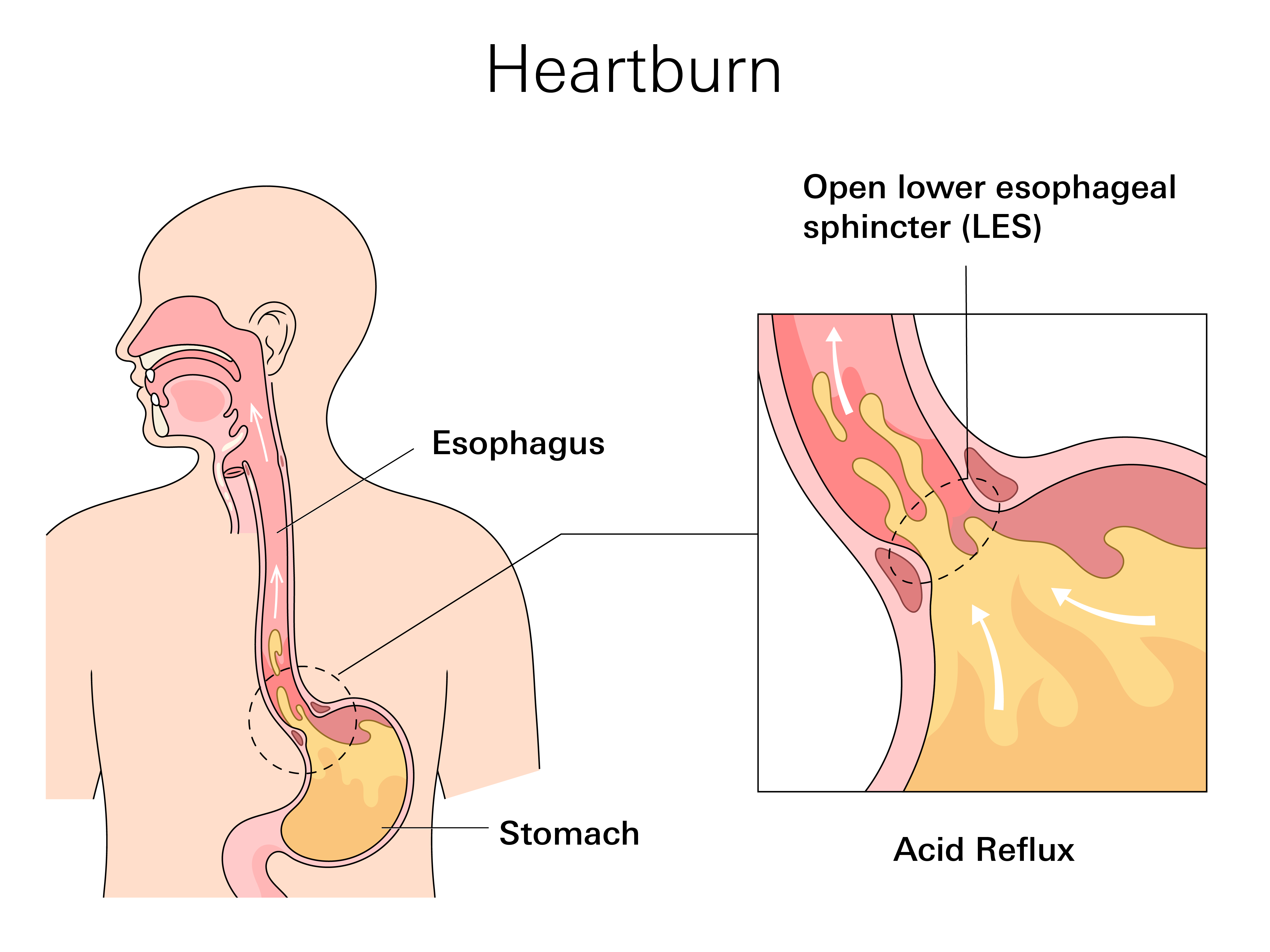
Heartburn happens when stomach acid flows back into the esophagus, the tube that connects your throat to your stomach. This backflow is called acid reflux. The esophagus doesn’t have the same protective lining as the stomach, so the acid causes irritation and discomfort.
At the bottom of the esophagus is a ring of muscle called the lower esophageal sphincter (LES). Its job is to keep stomach contents from moving upward. If the LES becomes weak or relaxes at the wrong time, acid can escape into the esophagus and cause heartburn.
When Heartburn Becomes a Concern
Occasional heartburn is common and usually not serious. However, if you experience heartburn more than twice a week or if symptoms last for hours, it may indicate gastroesophageal reflux disease (GERD), a chronic condition that affects about 1 in 5 adults in the U.S.. GERD can lead to more serious health issues if left untreated, including inflammation, narrowing of the esophagus, or even precancerous changes.
Complications of Ongoing Acid Reflux
When stomach acid repeatedly flows into the esophagus, it can cause more than just discomfort. Over time, this irritation may lead to esophageal ulcers, open sores that form on the lining of the esophagus. These ulcers can be painful and may make swallowing difficult. In more severe cases, they can bleed, which may show up as blood in vomit or black, tarry stools.
Medications That Can Worsen the Problem
Certain medications, especially nonsteroidal anti-inflammatory drugs (NSAIDs) like ibuprofen, naproxen, and aspirin, can increase the risk of reflux and ulcers. These drugs may irritate the stomach and esophageal lining, making it more vulnerable to acid damage. Taking NSAIDs frequently or in high doses raises the risk of both reflux and ulcer formation.
How Food Affects Digestion and Reflux
Food plays a major role in how your digestive system functions and how likely you are to experience reflux.
- Some foods increase acid production, such as spicy or fatty meals.
- Others slow digestion, causing food to stay in the stomach longer.
- Large meals can build pressure in the stomach, pushing acid upward.
For example, after a heavy meal, the stomach may take longer to empty. This increases the chance that acid will move up into the esophagus.
Timing matters too. Eating late at night or lying down soon after a meal makes it easier for acid to travel the wrong way. Even how you eat can make a difference: eating quickly or consuming large portions can cause the lower esophageal sphincter (LES) to relax, allowing acid to escape.
Foods That Can Trigger Heartburn
Certain foods are more likely to cause reflux. While triggers vary from person to person, these are common culprits:
- Fried or fatty foods: Burgers, fried chicken, chips, and creamy desserts slow digestion and increase pressure in the stomach.
- Spicy foods: Hot sauces, chili, and pepper-heavy dishes can irritate the esophagus.
- Acidic foods: Tomatoes, citrus fruits, and vinegar-based dressings can increase acid levels.
- Caffeine: Found in coffee, tea, and soda. Even decaf can be problematic for some.
- Chocolate: May relax the LES and allow acid to rise, especially at night.
- Alcohol: Beer, wine, and spirits can weaken the LES and raise stomach acid.
- Onions and garlic: Especially raw, these can be strong triggers.
- Mint: Though soothing for some, mint can relax the LES and worsen reflux.
Meal Tips That May Help with Heartburn
Simple changes in how and when you eat can make a big difference in reducing heartburn symptoms. Try these habits:
- Eat smaller meals more often. This helps reduce pressure on the stomach.
- Stay upright after eating. Avoid lying down right after meals.
- Wait 2 to 3 hours before lying down. Give your body time to digest.
- Chew slowly and thoroughly. This supports smoother digestion.
- Avoid late-night meals. Eating earlier in the evening may reduce nighttime reflux.
Foods That May Be Easier on Digestion
Some foods are less likely to trigger reflux and may help you feel more comfortable during and after meals:
- Vegetables: Low-fat, high-fiber options like carrots, green beans, broccoli, and leafy greens.
- Less acidic fruits: Bananas, apples, pears, melons, and papayas are gentler than citrus.
- Whole grains: Oatmeal, brown rice, quinoa, and whole wheat toast support steady digestion.
- Lean proteins: Skinless chicken, turkey, fish, tofu, and legumes are easier to digest than fatty meats.
- Egg whites: Lower in fat than yolks, making them a safer choice.
- Plain starchy vegetables: Baked potatoes, sweet potatoes, and squash—avoid frying or heavy toppings.
- Low-fat or non-dairy alternatives: Almond, soy, or oat milk, and low-fat yogurt.
- Water: Helps move food through the digestive system without adding acid.
- Herbal teas (non-caffeinated, non-mint): Ginger or chamomile may soothe the stomach.
- Non-acidic juices: Options like papaya juice may be easier to tolerate.
When to See A Doctor About Heartburn
Some symptoms may point to a more serious issue and should be evaluated by a doctor:
- Trouble swallowing (dysphagia)
- Chest pain that feels different from typical heartburn or spreads to the neck, jaw, or arms
- Unexplained weight loss
- Vomiting blood or material that looks like coffee grounds
- Black or tar-colored stools
- Persistent nausea or vomiting
- Chronic cough, hoarseness, or worsening asthma
- Heartburn that doesn’t improve with over-the-counter medications or dietary changes
These symptoms could indicate complications such as esophageal ulcers, strictures, or even precancerous changes like Barrett’s esophagus.
If lifestyle changes and non-prescription treatments aren’t helping, don’t wait. Bring it up at your next appointment. Managing heartburn early can improve your quality of life and help prevent long-term damage to your esophagus.
References:
- Heidarzadeh-Esfahani N, Soleimani D, Hajiahmadi S, et al. Dietary intake in relation to the risk of reflux disease: a systematic review. Prev Nutr Food Sci. 2021;26(4):329-344. doi:10.3746/pnf.2021.26.4.329

