


Glaucoma and Eye Health
- Glaucoma is a group of eye diseases that damage the optic nerve, often due to high pressure inside the eye, and it's a leading cause of irreversible blindness worldwide.
- It typically progresses slowly with no early symptoms, affecting side vision first while central vision stays clear for years, so many people remain undiagnosed until significant loss occurs.
- There's no cure and vision loss can't be reversed, but early detection through routine eye exams plus treatments like eye drops, laser, or surgery can effectively lower pressure and preserve remaining sight.
Glaucoma is one of the leading causes of irreversible blindness, yet it often goes unnoticed until vision loss has already occurred.
In the United States, approximately 4.22 million adults have glaucoma (about 1.62% of adults), with around 1.49 million experiencing vision-affecting effects. Nearly half cases remain undiagnosed.
Vision loss from glaucoma is usually permanent, but early detection and treatment can often slow or stop progression and preserve remaining sight.
What Is Glaucoma?
Glaucoma is a group of eye diseases that damage the optic nerve, which connects the eye to the brain and carries visual signals. This damage typically results from increased pressure inside the eye, though it can occur even at normal pressure levels in some cases.
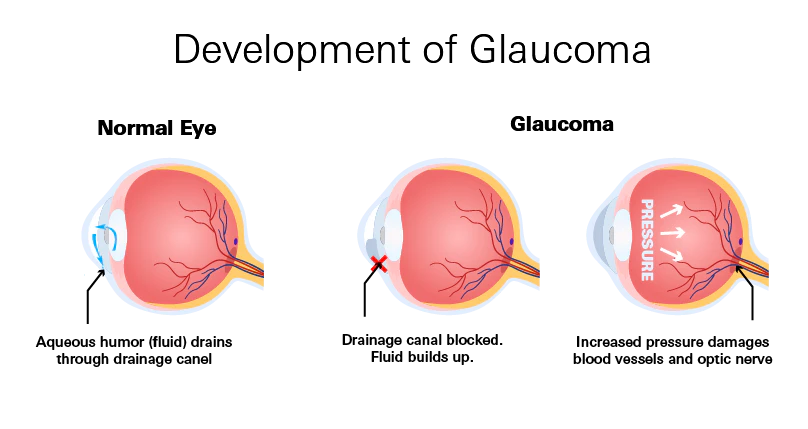
The eye constantly produces a clear fluid (aqueous humor) to nourish tissues and maintain shape. Normally, this fluid drains out through a tiny pathway. When drainage is blocked or too slow, fluid builds up, raising intraocular pressure (IOP). Over time, this pressure stresses and damages optic nerve fibers, leading to vision loss.
The Main Types of Glaucoma
Not all glaucoma is the same. The type affects how it develops, symptoms, and treatment. Here are the two most common:
- Open-Angle Glaucoma (90%+ of cases): The drainage angle stays open, but clogs slowly over time. Pressure rises gradually with no early symptoms. Most common in people over 40.
- Angle-Closure Glaucoma (less common but urgent): The drainage angle suddenly narrows or closes, blocking fluid outflow. Can cause sudden symptoms like pain, blurred vision, or halos—treat as a medical emergency.
Other types include:
- Secondary glaucoma (from injury, diabetes, or meds).
- Congenital glaucoma (rare, affects infants).
Why Glaucoma Often Goes Unnoticed
The condition progresses slowly and silently, which is why it's called the "sneak thief of sight." Key reasons include:
- Pressure buildup happens gradually, not suddenly.
- It rarely causes pain in the early stages (except in rare acute forms).
- Peripheral (side) vision is affected first, while central vision remains clear for years.
- People adapt to small blind spots in daily life without noticing.
Many people don't realize their vision field is narrowing until later stages. Glaucoma is frequently detected during routine eye exams, not because of symptoms. This is why regular check-ups are important.
Symptoms That May Appear Gradually
Most people experience no early warning signs. Subtle changes can feel like normal aging or situational issues, such as:
- Clumsiness in crowded or tight spaces
- Trouble judging distances or noticing objects/people approaching from the side
- Difficulty seeing at night or needing more light for reading/near tasks
- Avoiding night driving without clear reason
As it advances:
- Missing patches or shadows in vision
- Reduced depth perception
- Faded colors or lower contrast
- Eye strain more quickly
Rare but Urgent Forms
While most glaucoma is slow, Acute Angle-Closure Glaucoma happens suddenly. Seek immediate medical care if you experience:
- Intense eye pain or pressure
- Redness with blurred vision
- Halos around lights
- Nausea, vomiting, or headache linked to the eye
Glaucoma Treatment: What to Know
Glaucoma care focuses on lowering eye pressure to protect the optic nerve. Treatment depends on the type of glaucoma and how your eyes respond over time. Many patients may use more than one option as care progresses.
Prescription Eye Drops
Most treatment plans start with medicated eye drops. These are taken daily and work by reducing eye pressure in different ways, all aiming to relieve stress on the optic nerve.
- Prostaglandins – Xalatan (latanoprost), Travatan Z (travoprost), Zioptan (tafluprost), Lumigan (bimatoprost)
- Beta Blockers – timolol, Betoptic (betaxolol)
- Alpha Adrenergic Agonists – Alphagan P (brimonidine), Iopidine (apraclonidine)
- Carbonic Anhydrase Inhibitors – Trusopt (dorzolamide), Azopt (brinzolamide)
- Rho Kinase Inhibitors – Rhopressa (netarsudil)
These medications differ in how they work and may be prescribed alone or in combination. Some people may need to switch or add drops if pressure remains high.
Over-the-Counter Products
Currently, there are no over-the-counter eye drops proven to treat or manage glaucoma. While artificial tears and lubricating drops can soothe dryness or irritation, they do not lower eye pressure.
Laser and Surgical Treatments
If medications aren’t enough to control eye pressure, additional options can help improve drainage or reduce fluid buildup.
- Laser treatments to enhance fluid outflow or reduce fluid production.
- Surgical options that create new drainage pathways or implant small devices to regulate pressure.
These techniques are selected based on how advanced the glaucoma is and how well the eye responds to previous treatments. Your eye specialist will review risks, benefits, and expected outcomes before recommending a procedure.
Talk to Your Eye Doctor
If glaucoma is a concern, an eye exam is the only way to know if pressure or optic nerve health is affected. Early changes often cannot be felt or seen, so testing is essential.
An ophthalmologist or optometrist can:
- Measure eye pressure
- Check optic nerve health
- Detect subtle vision changes
You should schedule an exam if:
- Glaucoma runs in your family
- Previous exams showed high eye pressure
- Vision feels less reliable over time

