

Products that Get Rid of Warts: OTC vs Prescription
Warts are common, non-cancerous skin growths caused by the human papillomavirus (HPV). This virus enters the skin through tiny breaks and causes extra skin cells to grow rapidly, forming a wart. Warts are contagious and spread through direct contact.
They typically appear as small, round, firm bumps that match your skin tone. However, some warts may be lighter or darker and can contain small black dots (clotted blood vessels). There are many different types of warts, each with unique characteristics.
While most warts disappear on their own, they can be bothersome or embarrassing. If you want to remove a wart, various over-the-counter and professional treatments are available.
What Causes Warts?
Warts are caused by the human papillomavirus (HPV). This virus spreads through skin-to-skin contact with an existing wart or by touching contaminated objects like towels or shower floors. While many people come into contact with HPV, not everyone develops warts. Factors like overall health and immune system strength likely play a role in wart development.
Warts often appear in moist environments like locker rooms or swimming pools. Also, any break in the skin, such as a cut or scratch, can increase the risk of HPV infection and wart growth.
Types of Warts
Warts come in various forms based on appearance, location, and the specific HPV strain involved.
- Common warts (verruca vulgaris): Common warts are small, hard bumps on the skin often covered in tiny black dots. They are usually found on the fingers and hands and can range in size from the head of a pin to the size of a pea. Common warts are most commonly caused by HPV strains 2 and 4, but can also be caused by strains 1, 3, 7, 27, 29, and 57.
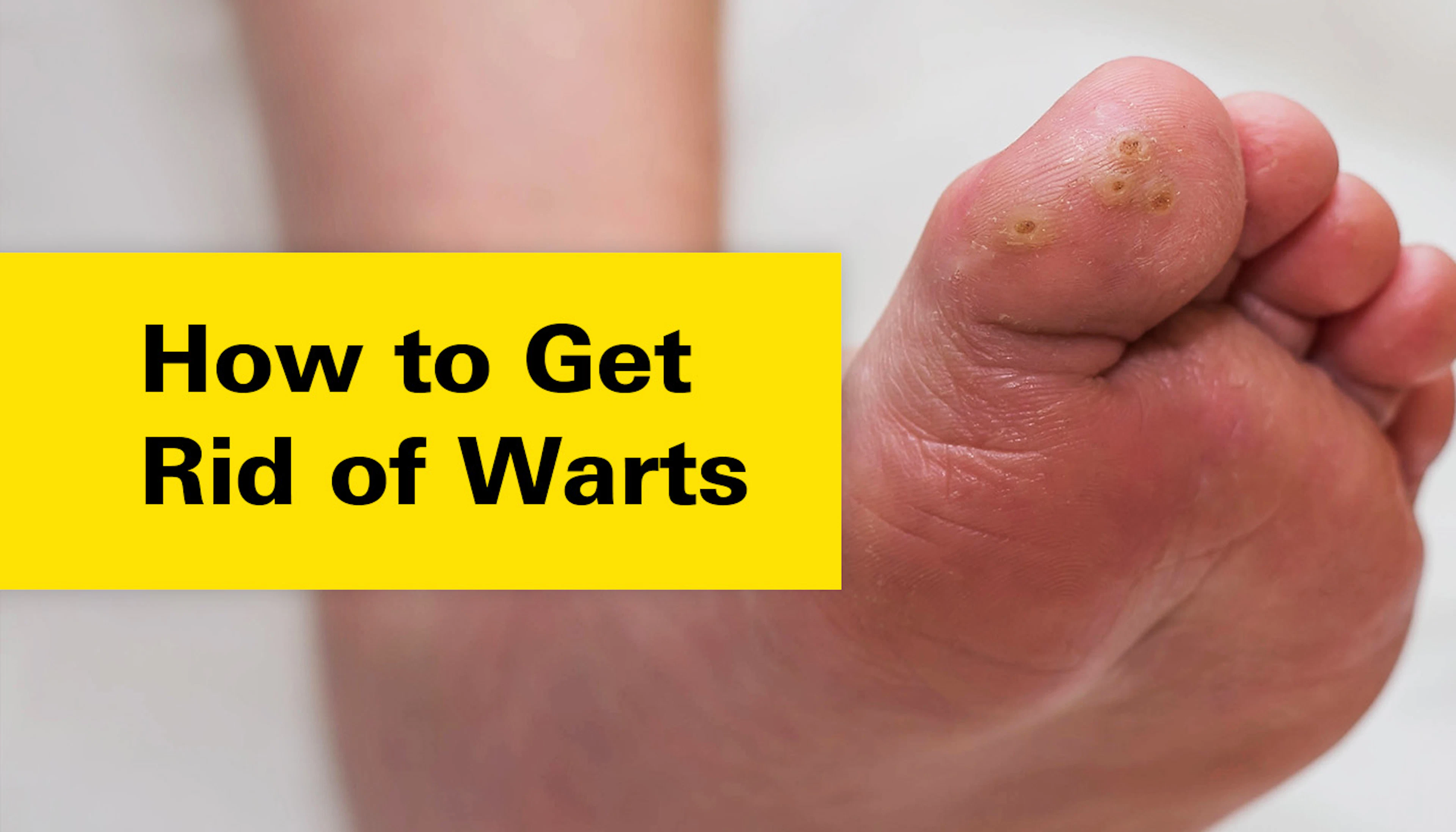
- Plantar warts (verruca plantaris): Plantar warts are typically found on the soles of your feet. Since the bottom of your feet supports the entire weight of your body, these warts are flat or may even grow inward. As a result, plantar warts can cause pain and pressure when walking and can be more difficult to treat. These small warts appear rough and spongy but can be found in clusters. Plantar warts are usually caused by HPV strains 1, 2, 4, 27, and 57.
- Flat warts (verruca plana): Flat warts are smooth and tiny (the size of a pinhead) and typically grow in clusters of up to 100. Flat warts can be found anywhere on the body but are most often found on the face. Flat warts are usually caused by HPV strains 3, 10, and 28.
- Filiform warts: Filiform warts are long, thin, and finger-like in the way they stick out of your skin. These warts typically grow on the face, specifically near the mouth, eyes, and nose. These distinctive warts are usually caused by HPV strains 1, 2, 4, 27, and 29.
- Genital warts (condyloma acuminatum): Though they are still warts, genital warts differ as they are considered sexually transmitted infections. These warts are passed through skin-to-skin contact in the genital areas and grow as small, hard bumps near or on the genitals and anus. Genital warts are most often caused by HPV strains 6 and 11. This infection is treated differently than other warts. A commonly used prescription cream is Imiquimod. If you notice warts on your genitals, it is important to speak with a healthcare provider regarding treatment.
Preventing Transmission
Warts are contagious, so it’s important to prevent their spread. The best way to avoid getting or spreading warts is by avoiding direct contact with warts or objects that have touched warts.
While it’s challenging to completely avoid contact with HPV, there are steps you can take to reduce your risk:
- Wash your hands frequently with soap and water, especially after touching a wart or potentially contaminated surfaces.
- Avoid sharing personal items like towels, washcloths, razors, and nail clippers.
- Wear flip-flops or water shoes in public showers, locker rooms, and pool areas.
- Cover your warts with a bandage to prevent accidental spread.
- Avoid picking or scratching at warts.
- Seek treatment for existing warts to prevent further spread.
Over-the-Counter Products
Many people choose to treat warts at home due to discomfort, appearance, or the risk of spreading the virus. Several over-the-counter (OTC) products can help remove warts.
Salicylic Acid
Salicylic acid is the most common OTC wart treatment. Available as liquids, gels, or patches in various strengths (17-40%), it works by gradually removing the wart's top layers. While effective in about 50% of cases, treatment can take weeks or months. Popular brands include Compound W and Dr. Scholl's Clear Away.
How to use:
- Soak the wart in warm water for 10 minutes to soften the skin.
- Gently file down the wart with an emery board (dedicated for wart removal only).
- Apply salicylic acid to the wart and cover if using liquid or gel.
- Repeat once or twice daily until the wart is gone.
Freezing
Over-the-counter freezing products, containing dimethyl ether, work by freezing the wart to kill the tissue. While they're effective in up to 60% of cases and often work faster than salicylic acid treatments, they can be more uncomfortable. Popular brands include Compound W Freeze Off and Dr. Scholl's Freeze Away.
How to use:
- Insert the applicator into the product can.
- Press the applicator firmly on the wart for up to 20 seconds.
- Discard the applicator and wash hands.
Duct Tape
Duct tape is a less common wart treatment with varying results. It involves covering the wart with duct tape for several weeks or months, but the exact method of action is unknown. It's believed to possibly suffocate the wart or remove viral particles.
While OTC treatments can be effective, they may not work for everyone. If a wart persists or becomes painful, consult a healthcare provider.
When to See a Doctor
When should you see a healthcare provider for your warts? The most important reason to see a healthcare provider is if your wart looks suspicious, such as a strange color, pain, itching, bleeding, or if you have any medical conditions that weaken your immune system.
Even if your wart looks “normal,” another reason to see a healthcare provider for warts would be due to their size, location, and/or number. If warts are particularly large, there are many of them, or if they are in certain locations such as the face or genitals, it is important to see a healthcare provider to assess the best method of removal.
A healthcare provider has multiple other treatment options to offer, including both procedures and medication options. This includes:
Cryotherapy
Cryotherapy involves freezing the wart with liquid nitrogen to destroy the tissue. Your healthcare provider may swab your wart with this extreme cold (as cold as -321°F!), destroying the surface of the skin and encouraging the wart to die off. As it is very cold, this treatment may burn or sting, causing redness and a blister to form under/around the wart. Cryotherapy often needs to be repeated multiple times to be effective, typically with a break of at least a week between cycles.
Electrosurgery
Electrosurgery is a slightly less common method of wart removal that burns off the wart with an electric current. This method is often combined with another procedure known as curettage, in which the wart is scraped away with a sharp tool. This may occur before or after electrosurgery. To prevent discomfort, this procedure typically follows the application of a local anesthetic that helps to numb the area. Electrosurgery is typically reserved for warts that have failed other methods of removal and does sometimes leave scarring.
Surgical Excision
The wart is surgically removed with a scalpel or curette following numbing of the area with a local anesthetic. Like electrosurgery, surgical removal is typically only performed following the failure of other removal methods and can sometimes leave scarring.
Prescription Medications
This route is less common but may be required in specific situations, such as warts that are particularly stubborn. Some of the products that may be prescribed include:
- Fluorouracil: This medication is typically used as chemotherapy. However, when applied as a cream, it can be used to kill the wart-causing viruses. This is typically applied to the wart(s) and kept under a bandage every day for multiple months.
- Bleomycin: Like fluorouracil, bleomycin is usually an anti-cancer medication. However, this medication differs as it is injected directly into the wart(s) rather than applied as a cream. This injection may cause pain and sometimes has undesirable side effects such as fingernail loss if used for warts on the fingers.
- Immunotherapy: A “last resort” approach for wart removal is known as immunotherapy, as it uses your immune system to fight off the wart(s). In this case, the wart is injected with an antigen (something that stimulates the immune system). This results in a mild reaction, allowing your own immune system to fight off the wart.
Summary
Warts are contagious skin growths caused by the human papillomavirus (HPV). They come in various types and can appear anywhere on the body. While many warts clear up on their own, over-the-counter treatments, such as salicylic acid or freezing products, can be used to remove them. For persistent, painful, or numerous warts, consulting a healthcare provider is recommended. Professional treatments include cryotherapy, electrosurgery, surgical excision, and prescription medications. Preventing the spread of warts involves good hygiene practices and avoiding direct contact with warts or contaminated surfaces.
If you are unsure about the best way to treat your wart, it is always sensible to speak with a healthcare provider about the best method for you.
Commonly Asked Questions about Warts
Click on the questions below to expand the answer.
What causes warts?
Warts are caused by the human papillomavirus (HPV). The virus enters the skin through a small scratch or cut and leads to an over-growth of skin cells in that area, forming the raised bump typical of a wart.
Are warts contagious?
Yes. Warts can spread from person to person or from one area of your body to another. They’re most commonly shared by skin-to-skin contact or via surfaces like towels, fitness mats, or shoe interiors where the virus survives.
What over-the-counter treatments work for warts?
OTC treatments often use **salicylic acid**, which softens and gradually removes the wart layers, or **cryotherapy kits** that freeze the wart tissue. These options work best for common warts on hands or feet when started early and used consistently.
Should I freeze my wart or use a peeling treatment instead?
Both freezing and peeling treatments can work for common warts — the best option depends on the wart’s size, location, and how quickly you want results.
Freezing (cryotherapy) uses cold spray or liquid nitrogen to destroy wart tissue. It usually works faster — after one to three treatments — but can sting and sometimes cause blistering. It’s best done by a healthcare professional for thick or stubborn warts.
Peeling treatments use salicylic acid to slowly dissolve the wart layer by layer. These are available over the counter and work well for smaller warts, especially on hands and feet. The key is consistency — applying daily for several weeks.
Many dermatologists recommend starting with a peeling treatment first. If there’s no improvement after 6–8 weeks, or the wart is painful or spreading, freezing or prescription treatments may be more effective.
How can a wart be removed other than freezing it off?
Warts can also be treated using peeling agents such as salicylic acid. These products work by softening and dissolving the layers of thickened skin that make up the wart.
Salicylic acid is available over the counter as a liquid, gel, pad, or ointment. It’s best applied once daily after soaking the area in warm water and gently filing away loose skin. With consistent use, it can help remove smaller warts in a few weeks.
If the wart hasn’t improved after 6–8 weeks of regular treatment, or becomes painful or irritated, it’s best to check with your healthcare provider for other options.
When should I see a doctor for a wart?
Consult a healthcare provider if the wart is large, painful, bleeding, changes colour, appears on your face or genitals, or if you have a weakened immune system. A doctor may offer treatments like stronger cryotherapy, laser, immunotherapy or prescription creams.
Can warts go away on their own?
Yes. Many warts will resolve without treatment over months to years as your immune system clears the virus. However, treatment speeds clearance, reduces the risk of it spreading, and may reduce the chance of scarring.
How can I prevent warts from spreading or returning?
To reduce spread, avoid walking barefoot in public pool areas, don’t share towels or shoes, cover warts with a bandage, and keep your skin clean and dry. Boosting your immune health and minimizing skin trauma can also help prevent recurrences.
I came in contact with a wart. Does that mean I will get one?
Not necessarily. While warts are caused by the human papillomavirus (HPV) and can spread through direct contact, not everyone who comes in contact with the virus will develop a wart.
Your risk depends on several factors — such as the strength of your immune system, whether you have any small cuts or breaks in your skin, and how long the virus was in contact with you. The virus needs an entry point to infect the skin.
To lower your risk, wash the area with soap and water, avoid touching your face or other skin areas, and don’t share towels or razors. Even if you were exposed, most healthy immune systems can fight off the virus before a wart forms.
When should I use a prescription to treat my wart?
Most common warts respond to over-the-counter treatments such as salicylic acid or cryotherapy kits. However, if the wart hasn’t improved after several weeks of consistent use—or continues to grow, spread, or become painful—it’s time to talk to your healthcare provider about prescription options.
Prescription treatments may include stronger peeling agents, prescription cryotherapy, immunotherapy, or topical medications like imiquimod or cantharidin that help your immune system clear the virus.
You should also see your doctor right away if the wart is on your face, genitals, or near your nails, or if you have a weakened immune system. In those cases, prescription-strength treatments are safer and more effective than at-home remedies.
What’s the fastest way to remove a wart?
The fastest way to remove a wart is usually with freezing (cryotherapy) performed by a healthcare provider. This treatment uses liquid nitrogen to quickly destroy wart tissue. Most warts improve after one to three treatments spaced a few weeks apart, making it one of the quickest and most effective options.
Prescription treatments may also work faster than over-the-counter options, especially for stubborn or painful warts. A doctor might prescribe topical medications like cantharidin or imiquimod, or perform minor procedures to remove the wart more quickly.
Salicylic acid—a common over-the-counter peeling agent—can also remove warts but usually takes longer. It works gradually by dissolving layers of thickened skin over several weeks of consistent daily use. While slower, it’s less painful and can be effective for smaller warts.
In short: freezing and prescription treatments are fastest, while salicylic acid is the most convenient for at-home use if you’re not in a rush and the wart is mild.
References:
- Warts (for Parents). (Reviewed 2023, February). Nemours KidsHealth; Nemours Children’s Health. Retrieved July 29, 2024, from https://kidshealth.org
- Cleveland Clinic. (Reviewed 2024, February 20). Warts: HPV, Causes, Types, Treatments, Removal, Prevention. Cleveland Clinic. Retrieved July 29, 2024, from https://my.clevelandclinic.org
- Overview: Warts. (2023). In www.ncbi.nlm.nih.gov. Institute for Quality and Efficiency in Health Care (IQWiG). https://www.ncbi.nlm.nih.gov/books/NBK279586/ (Original work published 2006)
- How to get rid of warts. (2023, May 24). Harvard Health. Retrieved July 29, 2024, from https://www.health.harvard.edu
- Wart Treatment. (n.d.). Nationwide Children’s. Retrieved July 30, 2024, from https://www.nationwidechildrens.org
- Al Aboud, A. M., & Nigam, P. K. (2023). Wart. In Nih.gov. StatPearls Publishing. https://www.ncbi.nlm.nih.gov/books/NBK431047/
- Warts: Diagnosis and treatment. (n.d.). Www.aad.org. Retrieved July 30, 2024, from https://www.aad.org
- Common warts - Diagnosis and treatment. (2024, May 16). Mayo Clinic. Retrieved July 30, 2024, from https://www.mayoclinic.org