
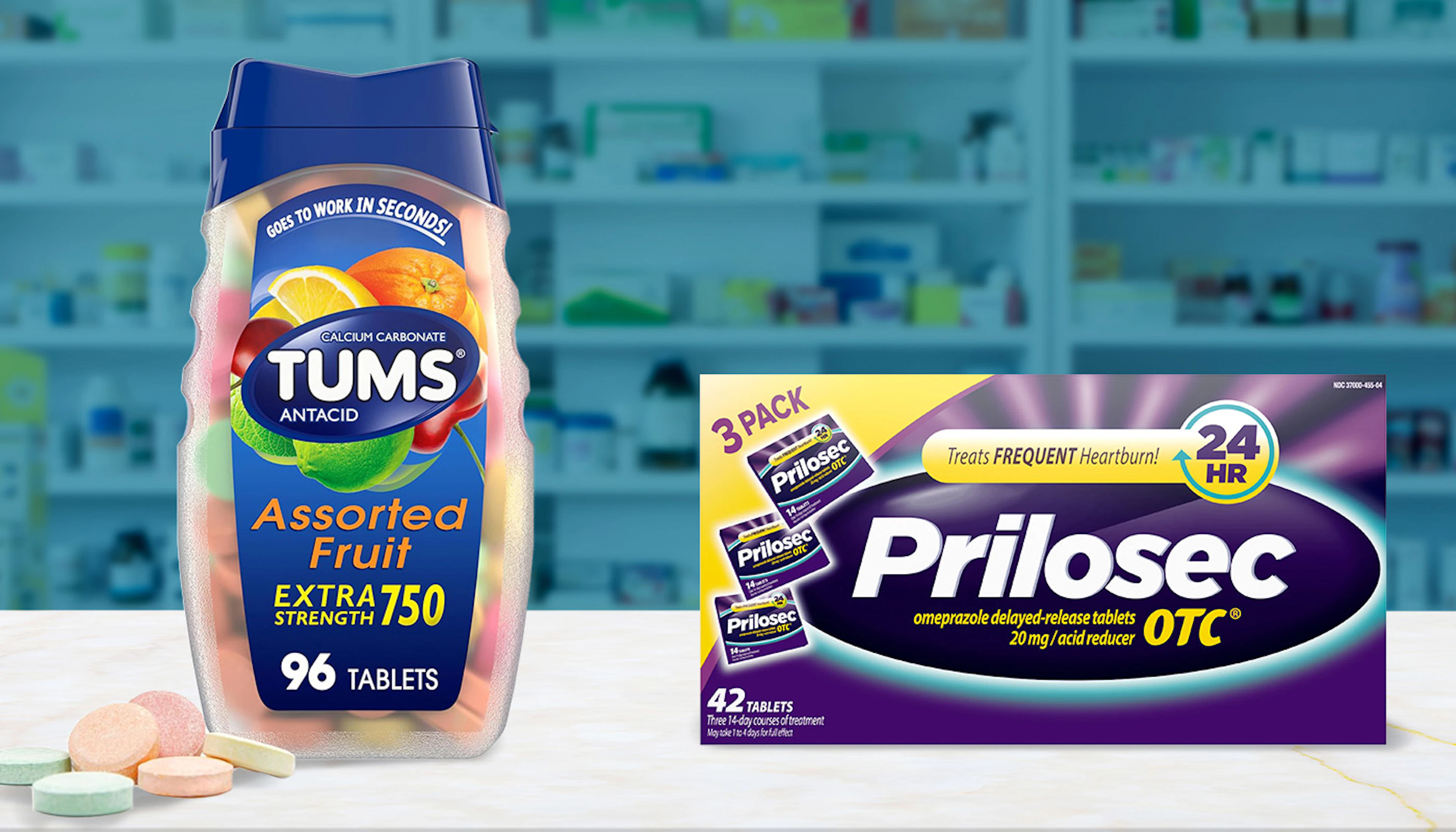


What Should I Take for Heartburn: Tums vs. Prilosec
- Tums
- Use: Occasional heartburn, sour stomach, acid indigestion
- Active Ingredient: Calcium carbonate
- Onset: Immediate relief, lasts up to a few hours
- Common Side Effects: Burping, constipation, gas
- Long-Term Risks: Hypercalcemia, drug interactions (e.g., levothyroxine, certain antibiotics)
- Prilosec (Omeprazole)
- Use: Frequent heartburn (2+ days per week)
- Active Ingredient: Omeprazole
- Onset: Full effect in 1-4 days, longer-lasting relief
- Common Side Effects: Headache, diarrhea
- Long-Term Risks: Hypomagnesemia, bone fractures, drug interactions (e.g., St. John’s Wort, rifampin)
Tums and Prilosec (omeprazole) are both popular medications used to treat heartburn (acid reflux). While both are effective, they differ in how they work and how they should be taken.
Uses
Tums is designed for on-demand, short-term relief of occasional heartburn, acid indigestion, and sour stomach. On the other hand, Prilosec is indicated for the treatment of frequent heartburn, defined as experiencing heartburn two or more days per week.
Tums
- Occasional heartburn
- Sour stomach
- Acid indigestion
Prilosec (Omeprazole)
- Frequent heartburn (occurring 2 or more days per week)
Administration
Tums (Adults)
- Chew 1-4 tablets as soon as symptoms occur.
- Expect relief within minutes, lasting up to 2 hours.
- Maximum Dose: Depends on the product. Do not use Tums for more than 2 weeks without consulting a doctor. If symptoms persist beyond 2 weeks, seek medical advice for proper diagnosis and treatment.
Prilosec (Omeprazole) (Adults)
- Swallow 1 tablet (do not crush or chew) once daily (every 24 hours) for 14 days.
- It may take 1-4 days for the full effect.
- Maximum Dose: 14 days every 4 months. If symptoms persist after 14 days or recur more frequently than every 4 months, consult a doctor.
Important Notes
- Neither Tums nor Prilosec is intended for long-term use.
- Tums is generally recommended for short-term, occasional heartburn relief and should not be used continuously for more than 2 weeks without medical advice.
- Prilosec should be used for a maximum of 14 consecutive days, and no more frequently than every 4 months, unless directed by a healthcare professional.
How They Work
Tums is an antiacid designed to be used on an as-needed basis for short-term relief of occasional heartburn. Prilosec is a proton pump inhibitor used as a treatment for frequent heartburn. Although Prilosec may take up to 4 days to have its full effect, it provides longer-lasting relief for persistent heartburn.
Tums
- Active Ingredient: Calcium carbonate
- Mechanism: Calcium carbonate (an antacid) quickly neutralizes stomach acid upon entering the stomach. Tums act almost immediately, and their effects can last for up to a few hours.
- Effectiveness: Extremely effective for quick relief of occasional heartburn. However, if you find yourself needing to use antacids like Tums frequently, other medications may be more appropriate for long-term relief of chronic heartburn (GERD).
Prilosec
- Active Ingredient: Omeprazole
- Mechanism: Omeprazole, a proton pump inhibitor (PPI), works by reducing the production of stomach acid. It inhibits the proton pump in the stomach lining, which is responsible for the final step in acid secretion.
- Relief Duration: While it may take 1-4 days for Prilosec to achieve its full effect, it provides longer-lasting relief compared to Tums.
- Availability: Omeprazole is available both over-the-counter and by prescription, depending on the dosage and intended use.
Side Effects and Risks
Both Tums and Prilosec are generally considered safe for short-term use, but they can cause side effects and carry potential risks, especially with prolonged or excessive use.
Tums Side Effects
Tums is generally well-tolerated, but some individuals may experience mild side effects, particularly with frequent or high-dose use.
- Burping
- Constipation
- Gas
Prilosec Side Effects
Prilosec side effects are typically uncommon and mild.
- Headache
- Diarrhea
Long-Term Risks: Tums
While considered safe for occasional use, prolonged or excessive Tums use can lead to:
- Hypercalcemia (High Calcium Levels): Accumulation of calcium from frequent Tums use can result in elevated blood calcium levels. This can pose serious health risks, including calcium deposits in blood vessels and organs, and is particularly dangerous for individuals with chronic kidney disease.
- Drug Interactions: Tums can interfere with the absorption of certain medications, including:
- Levothyroxine
- Tetracycline antibiotics
- Iron supplements
- Certain antifungal medications
To minimize potential changes to medication absorption, take Tums at least 1 hour before and at least 4 hours after other medications. It's important to check with a healthcare provider before using Tums to ensure it is safe to use alongside your other medications.
Long-Term Risks: Prilosec (Omeprazole)
- Hypomagnesemia (Low Magnesium Levels): Prolonged use (typically months) can lead to a decrease in magnesium levels.
- Bone Fractures: Long-term use (years) may increase the risk of bone fractures (hip, wrist, spine), especially in individuals with existing risk factors.
- Drug Interactions:
- St. John's Wort
- Rifampin
- Methotrexate.
Prilosec is meant for a 14 day course. Long term usage should be monitored by a doctor.
Cost
As over the counter products, both Tums and Prilosec can be purchased at any regular pharmacy without the need for a prescription. Both medications are available in multiple flavors. While Prilosec is only available as oral tablets, Tums products are available in a variety of formulations, including chewable gummies and chewable tablets.
Different formulations and pack sizes have various price points. In general, most products can be purchased for under $15, although Tums products tend to come in larger pack sizes at a slightly lower price point.
Prices mentioned in this article are based on average retail price at major box chain pharmacy in the U.S. as of March 9, 2025.
| Tums | Prilosec | |
|---|---|---|
| Uses | Occasional heartburn, sour stomach, acid indigestion | Frequent heartburn (2 or more days) |
| Active Ingredient | Calcium carbonate (Antiacid) | Omeprazole (Proton pump inhibitor) |
| Length of Use | Maximum 2 weeks | A 14-day treatment course, every 4 month |
| How It Works | Neutralizes the acid in the stomach | Reduces the amount of stomach acid released into the stomach |
| Side Effects | Burping, constipation, gas | Headach, diarrhea |
| Long-Term Risks | High calicium levels, many drug interactions | Low magnesium levels, bone fracture, many drug interactions |
| Cost | Under $15 | Under $15 |
References:
- Chewable Tablets Original. (n.d.). Pepto Bismol; Procter & Gamble. Retrieved March 9, 2025, from https://pepto-bismol.com
- TUMS Regular Strength 500mg. (n.d.). TUMS; Haleon. Retrieved March 9, 2025, from https://www.tums.com
- How Do Antacids Work to Provide Heartburn Relief? (n.d.). TUMS; Haleon. Retrieved March 9, 2025, from https://www.tums.com
- Calcium Carbonate Chewable Tablets. (2024). Cleveland Clinic; Elsevier Inc. Retrieved March 9, 2025, from https://my.clevelandclinic.org
- Prilosec OTC Product Monograph. (n.d.). Procter & Gamble. Retrieved March 9, 2025, from https://prilosecotc.com
- PRILOSEC (omeprazole) Delayed-Release Capsules and PRILOSEC (omeprazole magnesium) For Delayed-Release Oral Suspension. Food and Drug Administration. (1989; Revised 09/2012). Retrieved March 9, 2025, from https://www.accessdata.fda.gov

