Questions? Call us at 800-810-7790

- Gallstones are hardened deposits in the gallbladder, often made of cholesterol, that can cause no symptoms or trigger a painful "gallbladder attack."
- They can cause severe complications like gallbladder inflammation, bile duct blockage, or pancreatitis if a stone becomes lodged.
- Risk factors include being female, over 40, pregnant, or obese, as well as rapid weight loss and a diet high in fat.
- Diagnosis is usually made with an ultrasound, and treatment most often involves surgical removal of the gallbladder.
Overview
Gallstones, medically known as cholelithiasis, are small, hard deposits that form inside the gallbladder, a small, pear-shaped organ located just beneath the liver. The gallbladder stores bile, a digestive fluid produced by the liver that helps break down fats. When the composition of bile becomes imbalanced—for example, if there's too much cholesterol or not enough bile salts—solid particles can form and grow into stones.
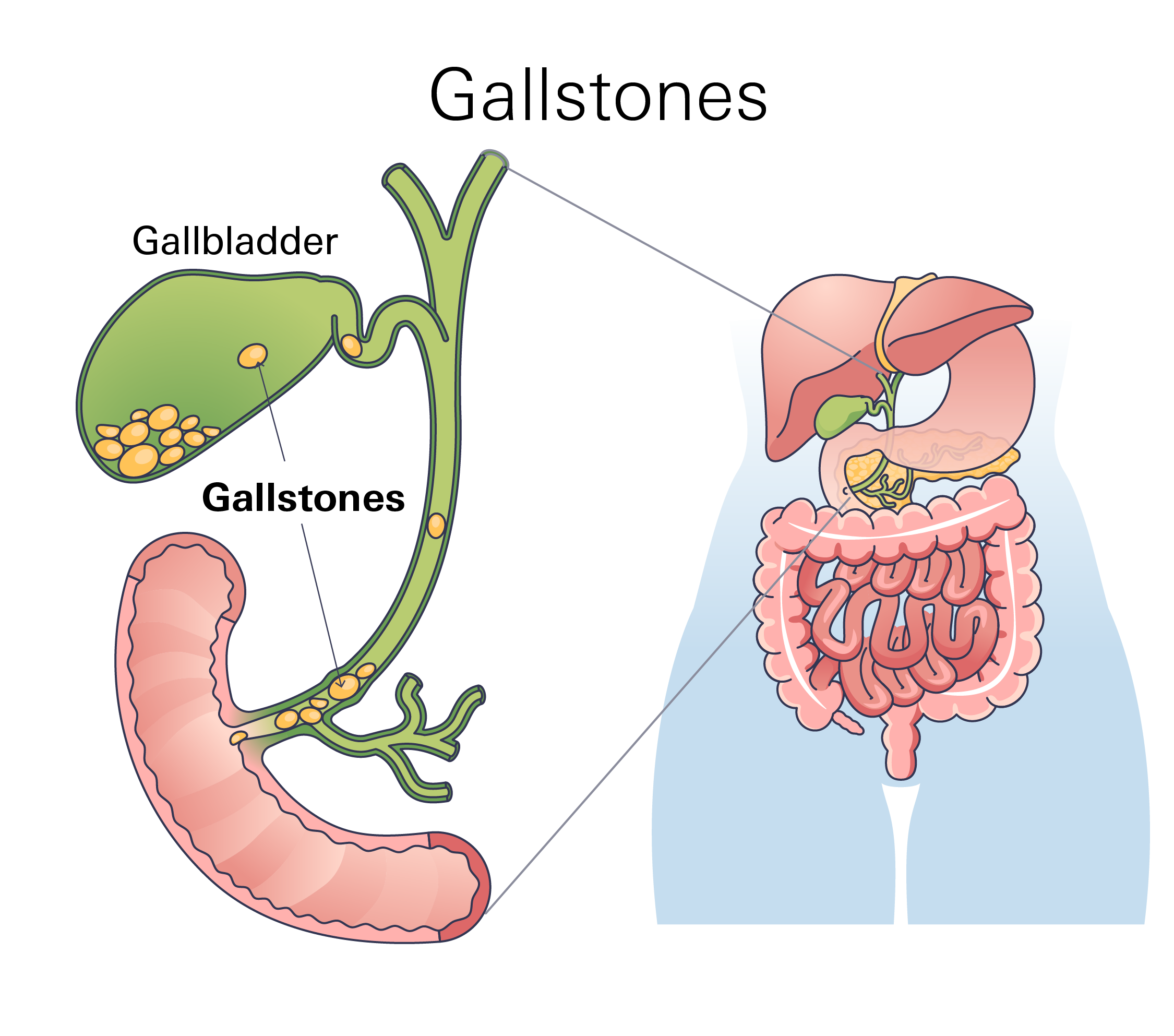
Gallstones vary in size and number. Some people may have just one, while others have many. Often, they cause no symptoms and are discovered incidentally during imaging for other conditions. However, when a stone blocks the bile duct, it can lead to a gallbladder attack, characterized by intense pain and potential complications.
How Common Is It?
Gallstones are common, affecting about 10–15% of adults in the U.S., with women being more frequently affected than men. While many cases are asymptomatic, those that do cause symptoms or complications require medical attention.
Symptoms
Gallstones may not cause symptoms, but when they do, it's typically because a stone is blocking a bile duct.
- Biliary colic (“gallbladder attack”): sudden, sharp or cramp-like pain in the right upper abdomen or under the breastbone; may radiate to the back or right shoulder blade—especially after fatty meals. Pain episodes typically last from several minutes to a few hours.
- Other common complaints: nausea, vomiting, bloating, indigestion, and excessive belching
Seek urgent care if symptoms include:
- Fever or chills,
- Jaundice (yellowing of skin or eyes),
- Dark urine or pale/clay-colored stools,
- Unrelenting pain, or inability to keep down fluids or food.
Complications
A gallbladder attack is often the first sign of a problem, but if a gallstone remains lodged, it can lead to more severe issues:
- Gallbladder Inflammation (Acute cholecystitis): Pain worsens and may be accompanied by fever and tenderness. Caused by a clogged duct preventing bile from draining.
- Blocked Bile Duct: If a stone gets stuck further down the bile duct, it can block the flow of bile from both the liver and gallbladder. This can lead to liver damage and jaundice.
- Pancreatitis: If a gallstone blocks the duct that the gallbladder shares with the pancreas, it can trigger inflammation of the pancreas. This condition is painful and requires hospitalization.
- Sepsis: In rare cases, a severe infection can develop in the gallbladder due to trapped bile. If not treated promptly, this infection can spread, leading to a life-threatening condition called sepsis.
Causes
Gallstones form when components of bile are out of balance, bile flow is impaired, or both. Key causes include:
- Excess cholesterol in bile – If bile contains more cholesterol than it can dissolve, crystals can form and eventually become stones.
- Too much bilirubin – Conditions causing increased breakdown of red blood cells (e.g., liver disease) can lead to excess bilirubin, contributing to stone formation.
- Poor bile flow / incomplete gallbladder emptying – Bile sitting too long becomes concentrated, making stone formation more likely.
Risk Factors
Non-modifiable:
- Age (especially over 40) and female sex (women are 2–3 times more likely than men)
- Ethnicity—particularly high rates among Native Americans and Hispanic populations
- Family history or genetics
- Hormonal influences—pregnancy, birth control, hormone therapy, and high estrogen levels increase risk
- Existing medical conditions—e.g., diabetes, insulin resistance, metabolic syndrome, certain intestinal diseases, or liver disease
Modifiable
- Obesity
- Rapid weight loss, especially through crash diets or bariatric surgery
- Diet high in refined carbs, saturated fats, limited fiber increases risk
- Gallbladder stasis from fasting or irregular meals
Diagnosis
When a patient presents with sudden, sharp pain in the upper right abdomen, a doctor's first thought is often a gallbladder attack. The diagnostic process begins with a detailed review of the patient's symptoms.
If the symptoms point to gallstones, imaging is the next step. An ultrasound is the most common tool. It's a non-invasive procedure that provides a clear image of the gallbladder. Doctors use it to look for:
- Gallstones inside the gallbladder
- Signs of inflammation or swelling
- Thickening of the gallbladder walls
- Enlarged bile ducts
If the ultrasound is inconclusive or the case is complex, a CT scan may be used. A HIDA scan can also be performed to assess how well the gallbladder is functioning, which is useful if no stones are visible on an ultrasound.
Additionally, blood tests are used to check for elevated liver enzymes, bilirubin, and signs of infection, all of which can signal a blocked bile duct or an inflamed gallbladder.
Treatment
Observation:
Asymptomatic gallstones often require no immediate treatment; monitoring is usually recommended.
Surgery:
The most common and definitive treatment is surgery to remove the gallbladder, a procedure known as a cholecystectomy.
It is usually performed laparoscopically, which involves a few small incisions and allows for a quicker recovery. The gallbladder is not essential for digestion, and the body can adapt to digest fats without it.
Surgery is advised when pain is recurrent, severe, or complicated by infection, inflammation, or duct obstruction.
Medication
For patients who are unable to undergo surgery, an oral medication called ursodiol can be used.
This bile acid can help dissolve small, cholesterol-based gallstones, but it requires months of consistent use and only works for about half of patients. Gallstones can also re-form after the treatment is stopped.
For mild, occasional pain, over-the-counter pain relievers like acetaminophen or ibuprofen can help manage symptoms during a flare-up but do not address the underlying cause.
Prevention
For those who have never had gallstones or are at a higher risk, there are steps you can take to help prevent them.
The most important is to avoid sudden, drastic changes to your diet and weight. Rapid weight loss, for example, can disrupt bile's composition.
Focus on consistency:
- Eat regular meals. Skipping meals or fasting can cause bile to become more concentrated, increasing the risk of stone formation.
- Maintain a healthy diet. Include moderate portions of healthy fats. Extreme low-fat diets can also increase risk.
- Drink plenty of water. Staying hydrated helps keep bile flowing properly.
- Aim for gradual weight loss. If you're trying to lose weight, a slow and steady approach is better for gallbladder health.