Questions? Call us at 800-810-7790

- Impetigo is a highly contagious bacterial skin infection, often appearing as red sores that develop into a honey-colored crust.
- It commonly affects young children and typically appears around the nose and mouth, but can occur anywhere on the body.
- The infection spreads easily through skin contact or sharing items like towels or toys.
- Most cases are mild and treated effectively with topical or oral antibiotics.

Overview
Impetigo is a common, highly contagious bacterial skin infection that mainly affects young children but can occur at any age.
It usually starts with red spots or blisters that quickly break open, ooze, and form a distinctive yellowish crust. These sores often appear around the nose and mouth but can develop anywhere the skin is broken or irritated.
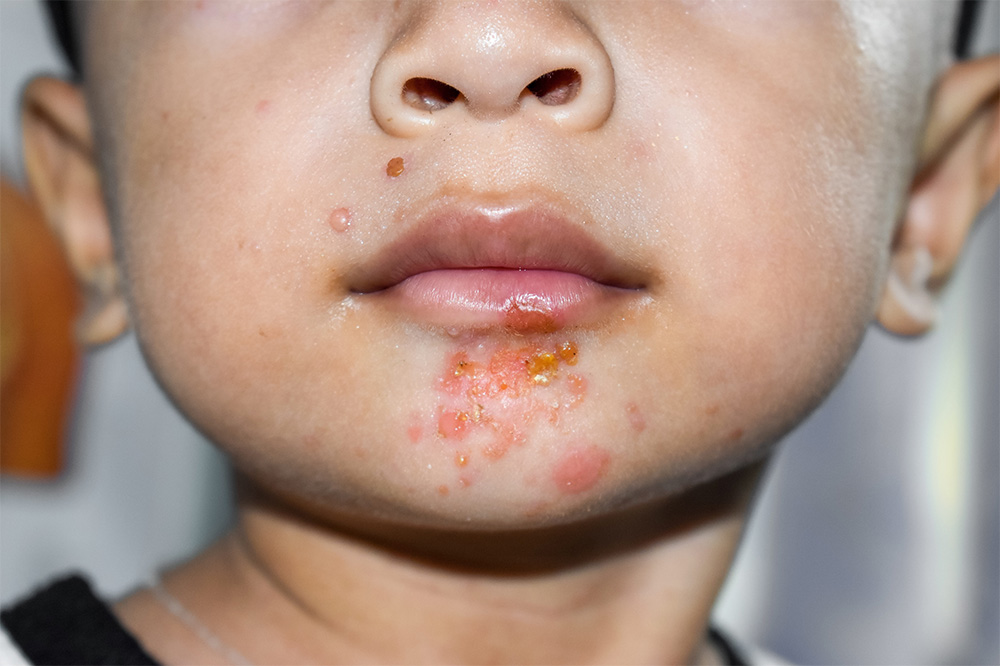
The infection spreads easily through direct contact with an infected person or by touching contaminated items such as towels, clothing, or toys.
Impetigo is a common condition, with millions of cases reported annually in the U.S., predominantly affecting children under six years old. The incidence tends to increase in warm, humid climates and in environments children are close together, such as daycares and schools.
While less frequent, adults can also contract impetigo, especially if they have pre-existing skin conditions or compromised immune systems.
Impetigo is generally not serious and often resolves with appropriate antibiotic treatment, however, it is contagious until the sores are no longer blistering or crusting, or 24 to 48 hours after starting treatment.
Symptoms
Impetigo can appear in different forms, each with its own set of symptoms.
Non-Bullous Impetigo (Most Common Type)
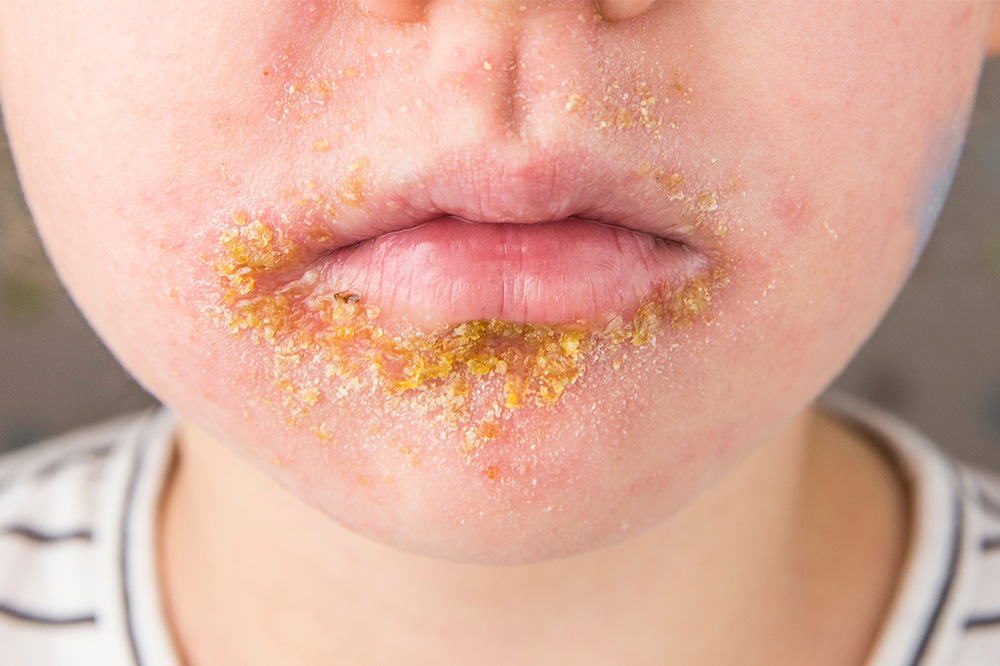
- Begins as small red spots or bumps
- Develops into blisters or pustules that break open easily
- Leaves behind a thick, golden-yellow (honey-colored) crust
- Most often found around the nose and mouth, but can appear anywhere
- Usually not painful, but may cause itching
- Can spread by scratching or touching other parts of the skin
Bullous Impetigo
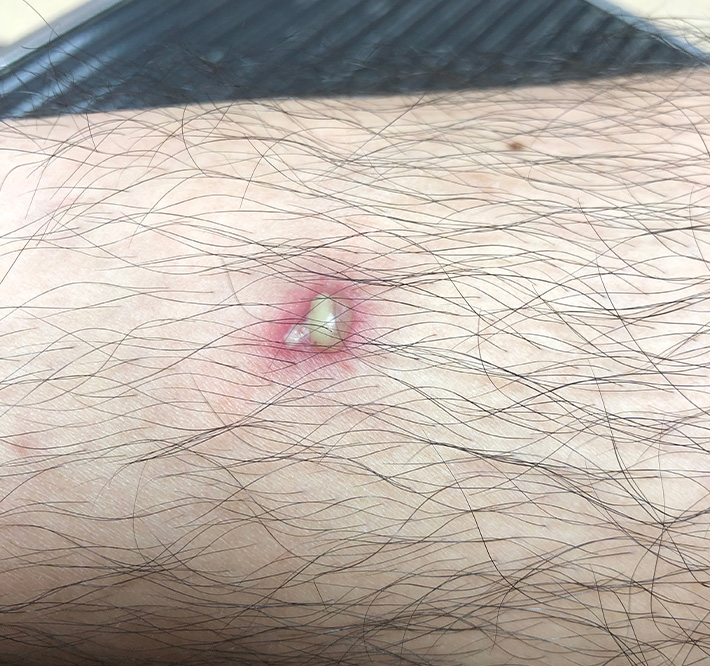
- Causes larger, fluid-filled blisters (bullae)
- Blisters are fragile and may burst quickly
- Leaves a red or irritated area with a thinner, lighter crust
- Commonly appears on the arms, legs, or trunk
- May be accompanied by mild fever or fatigue in some cases
Ecthyma (More Severe Form)
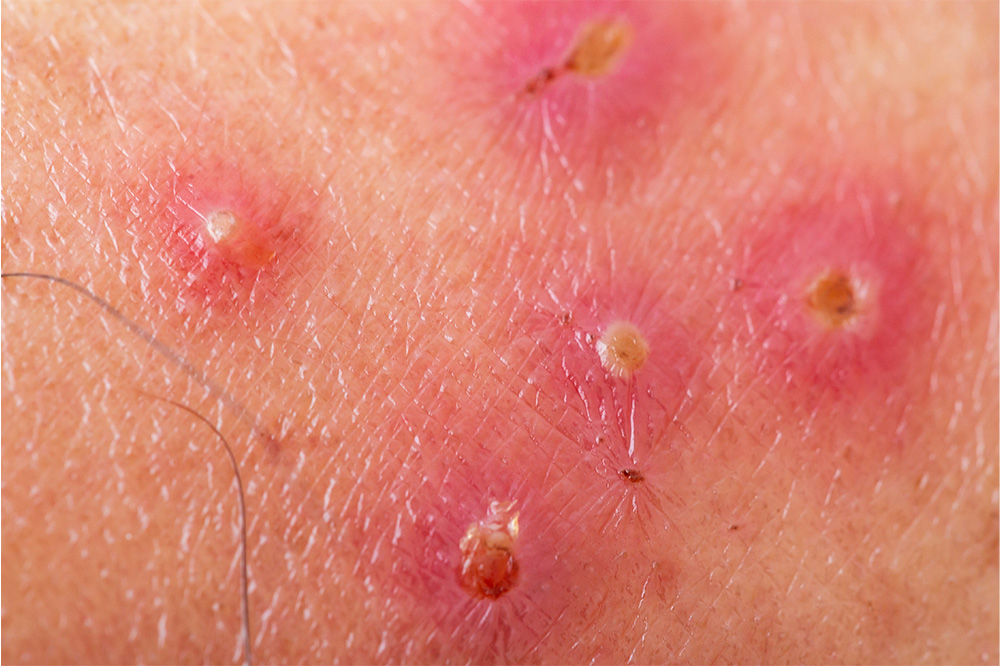
- Starts as a sore that goes deeper into the skin
- Forms ulcers with thick crusts, often brown or dark yellow
- Edges of the sore may appear red or have a purple tint
- Can be painful and slower to heal
- May leave a scar after healing
Other Possible Symptoms
- Itching
- Swollen lymph nodes near the infected area
- Mild fatigue
Causes
Impetigo occurs when certain bacteria enter the skin, usually through a small cut, scratch, insect bite, or other minor skin damage. The two main bacteria responsible are:
- Staphylococcus aureus (Staph aureus)
- Group A Streptococcus (Group A strep)
These bacteria often live harmlessly on the skin, but when the skin barrier is broken, they can cause infection.
- Non-bullous impetigo, the most common form, is usually caused by Staph aureus.
- In fewer cases, Group A strep is involved, and sometimes both bacteria are present.
- Bullous impetigo, which causes larger blisters, is almost always linked to Staph aureus.
- In more severe cases, the infection can go deeper and develop into ecthyma.
A more resistant strain of staph called MRSA (methicillin-resistant Staphylococcus aureus) has become increasingly common, particularly in crowded places like schools, daycares, and group homes.
Impetigo does not always require a visible skin break to start. It can also appear on skin that is already irritated or affected by other skin conditions. Once present, the infection spreads easily to nearby skin areas or to other people through direct contact or by sharing contaminated objects.
Risk Factors
Anyone can get impetigo, but certain factors increase the risk. The most important is broken or irritated skin, which gives bacteria an easy entry point.
You’re more likely to develop impetigo if you:
- Spend time in crowded places
- Have close contact with someone who’s infected
- Have a skin condition like eczema that causes itching or breaks in the skin
- Live in a warm, humid climate, where bacteria thrive
- Have a weakened immune system due to illness or medications
- Have diabetes or other chronic conditions that affect healing
- Participate in contact sports or activities with frequent skin-to-skin contact
Other contributing factors include poor hygiene, undernourishment, and sharing personal items like towels, razors, or clothing.
Diagnosis
In most cases, healthcare providers can diagnose impetigo by simply looking at the skin. The appearance of the sores usually provides enough information. Special laboratory tests are rarely needed.
If the diagnosis is uncertain, or if symptoms don’t improve with treatment, a provider might take a skin swab. This involves gently rubbing a cotton swab on a sore to collect a sample, which is sent to a lab to identify the exact bacteria present. It also helps check for resistant bacteria, like MRSA. Lab results typically take 3–5 days.
Once impetigo is confirmed, treatment usually begins right away. This may include antibiotic creams, oral antibiotics, or both, depending on how widespread or severe the infection is. Managing symptoms like itching is also part of the care plan.
Treatment
The treatment of impetigo depends on how much skin is affected and the type of infection.
Mild, localized impetigo:
- Topical antibiotics are the first choice, especially for non-bullous cases.
- Before applying medication, clean the affected area gently with soap and water to help remove crusts.
- Common topical antibiotics include mupirocin and retapamulin.
Oral antibiotics are used when:
- Multiple lesions are present on the body
- The infection causes blisters (bullous impetigo)
- Deeper skin layers are involved (such as ecthyma)
Frequently prescribed oral antibiotics include cephalexin, amoxicillin-clavulanate, or dicloxacillin.
If MRSA is suspected or confirmed other antibiotics like clindamycin or doxycycline may be recommended.
Supportive care:
- Keep the skin clean and covered to prevent spreading
- Children should avoid school or daycare until the infection begins to improve
- Wash clothes, towels, and bedding regularly during treatment
Prevention
Preventing impetigo from spreading starts with basic hygiene. Always wash your hands thoroughly, clean cuts immediately, and cover them with a clean bandage.
A few other tips to help prevent impetigo:
- Avoid sharing towels, clothing, razors, or other personal items
- Keep fingernails short to reduce scratching
- Wash bedding and laundry more often if someone is infected
- Avoid touching sores or scabs
- Disinfect shared surfaces like doorknobs, toys, and light switches
In group settings, especially with children, consistent handwashing and early treatment of any skin breaks can significantly reduce the risk. If someone does get impetigo, covering the affected area and strictly following treatment instructions prevent it from spreading to others.