Questions? Call us at 800-810-7790

- Melanoma is an aggressive form of skin cancer that can spread to other parts of the body.
- Major risk factors include UV radiation exposure, fair skin, family history, numerous moles, and weakened immune systems.
- Use the ABCDE rule (Asymmetry, Border, Color, Diameter, Evolving) and the "Ugly Duckling" sign to identify suspicious moles.
- Diagnosis often involves clinical exams, dermoscopy, and skin biopsies. Treatments include surgery, immunotherapy, targeted therapy, radiation, and chemotherapy.
- Reduce risk by using sunscreen, wearing protective clothing, avoiding tanning beds, performing regular skin checks, and scheduling annual dermatologist visits.
Overview
Melanoma is one of the most serious forms of skin cancer due to its aggressive nature and higher risk of spreading (metastasizing) to other parts of the body compared to other types of skin cancer.
This type of skin cancer originates from melanocytes, the cells responsible for producing melanin, the pigment that gives color to your skin. While melanoma is often associated with the development of moles, it can also occur in other pigmented tissues, such as the eyes.
Melanin and Melanoma
Melanin exists in two forms: eumelanin and pheomelanin. Eumelanin is the pigment that helps protect the skin from the sun's harmful ultraviolet (UV) rays by darkening or tanning the skin. Pheomelanin offers minimal protection.
Exposure to UV radiation, whether from the sun or tanning beds, damages skin cells and can trigger melanocytes to produce more melanin. However, excessive UV exposure can cause DNA damage within melanocytes, leading to uncontrolled cell growth and the development of melanoma.
Skin Types and Susceptibility
Individuals with naturally darker skin have higher levels of eumelanin, while those with naturally fair skin have more pheomelanin. Eumelanin provides some protection against UV damage, whereas pheomelanin lacks this protective attribute. Consequently, individuals with darker skin are less susceptible to skin cancer compared to those with fair skin, who are more prone to sun damage, sunburn, and the development of skin cancer due to their lower levels of eumelanin.
Prevalence
Melanoma is a significant public health concern in the United States. In 2022, approximately 197,700 new cases were reported. This number highlights the importance of skin cancer prevention and early detection.
While melanoma can affect people of all ages, it is particularly concerning for young adults. In fact, it is one of the most common cancers among individuals aged 25-29. This trend underscores the need for increased sun safety education and awareness among this demographic.
It's important to note that melanoma rates have been increasing in recent years. Understanding this trend can help individuals take proactive steps to protect their skin and reduce their risk.
Symptoms
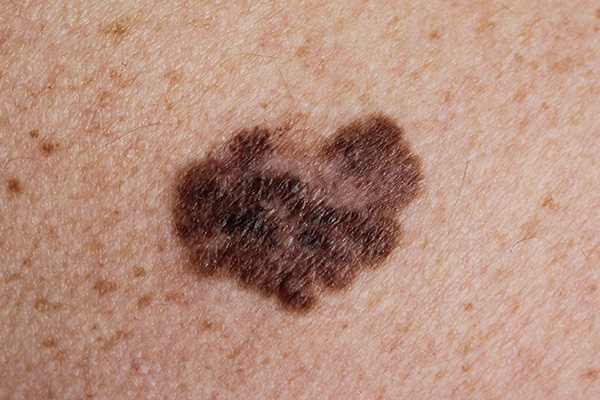
The warning signs of melanoma can be remembered using the ABCDE rule and the “Ugly Duckling” sign:
- Asymmetry: One half of the mole doesn't match the other.
- Border: The edges are irregular, ragged, notched, or blurred.
- Color: The color is uneven, with shades of black, brown, red, white, or blue.
- Diameter: Larger than the size of a pencil eraser (about 6 millimeters), although melanomas can sometimes be smaller.
- Evolving: The mole is changing in size, shape, color, or elevation.
The “Ugly Duckling” Sign
The “Ugly Duckling” sign is a concept where you compare one mole or spot to the others on your body. If a particular mole looks significantly different from the others (the “ugly duckling” among the “swans”), it could be a warning sign of melanoma. This emphasizes the importance of being aware of your own skin and any changes that may occur, as not all melanomas fit into the ABCDE criteria.
Regular self-exams and professional skin checks by a dermatologist can help identify suspicious changes early. If you notice any concerning changes in your moles or skin, it’s crucial to consult your doctor for evaluation.
Risk Factors
While the exact cause of melanoma remains elusive, it's clear that a combination of genetic and environmental factors plays a significant role in its development.
- Ultraviolet (UV) Radiation: Excessive exposure to UV rays from the sun or tanning beds is the primary cause of melanoma. Sunburns, especially during childhood, can dramatically increase the risk.
- Ultraviolet (UV) Radiation: Individuals with fair skin, light hair, and blue or green eyes have less melanin, a natural skin pigment that offers protection from UV rays.
- Family History: Having a family history of melanoma or other skin cancers significantly increases the risk.
- Moles: People with numerous moles, particularly atypical moles (dysplastic nevi), are at a higher risk.
- Weakened Immune System: Conditions or medications that suppress the immune system can contribute to melanoma development.
- Age: The risk of melanoma increases with age, although it can occur at any age.
- Gender: Men are more likely to develop melanoma than women.
- Genetic Factors: Certain genetic mutations, such as those in the CDKN2A or CDK4 genes, can significantly increase the risk.
- Geographic Location: Living in areas with high levels of UV radiation, closer to the equator, increases exposure and risk.
It's important to note that while these factors increase the risk of melanoma, not everyone who has them will develop the disease. Conversely, melanoma can occur in individuals with no known risk factors.
Diagnosis
Determining whether a skin lesion is melanoma involves a careful evaluation by a healthcare professional. The diagnostic process typically includes:
Clinical Examination
A thorough examination of the skin is the first step. Your healthcare provider will look for any suspicious moles, freckles, or spots, using the ABCDE rule and the "Ugly Duckling" sign as guidelines.
Dermoscopy
Dermoscopy is a non-invasive technique that uses a magnifying device with a light to examine the skin. It helps doctors assess the underlying structures of moles and other pigmented lesions, aiding in the differentiation between benign and potentially cancerous growths.
Skin Biopsy
If a suspicious lesion is identified during the clinical exam and/or dermoscopy, a skin biopsy is typically performed to confirm the diagnosis. There are several types of skin biopsies, including:
- Shave Biopsy: Removes the top layers of the lesion.
- Punch Biopsy Extracts a deeper sample of skin using a circular tool.
- Excisional Biopsy: Removes the entire lesion and a margin of surrounding healthy skin. This is often done if melanoma is strongly suspected.
- Incisional Biopsy: Removes only a portion of the lesion for examination.
The biopsied tissue is then examined under a microscope by a pathologist to determine if melanoma is present.
Staging
If melanoma is diagnosed, additional tests, such as imaging scans (CT, MRI, PET) and lymph node biopsies, may be performed to determine the stage of the cancer. Staging helps assess the extent of the disease and whether it has spread to other parts of the body.
Early detection and accurate diagnosis are crucial for successful melanoma treatment. If you notice any changes in your skin, it's essential to consult a healthcare provider for evaluation.
Treatment
The treatment for melanoma depends on several factors, including the stage of the cancer, its location, and the patient's overall health.
Surgical Intervention
Surgery is often the first line of treatment for melanoma. The extent of the surgery varies based on the cancer's characteristics:
- Wide Local Excision: Removal of the melanoma and a margin of healthy tissue surrounding it. This is typically used for early-stage melanoma.
- Sentinel Lymph node Biopsy: Involves identifying and removing the first lymph node(s) to which cancer cells are likely to spread. This helps determine if the cancer has spread beyond the skin.
- Lymph Node Dissection: Removal of multiple lymph nodes if cancer is detected in the sentinel lymph node.
Immunotherapy
Immunotherapy medications, such as Pembrolizumab or Nivolumab, are used to stimulate your body’s immune system to recognize and attack cancer cells.
Targeted Therapy
Some melanomas have specific genetic mutations, such as BRAF mutations. Targeted therapy drugs, such as Vemurafenib, are designed to target these specific mutations.
Radiation Therapy
Radiation therapy uses high-energy X-rays to kill cancer cells or shrink tumors. It’s sometimes used to treat melanoma that has spread to the brain or bones.
Chemotherapy
While less common for melanoma due to the effectiveness of newer treatments, chemotherapy might be considered for advanced cases where other options have not been successful.
The choice of treatment depends on various factors, including the melanoma's stage and location, your overall health, and specific characteristics of the melanoma itself. Early detection and treatment are crucial for improving outcomes, so regular skin checks and prompt medical attention to suspicious changes are essential. Each treatment plan is tailored to the individual, often involving a multidisciplinary team to ensure the best possible care.
Prevention
While it's impossible to completely eliminate the risk of melanoma, adopting preventive measures can significantly reduce your chances of developing this dangerous form of skin cancer.
Sun Protection is Key
- Sunscreen: Apply a broad-spectrum sunscreen with an SPF of 30 or higher generously to all exposed skin, reapplying every two hours or more frequently if swimming or sweating.
- Protective Clothing: Wear long-sleeved shirts, pants, wide-brimmed hats, and sunglasses to shield your skin from the sun's harmful rays.
- Seek Shade: Avoid prolonged sun exposure, especially during peak hours (10 AM to 4 PM).
- Avoid Tanning Beds: These devices emit harmful UV radiation, significantly increasing your risk of skin cancer.
Regular Skin Self-Exams
Familiarize yourself with your skin and conduct regular self-exams to detect any changes in moles or the appearance of new spots. Use the ABCDE rule (Asymmetry, Border, Color, Diameter, Evolving) and the "Ugly Duckling" sign to identify potentially suspicious lesions.
Professional Skin Checks
Schedule annual skin examinations with a dermatologist, especially if you have a family history of melanoma, numerous moles, or fair skin. Early detection is crucial for successful treatment.