Questions? Call us at 800-810-7790

- Rosacea is a long-term inflammatory skin condition that primarily affects the face, causing redness, visible blood vessels, and sometimes pimples.
- Sunlight, extreme temperatures, spicy foods, alcohol, and stress can trigger or worsen symptoms.
- Treatments include topical and oral medications, lifestyle modifications, laser therapy, and stress management.
- Fair skin, family history, age (30-60), and gender (more common in women but more severe in men) increase the risk of developing rosacea.
- While it can’t be entirely prevented, managing triggers, using gentle skincare, and seeking early treatment can help control symptoms and reduce flare-ups.
Overview
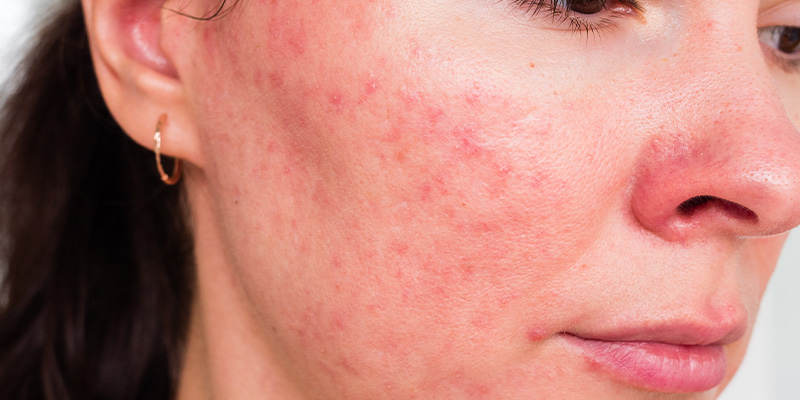
Rosacea is a common and chronic inflammatory skin condition that primarily affects the face. It is characterized by persistent redness, visible blood vessels (telangiectasia), and sometimes small, red, pus-filled bumps. The condition often begins with a tendency to flush or blush more easily than others. Over time, it can progress to more persistent redness and other symptoms, including the thickening of the skin, especially around the nose (rhinophyma), and eye irritation, which can lead to ocular rosacea.
While there is no known cure for rosacea, it can be effectively controlled and managed through a range of treatments. These treatments include topical and oral medications to reduce inflammation and redness, lifestyle modifications to avoid known triggers, and various dermatological procedures such as laser therapy to address visible blood vessels. Early diagnosis and tailored treatment plans are crucial in managing the condition and preventing its progression.
Prevalence
Rosacea is a fairly widespread skin condition, although its prevalence varies among different populations. In the United States, it is estimated that approximately 2% to 10% of the population is affected by rosacea. The likelihood of developing rosacea increases with age, and it is more frequently seen in individuals with fair skin, particularly those of Northern European descent. While women are more likely to develop rosacea, men often experience more severe symptoms.
The condition is less commonly reported in Asian and African populations, which may be due to underdiagnosis or differences in skin characteristics that make symptoms less noticeable. Globally, rosacea remains under-recognized and often misdiagnosed, leading to delays in treatment. Increased awareness and education about the signs and symptoms of rosacea are essential to improve early diagnosis and intervention, ultimately enhancing the quality of life for those affected.
Symptoms
Rosacea is a complex skin condition with various manifestations. It's often categorized into different subtypes, each with its own set of symptoms.
Types of Rosacea
- Erythematotelangiectatic rosacea: Characterized by persistent facial redness (erythema) and visible blood vessels (telangiectasia).
- Papulopustular rosacea: Involves redness, blood vessels, and acne-like breakouts with pus-filled bumps.
- Phymatous rosacea: A rare type causing skin thickening, often on the nose (rhinophyma).
- Ocular rosacea: Affects the eyes, causing dryness, redness, itching, and sensitivity to light.
It's important to note that these types can overlap, and individuals may experience symptoms from multiple categories.
Common Symptoms
Beyond the specific subtypes, rosacea can present with a variety of general symptoms:
- Facial redness: Persistent redness on the central part of the face, often resembling a sunburn or blush. This redness may come and go but tends to worsen over time.
- Flushing: Frequent or sudden episodes of facial redness and warmth. Often triggered by various factors such as heat, spicy foods, alcohol, and stress.
- Visible blood vessels: Small, red blood vessels visible on the skin's surface.
- Pimples and bumps: Acne-like breakouts associated with papulopustular rosacea.
- Eye irritation: Dryness, redness, itching, and sensitivity to light (ocular rosacea).
- Skin thickening: Thickened skin, often on the nose (phymatous rosacea).
- Burning and stinging: Sensations of heat, burning, or stinging on the face.
- Dry, rough skin: Skin dryness, roughness, and flaking.
- Facial swelling: Swelling, especially around the eyes, during flare-ups.
- Enlarged pores: Visible enlargement of facial pores.
The severity and combination of these symptoms can vary widely among individuals.
Causes
Although the exact cause of rosacea is not fully understood, researchers have identified several potential factors that contribute to its development. These include:
- Inflammation: An overactive immune response can lead to chronic inflammation, a hallmark of rosacea.
- Blood vessel abnormalities: Changes in blood vessels in the facial area can cause flushing and redness, common rosacea symptoms.
- Genetics: A family history of rosacea suggests a genetic predisposition.
- Demodex mites: Tiny mites called Demodex folliculorum are found on the skin of most people; however, they may be more numerous in individuals with rosacea. Their role in the development of rosacea is still being studied.
- Genetics: There appears to be a genetic component to rosacea, as it often runs in families. Specific genetic factors contributing to rosacea are still being studied.
- Triggers: Certain environmental and lifestyle factors can trigger or exacerbate rosacea symptoms. These triggers include exposure to sunlight, extreme temperatures, spicy foods, alcohol, hot beverages, stress, and certain skincare products.
- Alcoholic beverages, particularly red wine and hard liquor.
- Foods high in histamines or those that cause blood vessel dilation, such as tomatoes, citrus fruits, and chocolate.
- Intense physical exertion and workouts that lead to sweating.
- Harsh skincare products, especially those containing alcohol or fragrances.
Risk Factors
Several factors increase the likelihood of developing rosacea:
- Fair skin: Individuals with fair or light skin, especially those of Northern European descent, are at greater risk of developing rosacea.
- Gender: Women are more likely to develop rosacea, but men tend to experience more severe symptoms.
- Age: Rosacea often develops in adulthood, typically between the ages of 30 and 60, although it can occur at any age.
- Family history: A family history of rosacea increases the risk.
- Sun exposure: Excessive sun exposure can worsen rosacea symptoms.
- Environmental factors: Exposure to extreme temperatures (both hot and cold), wind, humidity, and other environmental factors can trigger rosacea flare-ups.
- Diet: Some people find that certain foods, like spicy foods or alcohol, aggravate their rosacea.
- Medical conditions: Certain medical conditions, such as gastrointestinal disorders, may be associated with rosacea in some cases.
- Medications: The use of certain medications, such as topical steroids, can lead to a condition known as steroid-induced rosacea.
It's important to note that having one or more risk factors doesn't guarantee developing rosacea. Many people with these factors never experience the condition.
Diagnosis
Rosacea is typically diagnosed through an evaluation by a healthcare provider, usually a dermatologist. There's no specific test for rosacea, and diagnosis is based on a combination of factors:
- Medical History: Your doctor will inquire about your skin condition, including when symptoms started, their severity, and any potential triggers. Family history of rosacea may also be relevant.
- Physical Examination: A thorough examination of your face will be conducted to assess the presence of redness, visible blood vessels, bumps, or other characteristic signs of rosacea.
- Symptom Evaluation: Your doctor will carefully evaluate your symptoms to determine if they align with the typical patterns of rosacea.
- Evaluation of Triggers: You may be asked about potential triggers that worsen your symptoms, such as exposure to sunlight, certain foods, alcohol, and stress.
- Differential Diagnosis: To rule out other skin conditions that may mimic rosacea, such as acne, lupus, eczema, or contact dermatitis, additional tests or examinations might be necessary.
Rosacea is generally diagnosed through clinical assessment, which relies on evaluating visible symptoms and your medical history. After confirming the diagnosis, your doctor will help create an appropriate treatment strategy to effectively manage your symptoms and reduce the frequency of flare-ups. Early diagnosis and proper treatment can play a vital role in managing your condition and enhancing your overall well-being.
Treatment
Rosacea is a chronic condition, but its symptoms can be effectively managed with a combination of treatments. Here are the common approaches:Narcolepsy is typically managed through a combination of medications and lifestyle modifications.
- Topical Medications: Creams or gels containing ingredients like metronidazole, azelaic acid, or sulfur can help reduce redness, inflammation, and bumps.
- Oral Medications: For more severe cases, oral antibiotics (like doxycycline) or low-dose isotretinoin might be prescribed to control inflammation.
- Laser Therapy: This can be used to reduce the appearance of visible blood vessels and improve overall skin tone.
- Lifestyle Modifications: Identifying and avoiding triggers is crucial. This includes sun protection, gentle skincare, and limiting exposure to irritants like alcohol-based products.
- Dietary Adjustments: While individual responses vary, some people find relief by avoiding potential triggers like spicy foods, hot beverages, or alcohol.
- Stress Management: Stress can exacerbate rosacea symptoms. Practicing stress-reduction techniques such as mindfulness, yoga, and meditation can be beneficial.
Regular consultation with a dermatologist is essential for personalized treatment plans and to monitor the condition's progression.
Prevention
While there's no guaranteed way to prevent rosacea, especially for those with a genetic predisposition, certain measures can help minimize its impact:
- Sun Protection: Consistent use of broad-spectrum sunscreen can help shield your skin from harmful UV rays, a common trigger.
- Gentle Skincare: Avoid harsh cleansers, exfoliants, and hot water, which can irritate sensitive skin.
- Identifying and Avoiding Triggers: Keeping a journal to track potential triggers can help you identify and avoid factors that worsen your condition.
- Early Treatment: Seeking medical attention at the onset of symptoms can help prevent rosacea from progressing to more severe stages.
Remember, everyone's skin is different, and what works for one person might not work for another. It's essential to work closely with a dermatologist to develop a treatment plan tailored to your specific needs.