Questions? Call us at 800-810-7790

- Vitiligo is an autoimmune condition that destroys pigment cells, causing smooth white patches on any part of the skin or hair.
- It affects ~1% of people worldwide, can start at any age, and is not contagious or dangerous.
- Genetics plus triggers (sunburn, stress, injury) cause the immune system to attack melanocytes in susceptible people.
- No cure exists, but creams, light therapy, and newer JAK inhibitors often restore some color when started early.


Overview
Vitiligo is a long-lasting skin condition where the skin loses its natural color, resulting in noticeably lighter or completely white patches that can appear anywhere on the body.
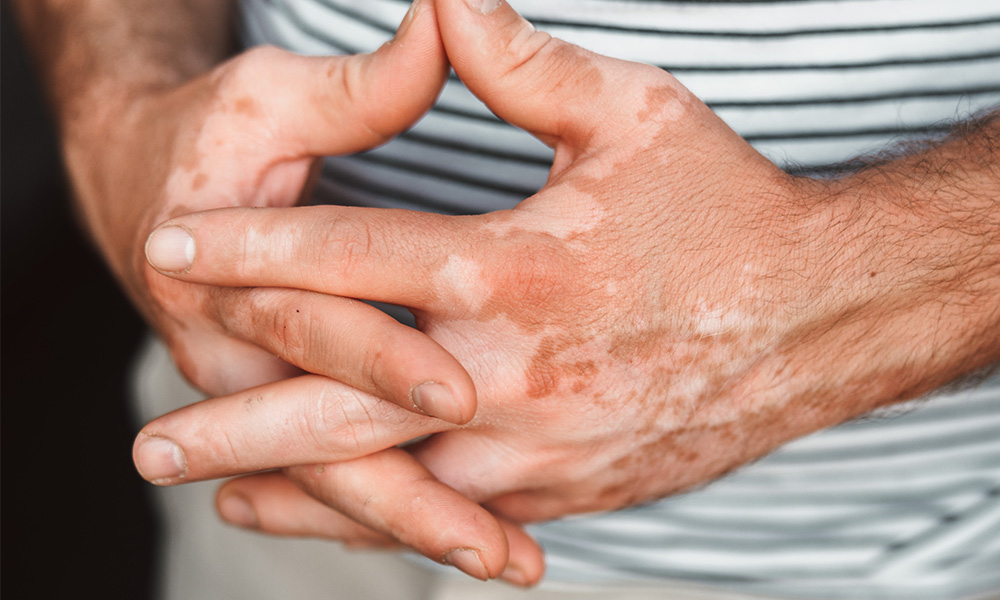
The fundamental cause is the loss of melanin, the pigment that gives skin and hair its color. Melanin is produced by specialized cells called melanocytes. In vitiligo, these melanocytes in certain areas stop working or are destroyed altogether.
It is not contagious, does not usually cause pain, and does not threaten physical health. Globally, about 1% of the population has vitiligo, and it affects all skin tones, genders, and backgrounds. Many people first notice changes before age 20, but it can start at any age.
Types and Symptoms
Vitiligo varies widely in appearance and progression. The main sign is smooth patches of skin that are lighter than the surrounding tone or completely white. Hair in affected areas may also lose color.
- Generalized vitiligo (most common; over 90% of cases): White patches appear on both sides of the body in a symmetrical pattern (hands, face, armpits, groin, around mouth/eyes).
- Segmental vitiligo: Affects only one side or section of the body, such as one arm or part of the face. It often starts younger and stabilizes after the early phase.
- Localized vitiligo: Involves one or a few small areas that remain limited and may not spread.
- Universal vitiligo (rare): Over 80% of the skin loses pigment, resulting in near-total color loss.
Common locations: face, lips, hands, arms, legs, feet, elbows, knees, and genitals.
Other signs:
- Sharp edges where pale patches meet normal skin
- Pink or reddish borders around new patches
- Loss of color in hair (eyebrows, eyelashes, scalp)
- Patches inside the mouth, nose, or genital lining
- Increased sun sensitivity in pale areas
- Occasionally mild itching or tingling when new patches form
The condition often progresses unpredictably—some people have a few stable patches for years, while others see gradual spreading.
Causes
Vitiligo is primarily an autoimmune disease. The immune system mistakenly attacks and destroys melanocytes. Once these cells are damaged or destroyed, skin in the affected areas loses its color.
Genetics and Immune Function
Vitiligo sometimes runs in families, but inheritance is complex. Multiple genes related to immune regulation and melanocyte health contribute to risk. Someone may carry these genes and never develop vitiligo unless triggered by environmental stress.
Possible Triggers and Risk Factors
Certain factors can activate or worsen vitiligo in people who are genetically prone:
- Sunburns or skin injury: A severe burn or repeated friction (Koebner phenomenon) can stress pigment cells.
- Emotional or physical stress: Can influence immune activity and inflammation.
- Hormonal changes: Pregnancy or hormonal shifts may trigger flare-ups.
- Other autoimmune conditions: Thyroid disease, type 1 diabetes, or alopecia areata often occur alongside vitiligo.
- Family history: Having a close relative with vitiligo increases risk.
- Melanoma or immune therapy for melanoma: May trigger pigment cell loss due to heightened immune reactivity.
Although these factors increase risk, most do not cause vitiligo by themselves. The condition results from a mix of genetic susceptibility, immune imbalance, and environmental stress.
Diagnosis
A dermatologist can usually diagnose vitiligo by examining the skin and observing the pattern of pale patches. During the visit, they may use a Wood’s lamp, a special ultraviolet light that makes depigmented areas fluoresce, helping confirm true pigment loss.
Your provider will also ask about:
- When the patches first appeared and how they have changed
- Family history of vitiligo or autoimmune disorders
- Any triggers such as sunburn, skin injury, or emotional stress
If needed, blood tests may be done to check for thyroid or autoimmune conditions. Skin biopsy is rarely required and is used only when the diagnosis is uncertain.
Treatment
There is no cure for vitiligo, but many people regain some or even significant pigment with treatment. The best approach depends on the type, extent, and how actively the condition is spreading.
Topical Treatments
Applied directly to the skin to calm the immune response and encourage repigmentation:
- Corticosteroid creams: Reduce immune activity; most effective early. Side effects include skin thinning if used too long.
- Calcineurin inhibitors (tacrolimus, pimecrolimus): Used long-term, often preferred for sensitive areas like the face and eyelids.
- Calcipotriene (vitamin D analogue) – Often combined with steroids or light therapy.
- Opzelura (ruxolitinib cream): FDA-approved JAK inhibitor for non-segmental vitiligo in patients 12+. Applied twice daily; may take 24+ weeks for results. Common side effects: redness, acne, mild irritation. Rare risks include serious infections or blood clots.
Oral or Systemic Medications
A short course of oral corticosteroids (like Prednisone) may be prescribed when pigment loss is spreading quickly to halt the hyperactive immune phase. They are not used for long-term management.
Light-Based Therapies
- Narrowband UVB phototherapy: One of the most common treatments, involving controlled exposure to UVB light in a clinic or home unit.
- Excimer laser: A focused beam of light used to target smaller patches, often combined with topical creams.
Surgical Options
These are only considered when vitiligo has been stable (no new patches) for several months:
- Skin Grafting: Small pieces of normally pigmented skin are transferred to the white patches.
- Cellular Transplant: Pigment cells are collected, processed, and placed onto depigmented areas.
Depigmentation (rare)
In rare, severe cases where most of the body has lost pigment, a topical medication may be used to permanently lighten the remaining normal skin, creating a uniform, pale appearance. This choice requires careful discussion as it is irreversible.
Prevention
Vitiligo can't be prevented, because genetic and autoimmune factors are the main drivers. However, avoiding severe sunburns, skin trauma, and harsh chemicals may reduce triggers in those already at risk.
The Bottom Line
Vitiligo is unpredictable — some people have a few stable spots for life; others experience gradual or rapid spreading. Early treatment offers the best chance of repigmentation.
With today’s options — especially combination therapy and newer medications like ruxolitinib cream — many patients see meaningful improvement and regain confidence in their appearance.
Related Topics
All About Vitiligo: Diagnosis and Treatment
Vitiligo often appears on the face, hands, and genitals but can affect any part of the body, including hair. The skin pigmentation changes are typically symmetrical, showing up as similar or identical patches on both sides of the body.
Vitiligo and Eczema: How Are They Linked?
While vitiligo and eczema are two distinct conditions, they sometimes appear together in patients. Why is that the case?
Read more about Vitiligo and Eczame