
Talk to Your Doctor
Have your healthcare provider send your prescription to Marley Drug.
If you're looking for cholesterol control that works differently, ZYPITAMAG (pitavastatin) offers key advantages that set it apart from other statins.
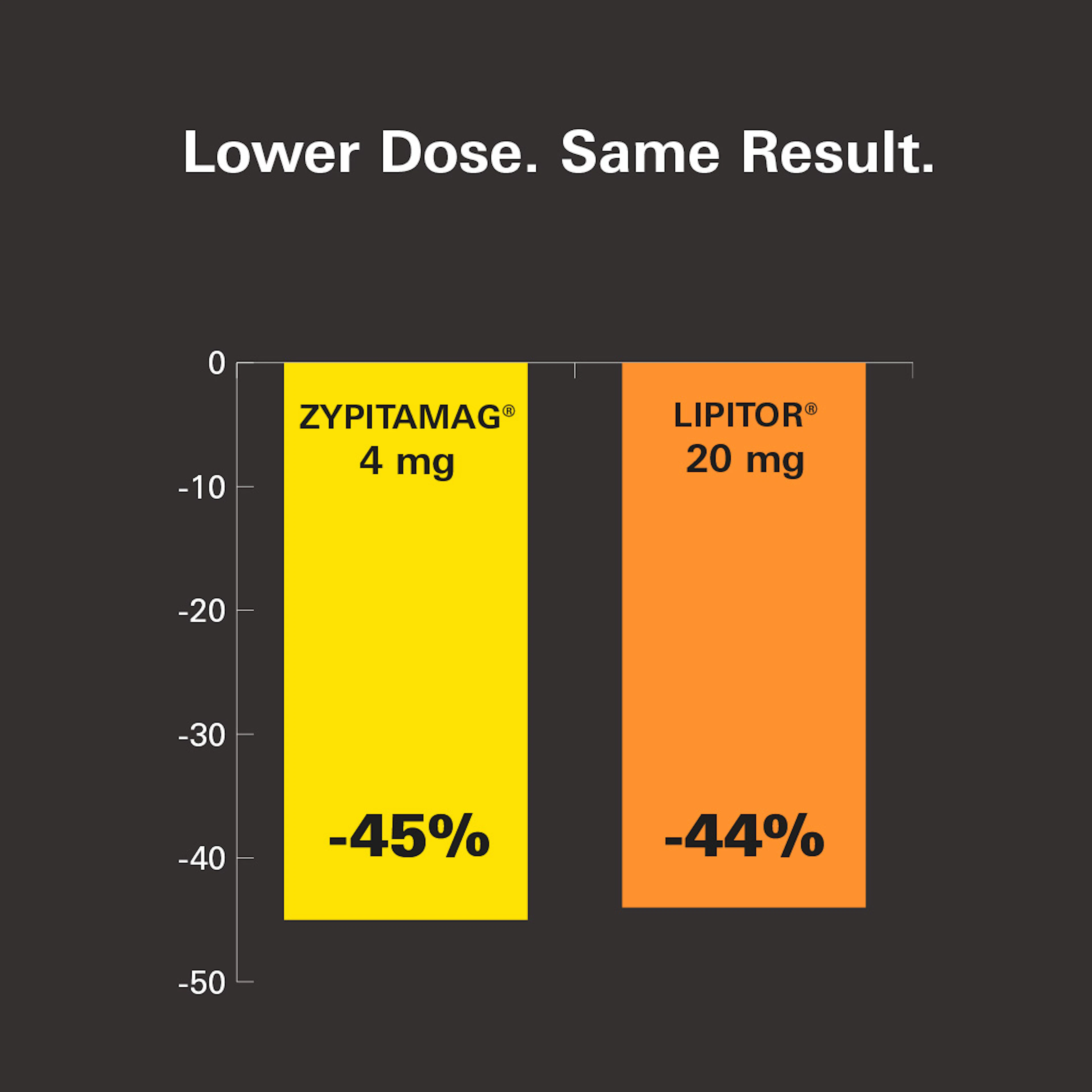
4 mg of ZYPITAMAG can lower “bad” cholesterol (LDL-C) by up to 45%, similar to 20 mg of Lipitor (atorvastatin).
This may make it more suitable for patients who struggle with higher-dose statin therapies.
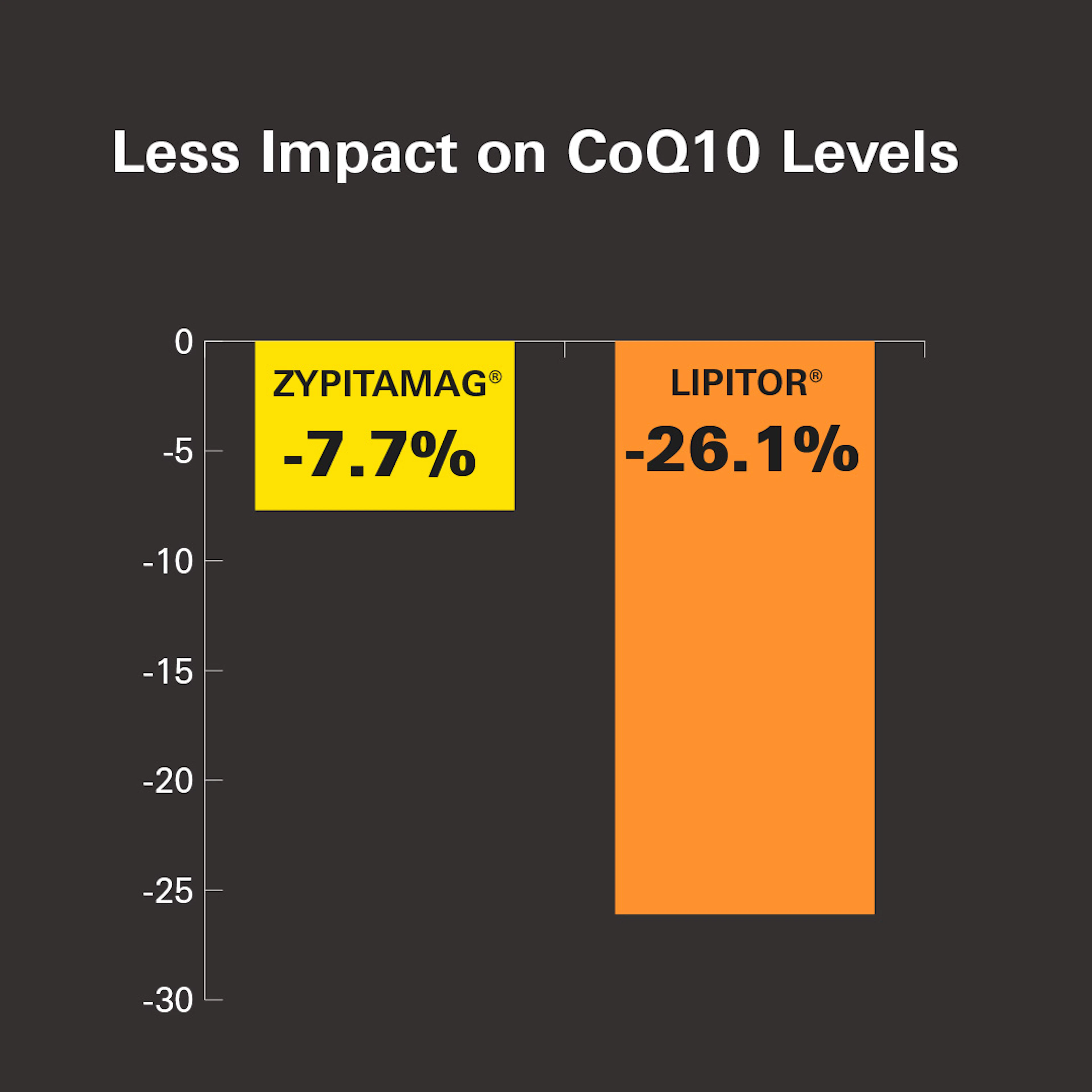
All statins can reduce CoQ10, an important enzyme for muscle energy. Lower CoQ10 is thought to contribute to muscle discomfort.
ZYPITAMAG caused a small reduction in CoQ10 (-7.7%), compared to -26.1% with atorvastatin.
ZYPITAMAG may lead to better tolerability.
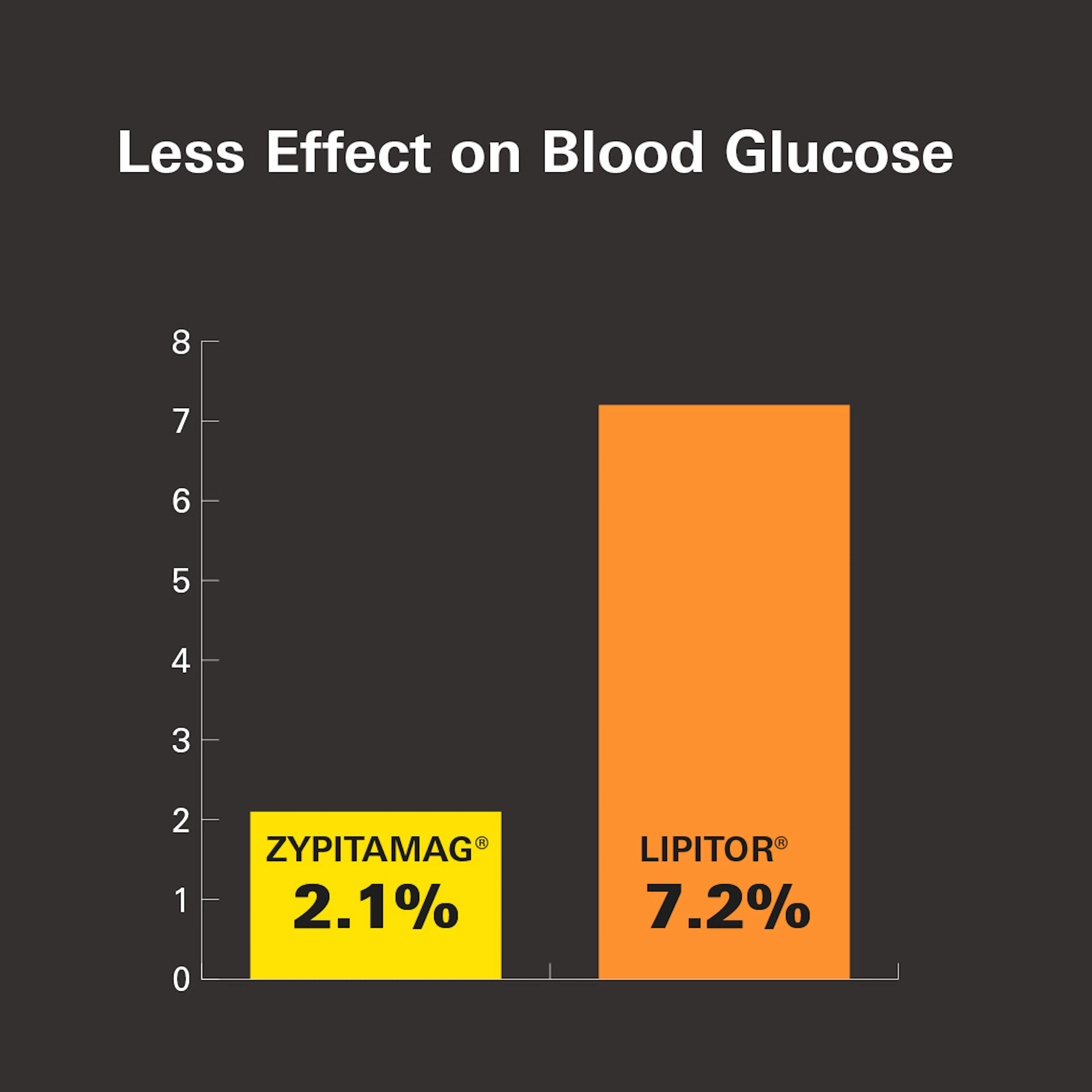
Statins can raise blood sugar levels, a concern for patients with diabetes or prediabetes. ZYPITAMAG has a minimal effect, raising blood glucose by only 2.1% compared to atorvastatin’s 7.2%.
This makes it a safer choice for those monitoring their blood sugar.
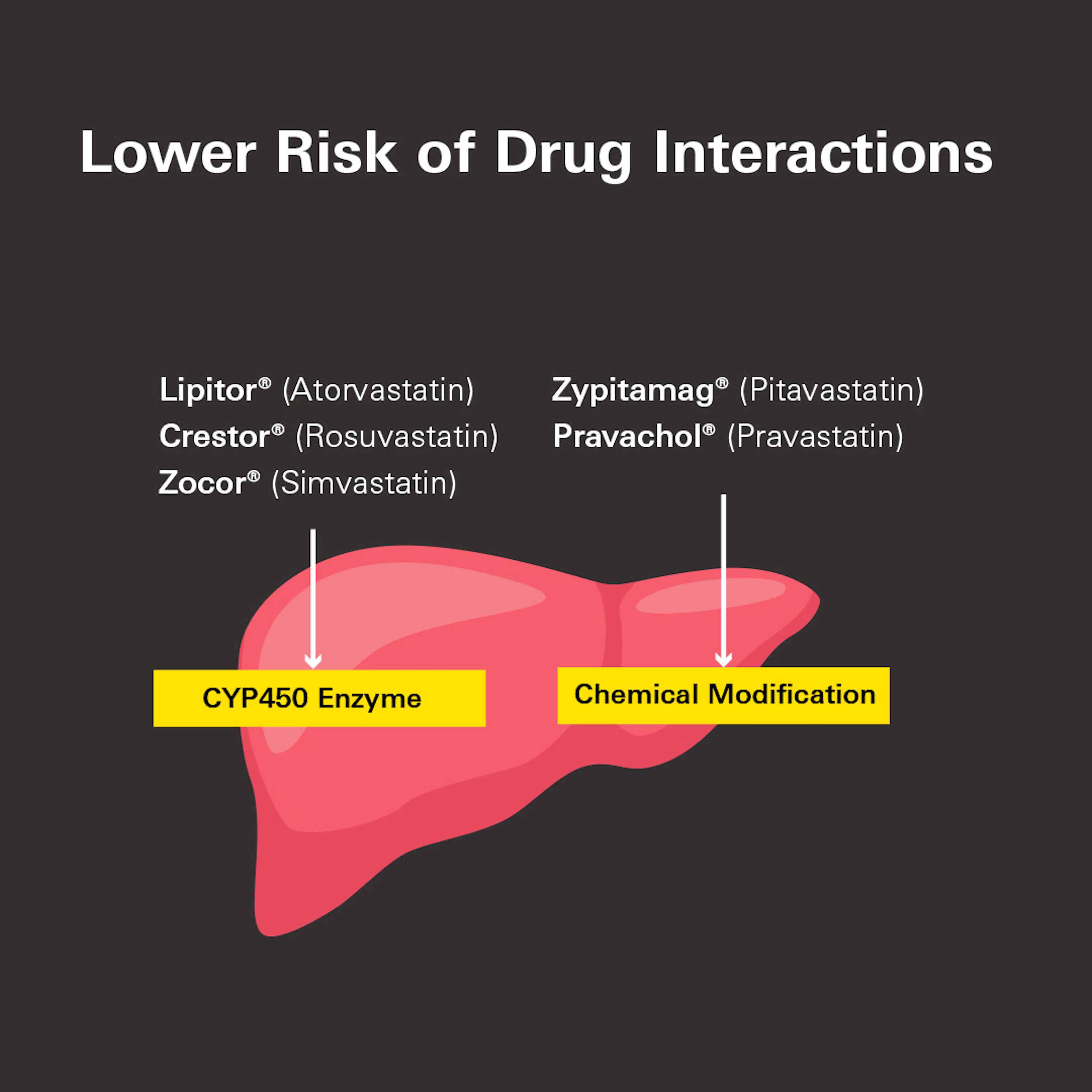
80% of drugs are broken down in the liver by the same enzyme family (CYP450). Taking two or more drugs that use this pathway can cause interactions, potentially making the drugs less effective or increasing side effects.
ZYPITAMAG is processed by a different pathway, reducing the risk of drug-drug interactions.
ZYPITAMAG may be a safer option for people who take multiple long-term medications.
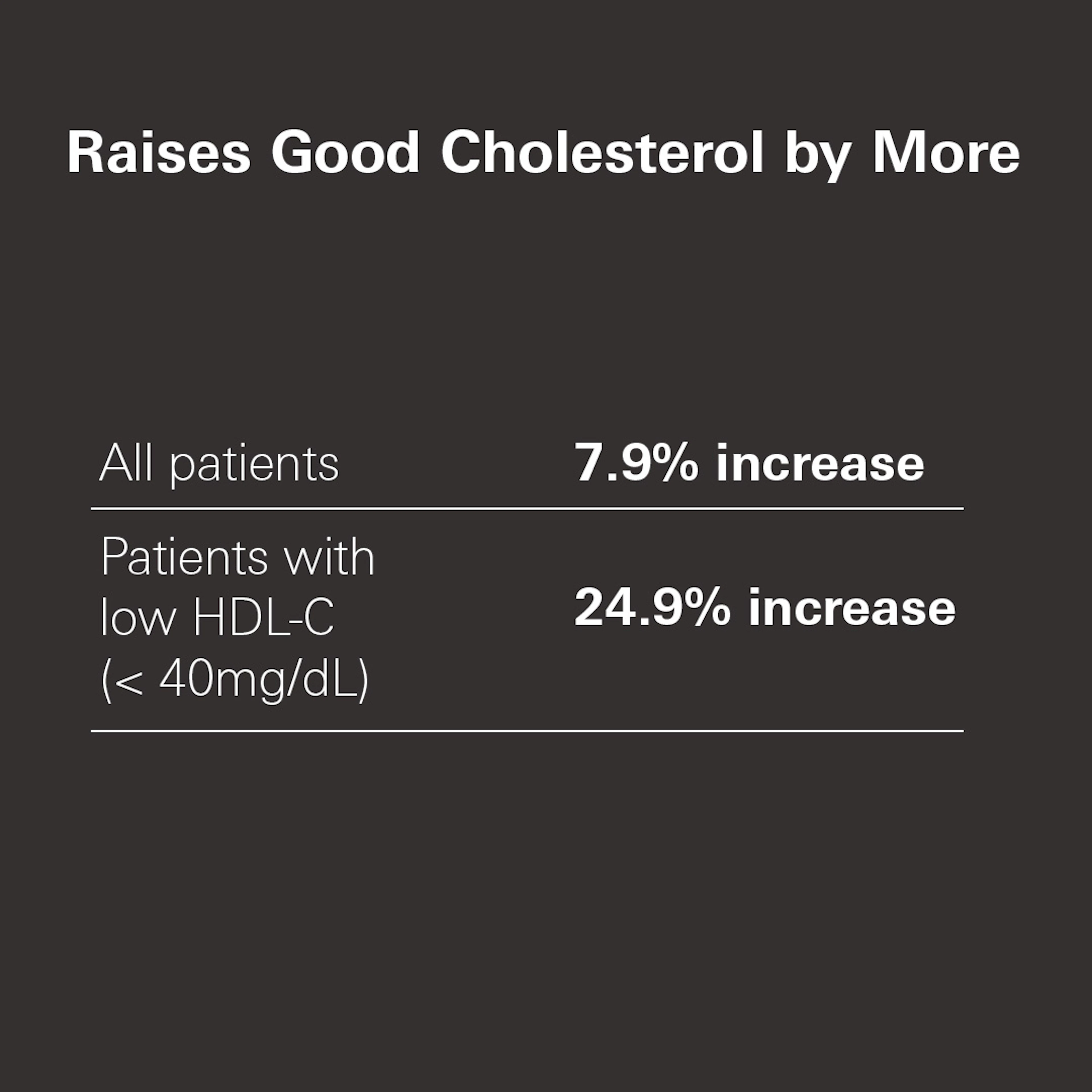
ZYPITAMAG raises HDL, the "good" cholesterol that removes excess cholesterol from your arteries, significantly more than other statins.
When patients switched to ZYPITAMAG from other statins, they saw an average increase in their HDL-C of 7.9%. This effect was even more significant for people with low HDL-C, who saw an increase of 24.9%.
ZYPITAMAG is a good choice for for those with high triglycerides, low HDL, or genetic risks for low HDL.
Have your healthcare provider send your prescription to Marley Drug.

You can talk to a board-certified doctor to see if you are a good fit for ZYPITAMAG.
Download How To Use TeleHealth Guide
If you have a Rx for ZYPITAMAG and want to transfer to us, fill out the form. We will take it from there.
No insurance headaches. We offer ZYPITAMAG at a flat cash price of just $39 per month.
Every order includes free shipping, and most deliveries arrive in about 2 days.
It's been about a little over a month since I started using Zypitimag. No muscle aches!
I tried Rosuvastatin before; only 5 mg as I could not tolerate a bigger dose. I still had shoulder and neck pain. Happy to continue this medication, although mail order is a bit of a big process.
Lakshmi G.
I found ZYPITAMAG on the Internet by accident. I called Marley Drug and decided to try this medication. It seem to work and I have been on it for about four years. I just talked to Terri to renew another supply and thought I’d write this good news and praise her and Marley Drug for my health.
Barbara T.
I've had a rough time with statins. I tried a plethora of them and each time I reacted with hives, muscle aches & general fatigue. My fabulous cardiologist recommended Marley Drug for Zypitamag that would be much less costly even if it was not covered, which is was not. I've had wonderful results & saved money. Thank you Marley Drug!
Barbara B.