

Poisonous Plants and OTC Options
- Many common plants like poison ivy, poison oak, poison sumac, and stinging nettle can cause painful rashes through oils or stinging hairs that trigger allergic reactions.
- Prevent contact by wearing long sleeves and pants, staying on trails, and learning plant identification.
- Treat reactions with over-the-counter antihistamines for itching and topical corticosteroids for inflammation and swelling.
- Seek medical attention if the rash spreads rapidly, shows signs of infection, affects sensitive areas, or doesn't improve with treatment.
Many plants have evolved defensive mechanisms to protect themselves from pests and predators. Unfortunately, these same defenses can cause painful reactions in humans. Understanding how to identify and avoid these plants is essential for safe outdoor activities.
How These Plants Cause Harm
- Urushiol Oil: Poison ivy, poison oak, and poison sumac contain urushiol oil on their leaves. This oil causes allergic reactions when it contacts skin, leading to rashes, redness, and intense itching.
- Stinging Nettle: Uses tiny hair-like spines to inject chemicals (histamine and formic acid) directly into the skin. Even light contact can cause immediate discomfort.
Prevention Tips
- Learn to identify these plants before heading outdoors
- Wear long sleeves and long pants when hiking or working in areas where these plants may grow
- Wash your skin and clothes thoroughly after outdoor activities
- Stay on marked trails when possible
Plant Identification and Characteristics
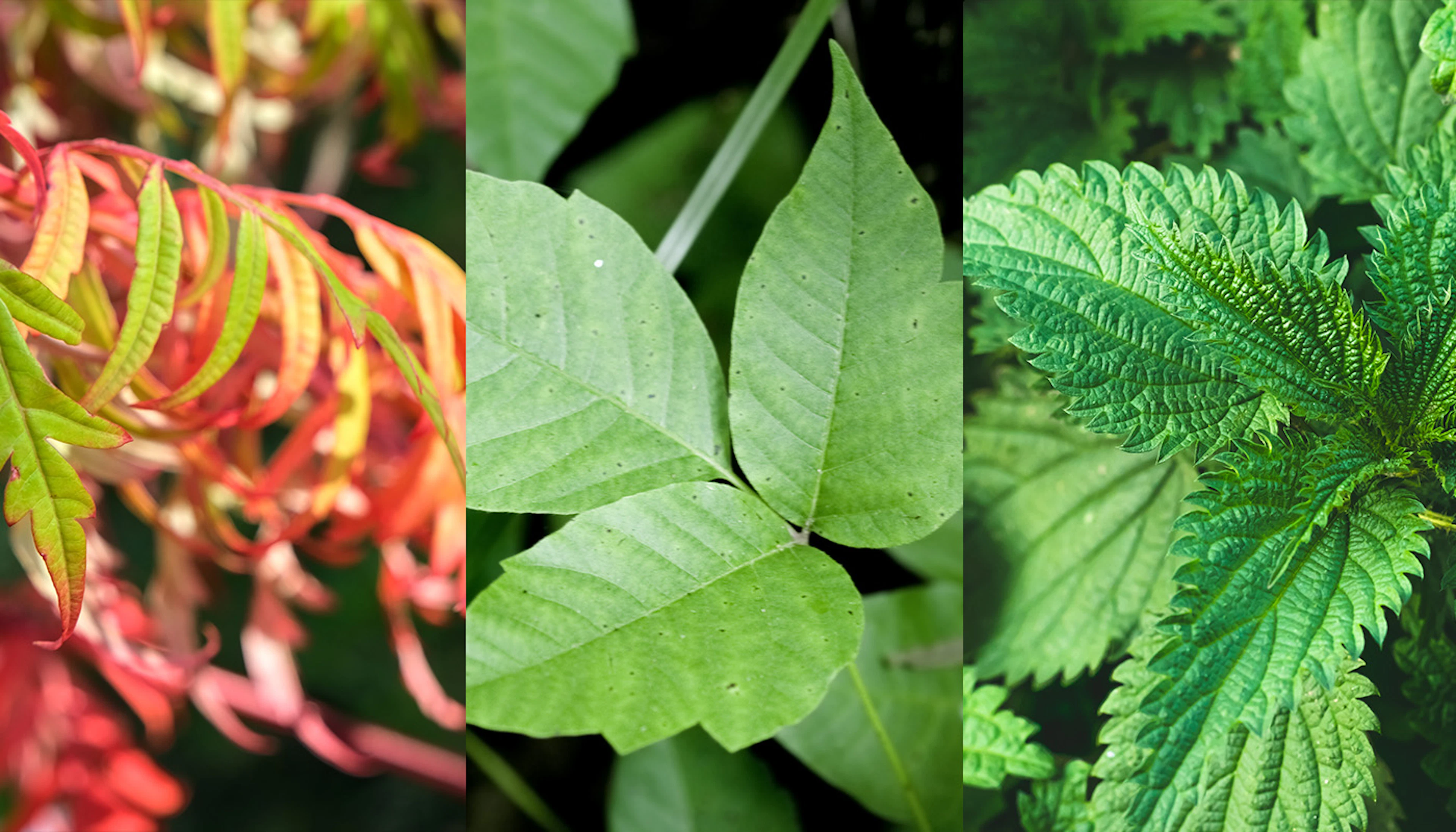
| Characteristics | Vine or low shrub with three shiny, pointed leaflets; turns red in fall |
| Cause of Reaction and Symptoms |
|
| Where It’s Found | Most of North America: forests, fields, roadsides |
| Relief Tips | Wash skin immediately with soap and water. Use corticosteroids and antihistamines. Cold compresses and calamine lotion may help. |
| Characteristics | Shrub or vine; leaves in groups of three resembling oak leaves; fuzzy texture |
| Cause of Reaction and Symptoms |
|
| Where It’s Found | Western U.S.: dry, wooded areas |
| Relief Tips | |
| Characteristics | Tall shrub or small tree with 7–13 leaflets and red stems |
| Cause of Reaction and Symptoms |
|
| Where It’s Found | Southeast U.S.: swamps, wetlands |
| Relief Tips | |
| Characteristics | Upright plant with jagged, heart-shaped leaves covered in fine stinging hairs |
| Cause of Reaction and Symptoms |
|
| Where It’s Found | Across North America: damp, shady areas |
| Relief Tips | |
OTC Medications for Relieving Discomfort from Poisonous Plants
Antihistamines
Antihistamines are oral medications that help reduce allergic reaction symptoms like swelling, redness, and itching. They're particularly effective for controlling the persistent itching that makes you want to scratch, which can worsen the rash and lead to infection.
First-generation antihistamines (may cause drowsiness):
- Benadryl (diphenhydramine): The drowsiness can actually be helpful if itching is keeping you awake at night
Second-generation antihistamines (less likely to cause drowsiness):
- Allegra (fexofenadine)
- Claritin (loratadine)
- Zyrtec (cetirizine)
Topical Corticosteroids
These are creams and ointments that reduce inflammation and soothe irritated skin. They work by calming your body's immune response, which helps relieve redness, itching, swelling, and discomfort.
- Creams: Light and soothing, best for moist or weepy blisters
- Ointments: Thicker and oilier, better for dry, scaly skin
Common over-the-counter options:
- Cortizone-10 Plus Cream
- Aveeno Anti-Itch Cream
Apply a thin layer to the affected area as directed, usually 1–2 times daily. Avoid using on broken skin or near the eyes unless advised by a doctor.
Tips to Prevent Poisonous Plant Rashes
The best treatment is avoiding contact altogether. Follow these steps to protect yourself:
Before You Go Outside
- Wear protective clothing – Long sleeves, long pants, closed-toe shoes, and gloves
- Tuck in your clothes – Tuck pants into socks and shirts into pants to minimize exposed skin
- Apply barrier creams – These can block plant oils from reaching your skin
- Learn plant identification – Know what poison ivy, oak, sumac, and stinging nettle look like in your area
While Outdoors
- Stay on marked trails – Avoid brushing against unknown plants
- Keep pets away from suspicious plants – They can carry oils on their fur and transfer them to you
After Outdoor Activities
- Wash immediately – Use soap and cool water as soon as possible to remove plant oils
- Clean under fingernails – Plant oils can hide there and spread to other areas
- Wash all clothes and gear – Plant oils can linger on fabric, shoes, tools, and backpacks
When to See a Doctor
While most plant rashes can be treated at home, seek medical attention if you experience:
Severe symptoms:
- Widespread, severe, or rapidly spreading rash
- Fever, chills, nausea, or difficulty breathing
- Rash on sensitive areas (face, eyes, or genitals)
Signs of infection:
- Skin that's oozing, crusting, or has pus
- Increased redness, warmth, or swelling around the rash
Treatment isn't working:
- Over-the-counter medications aren't providing relief after several days
- The rash is significantly interfering with daily activities
- You're unsure what caused the reaction