
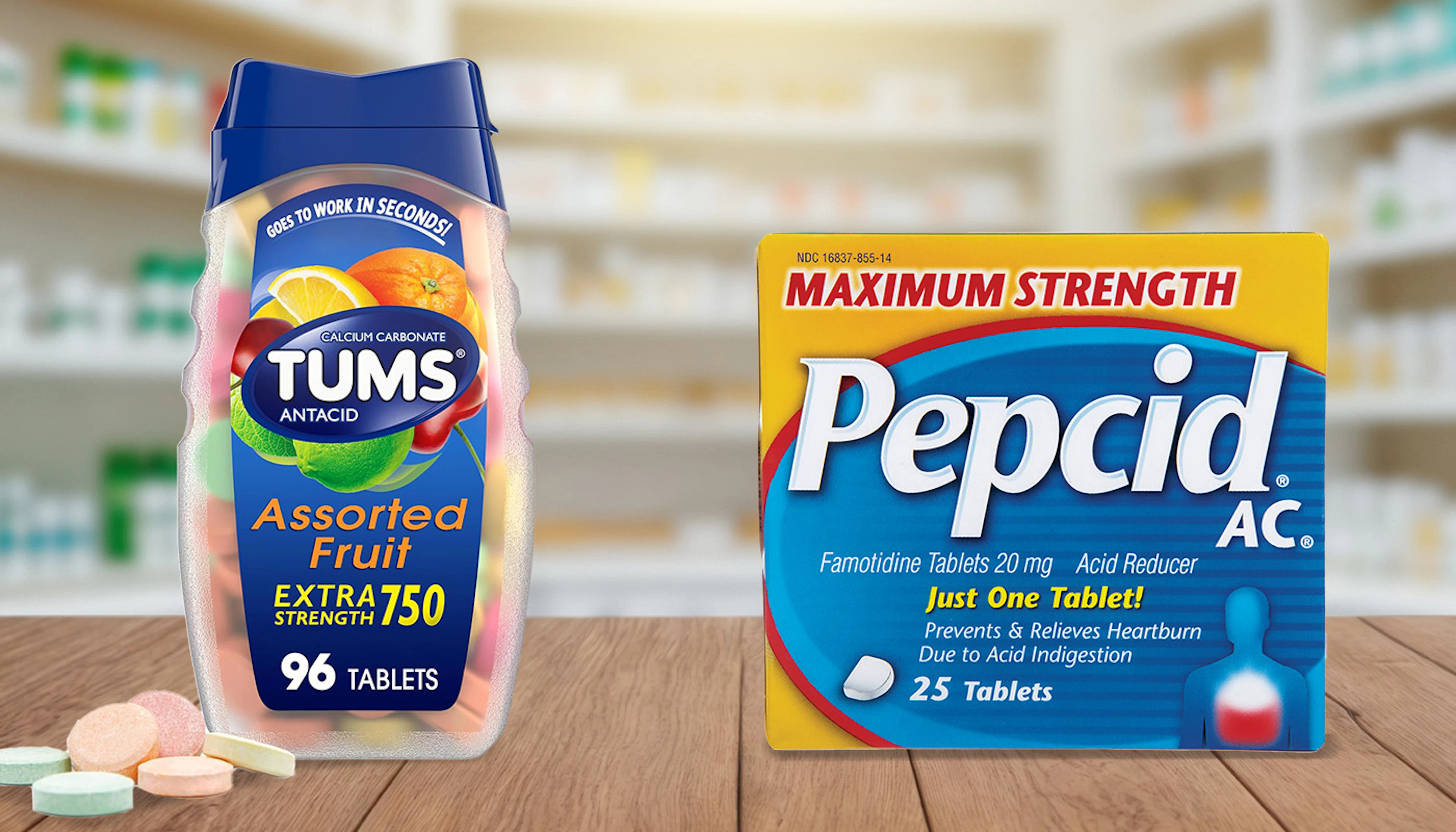


What Should I Take for Heartburn: Tums vs. Pepcid
- Tums (Calcium Carbonate)
- Use: Occasional heartburn, sour stomach, acid indigestion
- Mechanism: Neutralizes existing stomach acid.
- Relief: Fast-acting, short-term (up to 2 hours).
- Side Effects: Burping, constipation, gas.
- Warnings: Potential for hypercalcemia with long-term use; interacts with some medications.
- Pepcid (Famotidine)
- Use: For heartburn, acid indigestion; can prevent heartburn from certain foods/drinks.
- Mechanism: Reduces stomach acid production.
- Relief: Longer-lasting (up to 12 hours); can be used for prevention.
- Side Effects: Headache, dizziness, constipation, diarrhea; rare cognitive effects.
- Warnings: Potential for rebound heartburn; caution in elderly/kidney problems.
Both Tums and Pepcid are popular over-the-counter (OTC) medications used to relieve heartburn and acid reflux. While they address the same core issue, they work through different mechanisms.
Tums (Calcium Carbonate)
- Tums is an antacid. It works by directly neutralizing excess stomach acid.
- It provides rapid relief from heartburn, sour stomach, and acid indigestion.
- It's primarily used for immediate symptom relief.
Pepcid (Famotidine)
- Pepcid is a histamine-2 (H2) blocker. It reduces the amount of acid your stomach produces.
- It's used for both treating and preventing heartburn associated with acid indigestion or sour stomach, especially when triggered by certain foods or beverages.
How to Take Them (Adults)
Tums
- Chew 1-4 tablets as soon as symptoms occur.
- Expect relief within minutes, lasting up to 2 hours.
- Maximum Dose: Do not use Tums for more than 2 weeks without consulting a doctor. If symptoms persist beyond 2 weeks, seek medical advice for proper diagnosis and treatment.
Pepcid
- Swallow 1 tablet (do not chew) with a glass of water.
- Expect relief within minutes, lasting up to 12 hours.
- Maximum Dose: 2 tablets in 24 hours.
- Prevention of Heartburn: May prevent heartburn if taken 15-60 minutes before a meal.
Important Notes
Neither Tums nor Pepcid is intended for long-term use. ums should generally not be used for more than 2 weeks consecutively. Pepcid should not be used for more than 3 months without consulting a healthcare professional.
How They Work
Both Tums and Pepcid relieve heartburn, but they do so through distinct pharmacological mechanisms.
Tums: Direct Acid Neutralization
The active ingredient in Tums is calcium carbonate, which functions as an antacid. It directly neutralizes existing stomach acid through a chemical reaction, which provides rapid relief from heartburn, sour stomach, and acid indigestion.
The effects of Tums are short-lived, typically lasting for a few hours, making it suitable for occasional, immediate symptom relief.
Frequent use of Tums is not recommended for chronic heartburn (gastroesophageal reflux disease or GERD). Long-term use can lead to complications, and other medications are more appropriate for chronic conditions.
Pepcid (Famotidine): Histamine-2 Receptor Antagonism
The active ingredient in Pepcid is famotidine, which is a histamine-2 (H2) receptor antagonist. H2 receptors in the stomach lining stimulate the production of stomach acid. Famotidine blocks these receptors, thereby reducing acid secretion.
By reducing the amount of acid produced, Pepcid alleviates heartburn and acid indigestion. Famotidine does not neutralize existing stomach acid, it prevents future acid production.
Pepcid is available both over-the-counter (OTC) for occasional use and by prescription for long-term management of certain conditions, including GERD and peptic ulcers.
Pepcid AC offers longer-lasting relief, typically up to 12 hours. This extended duration makes it particularly effective for nighttime heartburn relief.
Pepcid can also be used preventatively. Taking it 15-60 minutes before consuming foods or beverages known to trigger heartburn (e.g., fatty, spicy, or acidic meals) can help minimize symptoms.
Side Effects
Both Tums and Pepcid are generally considered safe for occasional use, but they can cause side effects and carry potential risks, especially with prolonged or excessive use.
Tums Side Effects
- Burping (due to the release of carbon dioxide)
- Constipation
- Gas
These side effects are typically mild and transient.
Pepcid Side Effects
Prilosec side effects are typically uncommon and mild.
- Headache
- Dizziness
- Constipation
- Diarrhea
These side effects are uncommon.
If you experience any persistent or bothersome side effects from either medication, discontinue use and consult a healthcare provider.
Warnings and Precautions
Tums
- Hypercalcemia (High Calcium Levels):
- Prolonged or excessive use of Tums can lead to hypercalcemia (elevated calcium levels in the blood).
- This is particularly concerning for individuals with chronic kidney disease, as impaired kidney function can exacerbate calcium accumulation.
- Hypercalcemia can cause serious complications, including calcium deposits in blood vessels and organs.
- Drug Interactions: Tums can interfere with the absorption of certain medications, including:
- Levothyroxine
- Tetracycline antibiotics
- Iron supplements
- Certain antifungal medications
To minimize potential changes to medication absorption, take Tums at least 1 hour before and at least 4 hours after other medications. It's important to check with a healthcare provider before using Tums to ensure it is safe to use alongside your other medications.
Pepcid
- Rebound Heartburn: Prolonged, continuous use of Pepcid AC can sometimes lead to rebound heartburn, where symptoms worsen upon discontinuation of the medication.
- Cognitive Effects: Rarely, Pepcid has been associated with confusion, dizziness, and disorientation, especially in elderly individuals and those with kidney problems.
If you experience any unpleasant or unwanted side effects while using either medication, stop taking it and seek advice from a healthcare provider.
Cost
As over the counter products, both Tums and Pepcid can be purchased at any regular pharmacy without the need for a prescription. Both medications are available in a variety of products and formulations.
Different formulations and pack sizes have various price points. In general, Pepcid is slightly more expensive, costing a minimum of $15 per package. Most Tums products, in contrast, can be purchased for under $15.
Prices mentioned in this article are based on average retail price at major box chain pharmacy in the U.S. as of March 2, 2025.
| Tums | Pepcid | |
|---|---|---|
| Uses | Occasional heartburn, sour stomach, acid indigestion | Treatment and prevention of heartburn |
| Active Ingredient | Calcium carbonate (Antiacid) | Famotidine |
| Length of Use | Maximum 2 weeks | Maximum 3 months |
| How It Works | Neutralizes the acid in the stomach | Reduces the amount of stomach acid released into the stomach |
| Side Effects | Burping, constipation, gas | Headach, dizziness, constipation, diarrhea |
| Long-Term Risks | High calicium levels, many drug interactions | Rebound heartburn, confusion |
| Cost | Under $15 | Under $15 |
References:
- Chewable Tablets Original. (n.d.). Pepto Bismol; Procter & Gamble. Retrieved March 9, 2025, from https://pepto-bismol.com
- TUMS Regular Strength 500mg. (n.d.). TUMS; Haleon. Retrieved March 9, 2025, from https://www.tums.com
- How Do Antacids Work to Provide Heartburn Relief? (n.d.). TUMS; Haleon. Retrieved March 9, 2025, from https://www.tums.com
- Calcium Carbonate Chewable Tablets. (2024). Cleveland Clinic; Elsevier Inc. Retrieved March 9, 2025, from https://my.clevelandclinic.org
- Famotidine. (2022, January 15). MedlinePlus. Retrieved March 2, 2025, from https://medlineplus.gov
- PEPCID® (famotidine) tablets, for oral use. Food and Drug Administration. (1986; Revised 06/2018). Retrieved March 2, 2025, from https://www.accessdata.fda.gov

