Questions? Call us at 800-810-7790

- Buerger's Disease is a rare condition affecting blood vessels in arms and legs, causing inflammation and potential blockage, primarily in young adults with tobacco use.
- Symptoms include pain in hands and feet (especially with activity or cold), skin color changes, numbness, sores, and in severe cases, gangrene.
- This condition is strongly linked to tobacco use; quitting all forms of tobacco is the most important treatment to prevent worsening.
- Diagnosis involves assessing symptoms, checking blood flow with tests like ultrasound and angiogram, and ruling out other conditions.
- There is no cure for Buerger's disease. Treatment focuses on stopping tobacco, managing symptoms with medication, and in severe cases, amputation may be necessary.
Overview
Buerger's disease, also known as thromboangiitis obliterans, is a rare condition affecting the blood vessels of the arms and legs. It causes inflammation in the small and medium-sized arteries and veins, primarily in the hands and feet.
Over time, this inflammation can narrow or block the blood vessels, restricting blood flow to the skin, muscles, and other tissues. This reduced circulation can lead to pain, open sores, and in severe situations, tissue death (gangrene), particularly in the fingers and toes.
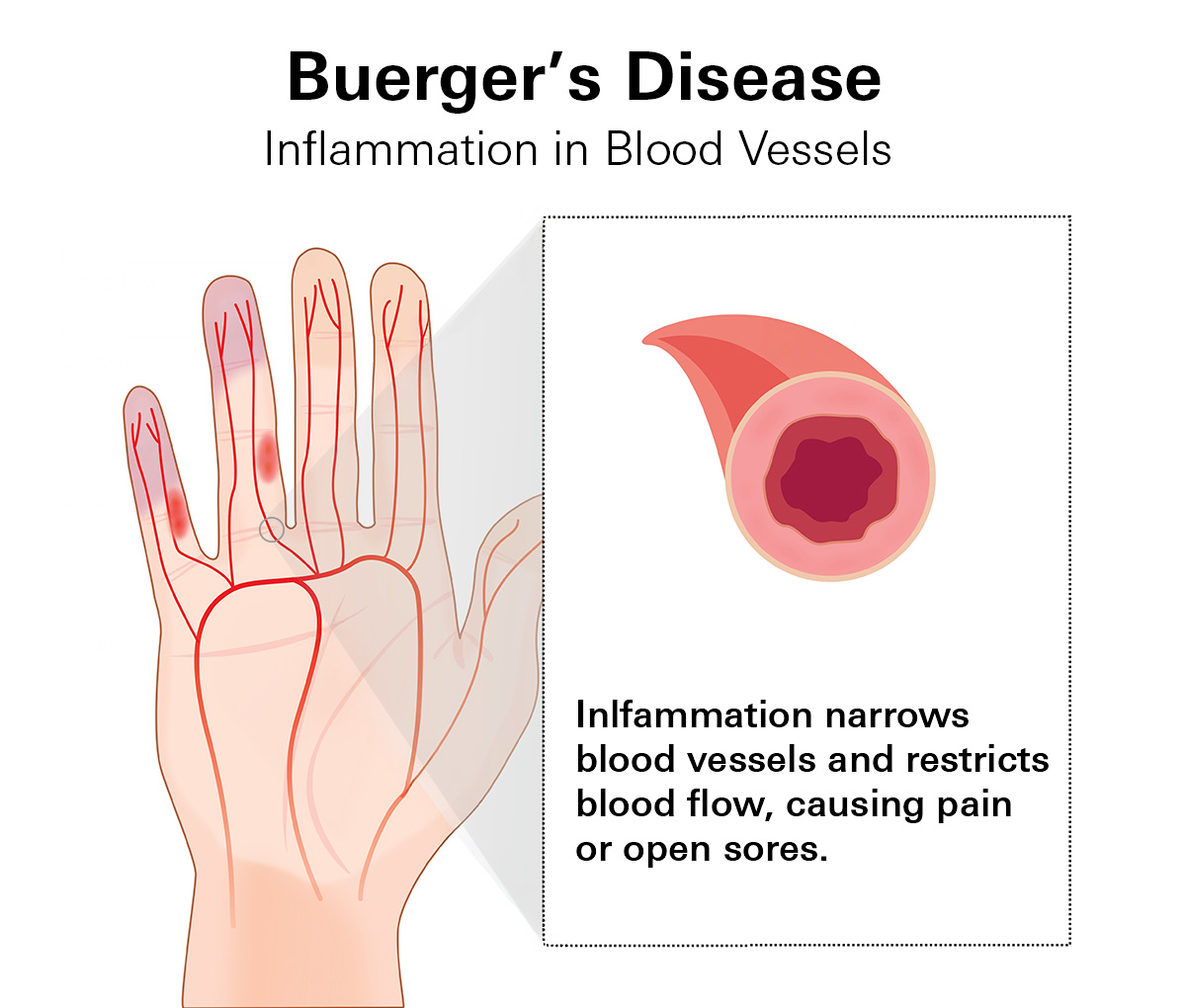
Buerger's disease predominantly affects young adults with a history of tobacco use. In fact, nearly all individuals with this condition are smokers or use other forms of tobacco.
The onset of Buerger's disease is gradual. Initial symptoms often include pain in the hands or feet during walking or physical activity, due to insufficient blood supply to the muscles.
As the disease progresses, the damage can become permanent. In advanced cases, complete loss of circulation can result in the death of parts of the fingers or toes.
Prevalence
Buerger's disease is a rare condition that typically affects individuals between the ages of 20 and 45. It is almost exclusively found in people with a history of smoking or tobacco use and is not seen in children or older adults.
The number of new cases of Buerger's disease has decreased over time. In 1947, approximately 104 out of every 100,000 Americans were affected. Today, depending on the population, this number has fallen to between 12.6 and 20 cases per 100,000. This decline is likely due to both reduced tobacco use and more precise diagnosis of similar conditions.
Men are more frequently affected than women, with a male-to-female ratio of about 3 to 1. However, this difference is decreasing in some areas as smoking becomes more prevalent among women.
While Buerger's disease is not usually a direct cause of death, it can lead to serious complications. Between 1999 and 2007, data from the Centers for Disease Control and Prevention (CDC) linked 117 deaths in the United States to this condition.
Despite the low mortality rate, Buerger's disease can cause long-term issues. If patients continue to smoke after diagnosis, nearly half will require one or more amputations within about eight years.
Symptoms
Buerger's disease often begins subtly, with symptoms that may initially seem mild or intermittent.
Early Symptomsn
One of the first signs is often discomfort in the hands or feet during activity, such as walking or prolonged hand use. This pain occurs due to poor blood flow.
Another common early symptom is pain in the hands or feet that can occur at rest or during movement, especially in cold temperatures. This pain may start in the fingers or toes and can feel sharp, cramping, or burning. While it might subside with rest, it can become more persistent as the disease progresses, even when you are not active.
Other Symptoms
- Coldness or numbness in the fingers or toes
- Changes in skin color: pale, red, or bluish skin
- Thin or shiny skin on the hands or feet
- Small, painful sores (ulcers) on fingers or toes that don’t heal well
- Darkened or blackened areas on the skin (tissue damage)
- Weak or missing pulses in the arms, legs, hands, or feet
- Fingers or toes very sensitive to cold or turning white or blue when exposed to cold, known as Raynaud’s phenomenon
Advanced Stages
As blood flow continues to worsen, the tissues may begin to break down due to lack of oxygen. In severe cases, this can lead to gangrene, where skin and deeper tissues die. This serious complication may necessitate amputation to prevent the spread of infection
Causes
While the precise cause of Buerger's disease remains unclear, tobacco use is overwhelmingly implicated.
- Strong Link to Tobacco: Nearly all individuals diagnosed with Buerger's disease have a history of tobacco use, whether through smoking cigarettes, cigars, or pipes, or using smokeless tobacco. The disease is extremely rare in individuals who have never used tobacco.
- Tobacco as a Trigger: It appears that tobacco triggers irritation in the lining of blood vessels. Over time, this irritation leads to swelling and inflammation, causing the blood vessels to narrow.
- Reduced Blood Flow: As the disease progresses, blood flow to the arms, hands, legs, and feet worsens. This can cause pain and tissue breakdown.
- Possible Immune System Involvement: Some researchers suggest that the immune system may play a role. The body might react to tobacco by mistakenly attacking the blood vessels, leading to inflammation, blockage, and long-term damage.
- Potential Genetic Factors: Some individuals with Buerger's disease have a family history of the condition or share certain genetic traits. However, this link is still under investigation.
- Tobacco Use is Key: Notably, the condition typically does not develop or worsen without continued tobacco use.
Diagnosis
Diagnosing Buerger's disease involves a combination of evaluating your symptoms, assessing blood flow, and excluding other conditions that might present with similar issues.
Blood Flow Testing
This can be done using small blood pressure cuffs and ultrasound imaging. These tests show changes in blood flow to your fingers or toes and help identify areas with reduced circulation.
Imaging Scans
To get a clearer view of your blood vessels, your provider may order a CT scan or an MRI. These scans create detailed images of your arteries and help determine if blood is flowing normally.
Angiogram
An angiogram is a detailed test to examine the small arteries in your hands and feet. During this procedure, a thin tube called a catheter is placed into a blood vessel, and a special dye is injected. The dye travels through your bloodstream and makes your arteries visible on X-rays.
This test can reveal the exact areas where the vessels are blocked or narrowed, which is common in Buerger’s disease.
Blood Tests
Although there is no blood test to confirm Buerger’s disease, your provider may order blood work to rule out other conditions.
These tests might include checking for diabetes, autoimmune diseases like lupus or scleroderma, and blood clotting disorders.
Heart Testing
In some cases, an echocardiogram, a special type of heart ultrasound, may be done. This test checks if clots are forming in the heart and traveling to other parts of the body.
Biopsy (Rarely Needed)
If the diagnosis is still unclear after all other tests, a biopsy may be done. This involves removing a small sample of a blood vessel to examine under a microscope.
Treatment
Tobacco Cessation
Currently, there is no cure for Buerger's disease. However, the key of treatment is the complete cessation of all tobacco use.
Even one or two cigarettes daily can keep the disease active and hinder the healing of blood vessels. This strict avoidance includes all forms of tobacco: smoking (cigarettes, cigars, pipes), chewing tobacco, and even nicotine replacement products. Continued nicotine intake in any form can perpetuate or worsen the disease.
Once tobacco use is stopped, other treatments may be implemented to improve blood flow, manage symptoms, and protect the affected areas from further damage.
Improving Blood Flow
Your doctor might recommend medications that help to relax and widen your blood vessels. These are often considered if you also experience Raynaud's phenomenon, a condition causing your fingers or toes to become cold, numb, or discolored.
- Iloprost: Given through a vein (IV), iloprost can reduce pain and slow tissue damage in patients who have recently quit tobacco. It may also lower the risk of an amputation.
- Bosentan: Bosentan is used to treat high blood pressure in the lungs but may improve blood flow in Buerger’s disease. It is not a standard treatment but may be considered in certain cases.
Symptom Management
If you experience persistent pain, your healthcare provider may prescribe anti-inflammatory drugs or other pain relievers.
In cases where ulcers or infections develop in the affected fingers or toes, antibiotics may be given to promote healing and prevent further complications.
Surgery as a Last Resort
Surgery to reopen or bypass blocked arteries is generally not effective for Buerger's disease. This is because the disease affects numerous small segments of arteries, making surgical interventions difficult or impossible.
- Amputation: In severe cases, amputation may become necessary. This is considered only when there is uncontrolled pain, non-healing wounds, or gangrene to prevent the spread of infection.
Prevention
The most effective way to prevent this condition is to completely avoid all forms of tobacco. See advice on how to quit smoking.
This includes not only cigarettes but also cigars, chewing tobacco, snuff, and even nicotine-containing products like vaping devices or nicotine replacement therapies. All of these can initiate or sustain the disease process.
For individuals already diagnosed with Buerger's disease, complete cessation of tobacco use is the only proven method to slow down or stop the progression of the condition.
Continuing to smoke or use nicotine products, even in small amounts, perpetuates inflammation and elevates the risk of tissue damage and potential amputation.
Minimizing exposure to secondhand smoke may also be beneficial, particularly for individuals with existing poor circulation or those identified as being at risk. While secondhand smoke is less likely to cause the disease on its own, it can still negatively impact blood vessel health.
Related Topics
Quitting Smoking: A Difficult But Important Decision
Smoking cigarettes is well known as being harmful to your health. Still, many people knowingly continue to smoke due to both the addictive nature of smoking and the difficulty associated with quitting.
Read more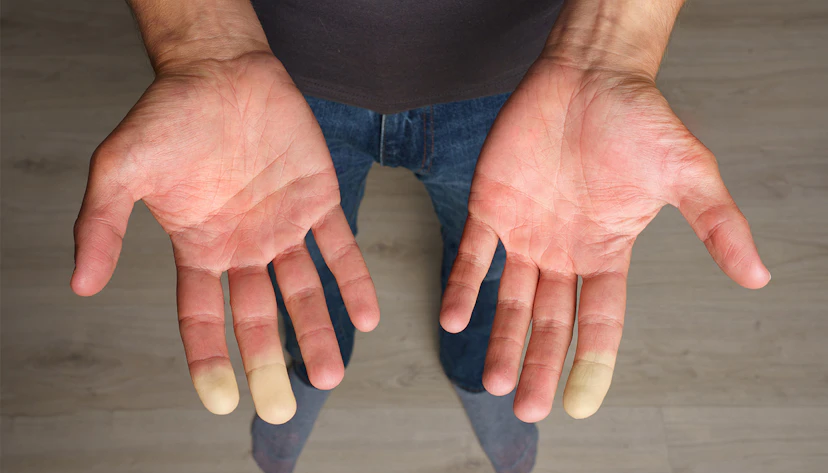
Raynaud's Syndrome
Raynaud's condition, also known as Raynaud's phenomenon or disease, impacts blood flow to extremities such as fingers and toes, and sometimes the nose, ears, or lips. The small blood vessels that supply blood to the skin become significantly narrower than normal, which reduces blood flow to the affected areas.
Read more
Using Bupropion to Quit Smoking
Bupropion is a medication used to treat various conditions. It’s often referred to as an antidepressant, as it can be used to treat major depressive disorder (MDD). However, it is also approved by the FDA as a medication to aid in smoking cessation.
Read more