Questions? Call us at 800-810-7790

- Croup is a viral infection that causes swelling in the airway, leading to a barking cough, hoarse voice, and sometimes noisy breathing.
- It mostly affects children ages 6 months to 3 years, with most cases being mild and lasting 3–5 days.
- Symptoms often worsen at night but usually improve with comfort, fluids, and home care.
- Severe cases may need medical treatment, if breathing becomes labored or noisy at rest.
Overview
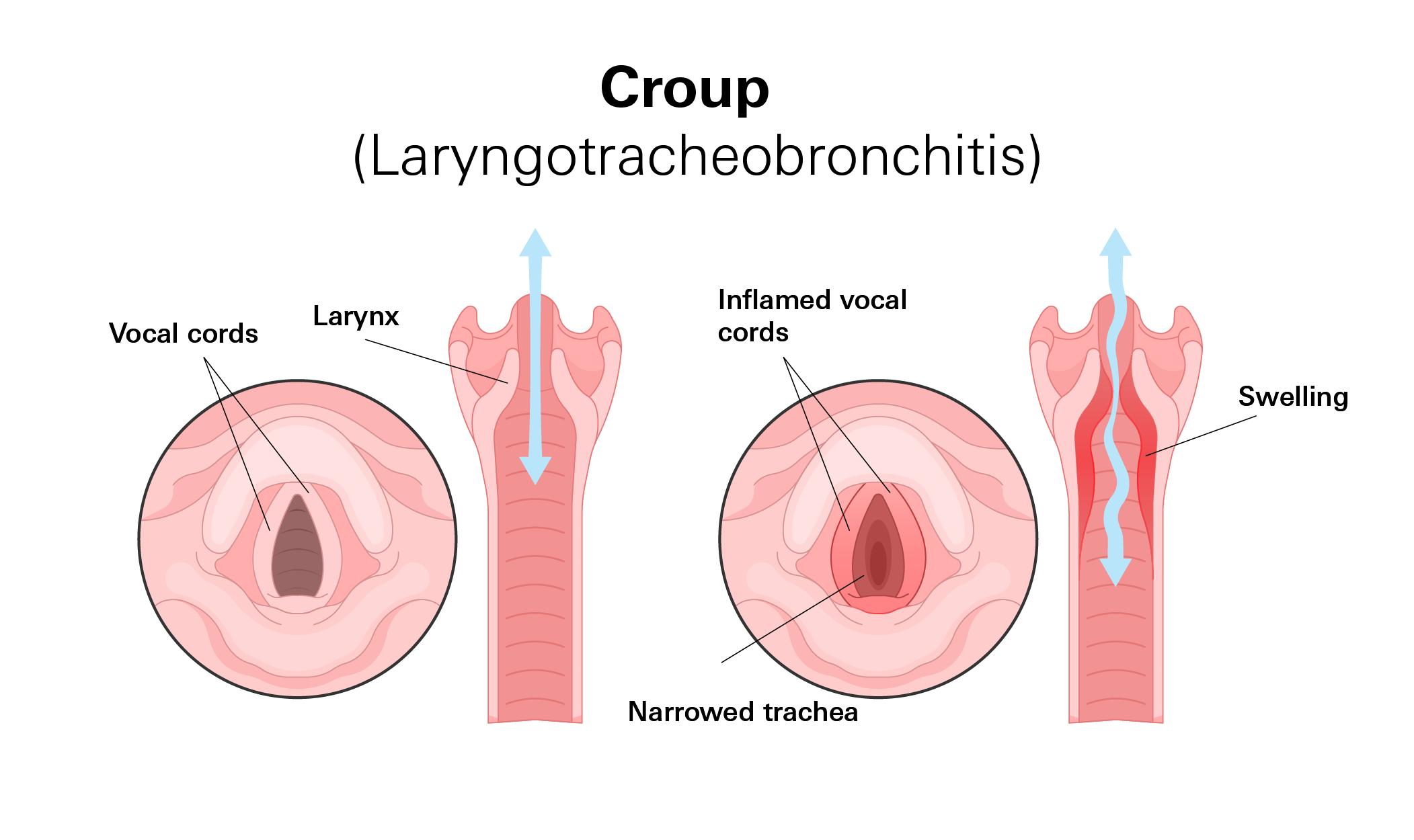
Croup, also known as laryngotracheobronchitis, is a common respiratory illness in young children caused by a viral infection. It leads to swelling in the upper airways, primarily the voice box (larynx) and windpipe (trachea).
Because a young child’s airway is so narrow, this swelling can make breathing difficult and produce hallmark symptoms like a barking cough, a hoarse voice, and a high-pitched squeaking sound when breathing in (stridor). While it can be frightening for parents to hear, most cases are mild and resolve on their own in 3 to 5 days.
Prevalence
Croup is a very common childhood illness, most prevalent in children between 6 months and 3 years old, with the peak incidence occurring around age 2. Older children and adults may contract the virus but typically experience milder symptoms due to wider airways. Most children will have at least one episode of croup before they enter school. Cases are most common in the fall and early winter.
Symptoms
Croup often starts with symptoms similar to a regular cold, such as a runny nose and a mild fever. The most noticeable symptoms typically appear as the swelling in the airways increases:
- A "seal-like" barking cough: This is the most distinctive symptom and is often worse at night.
- A hoarse or raspy voice: The swelling around the vocal cords causes this change in sound.
- Stridor: A high-pitched, squeaking noise that occurs when the child breathes in. This sound can be particularly alarming and usually worsens when the child is agitated or crying.
- Fever: This is typically low-grade.
- Irritability or restlessness: This can be a sign that the child is struggling to breathe.
While these symptoms can sound severe, most children with croup remain alert and can drink fluids.
However, seek immediate medical attention if your child exhibits any of the following emergency signs:
- Stridor that is present even when the child is calm.
- Labored or rapid breathing.
- Difficulty swallowing or catching their breath.
- Pale or bluish skin around the mouth or nose.
- The child appears unusually tired or lethargic.
Causes
Croup is caused by a virus that infects the upper airways. The most common culprit is the parainfluenza virus, but other viruses such as influenza, respiratory syncytial virus (RSV), and adenoviruses can also be responsible.
The infection is highly contagious and spreads through respiratory droplets from coughing or sneezing. The virus can also be transmitted by touching surfaces contaminated with the virus.
Risk Factors
Several factors can increase a child's risk of developing croup:
- Age: The most significant risk factor is age. Children between 6 months and 3 years are most susceptible due to their small, narrow airways.
- Season: Croup cases increase during the fall and winter months, aligning with the peak seasons for the viruses that cause the illness.
- Crowded environments: Children in daycares or preschools are at a higher risk of contracting croup and other illnesses due to close contact with other children.
- Underlying health conditions: Children with a history of asthma, allergies, or other respiratory conditions may be more prone to severe symptoms if they contract croup.
Diagnosis
Croup is typically diagnosed through a clinical examination, as its hallmark symptoms are easily recognizable. The distinctive barking cough and noisy breathing (stridor) often allow doctors to identify croup quickly.
During the exam, a healthcare provider will:
- Listen to breathing: Use a stethoscope to check for wheezing, stridor, or reduced airflow, which indicate airway inflammation.
- Examine the throat and airway: Look for redness or swelling in the upper airway, including the epiglottis, to confirm inflammation consistent with croup.
In most cases, these steps are sufficient to confirm croup and assess its severity.
If symptoms are atypical or another condition is suspected, doctors may order:
- Neck or chest X-rays to rule out other causes like a foreign object or different airway obstruction.
- On X-ray, croup may show a “steeple sign”, a narrowing of the airway below the vocal cords that resembles a church steeple.
Blood tests and viral swabs are rarely necessary, as the clinical history and physical exam usually provide enough information.
Treatment
Most cases of croup are mild and can be managed at home. The primary goal is to keep the child calm and breathing comfortably.
Home Care
- Keep your child calm: Crying can worsen airway swelling and make breathing more difficult.
- Use cool air or steam: Bringing your child into the cool night air or a steamy bathroom can help reduce swelling and ease noisy breathing.
- Stay hydrated: Make sure your child drinks plenty of fluids to prevent dehydration.
- Medications: Over-the-counter pain relievers like acetaminophen or ibuprofen can be used to manage fever.
Medical Treatment
For more severe cases, medical intervention may be necessary. In a clinic or hospital setting, doctors may use the following treatments:
- Corticosteroids: Medications like dexamethasone are used to reduce airway inflammation and swelling.
- Nebulized epinephrine: For children with significant breathing difficulty, a fast-acting inhaled medication can quickly shrink swollen airways. This treatment is given under close medical supervision.
- Oxygen support: Supplemental oxygen may be administered if breathing is very labored.
- Hospitalization: In rare instances, a child may need to be admitted to the hospital for ongoing breathing support or repeated treatments.
Prevention
While there's no guaranteed way to prevent croup, you can reduce the risk of infection by practicing good hygiene.
- Wash hands frequently: Regular handwashing with soap and water is one of the best ways to prevent the spread of viruses.
- Avoid close contact: Keep sick children away from others to prevent the spread of germs.
- Clean surfaces: Regularly clean and disinfect frequently touched surfaces and objects like doorknobs and toys.
Ultimately, most children will get croup at least once, but the good news is that it usually sounds more frightening than it is and passes within a few days.