Questions? Call us at 800-810-7790

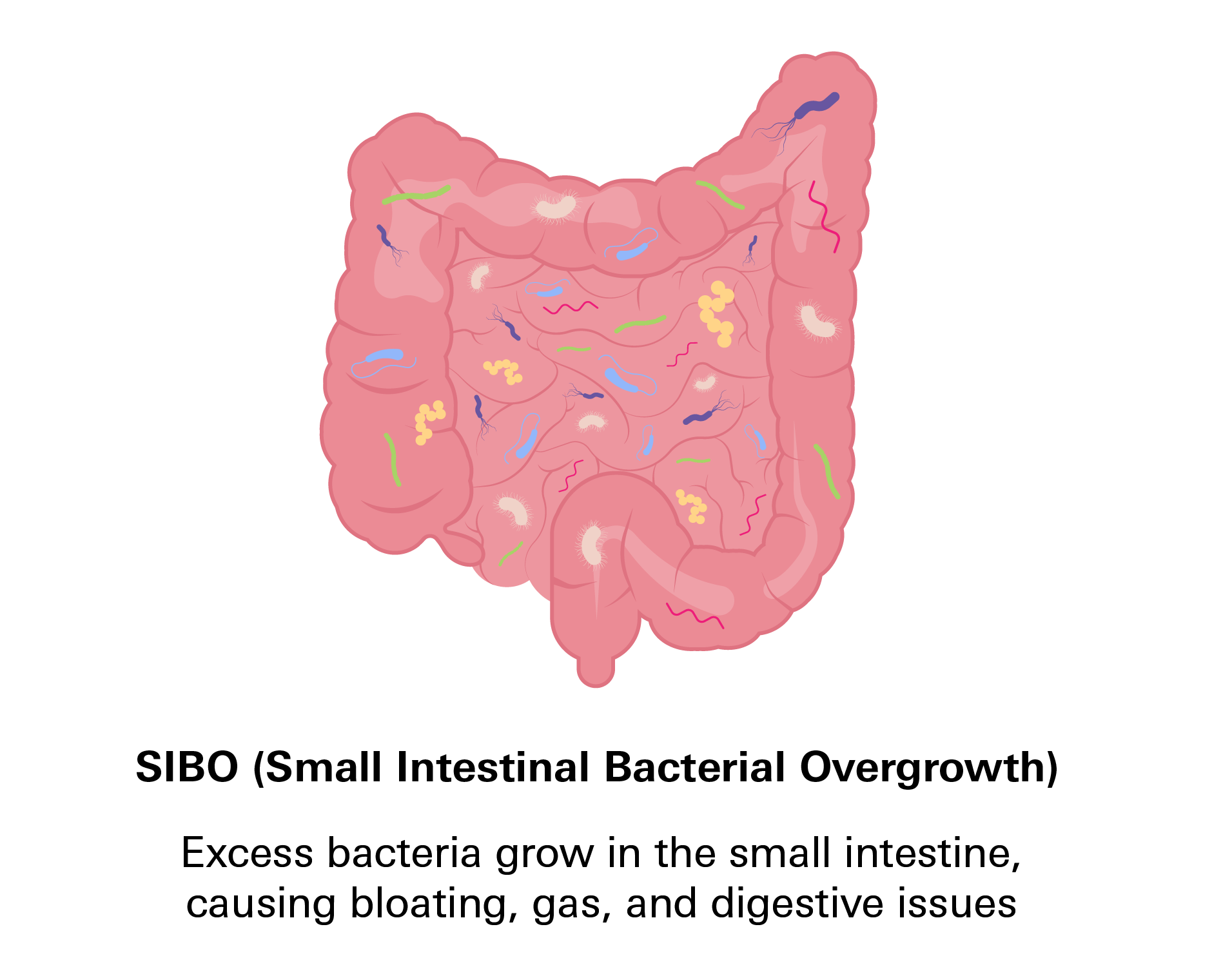
- SIBO happens when too many bacteria grow in the small intestine, where they don’t belong.
- It causes common digestive issues like bloating, abdominal pain, and gas, along with diarrhea or constipation.
- SIBO shares many of the same symptoms as IBS, but SIBO is caused by a bacterial imbalance, while IBS is a functional disorder of the gut.
- Diagnosis is usually done with a breath test that detects bacterial gases.
- SIBO is typically treated with antibiotics to reduce the bacteria, in addition to dietary changes to help manage symptoms.
Overview
Small Intestinal Bacterial Overgrowth (SIBO) happens when too many bacteria build up in the small intestine. Normally, most gut bacteria live in the large intestine, where they help break down food. When bacteria move into the small intestine or grow there in large numbers, they disrupt normal digestion. This disrupts digestion and nutrient absorption, leading to a range of uncomfortable symptoms.
Why it matters:
The misplaced bacteria ferment food, especially carbohydrates, too early in the digestive process. This can cause bloating, gas, and nutrient deficiencies. Over time, untreated SIBO may lead to malnutrition and complications like osteoporosis or anemia.
SIBO often overlaps with other digestive conditions, particularly irritable bowel syndrome (IBS). In fact, studies show that up to 1 in 3 people with ongoing digestive issues may have SIBO, and the rates are even higher among those with IBS. Age, certain medical conditions, and medications (long-term use of acid blockers) can increase the risk.
Symptoms
SIBO can look different from person to person. Some people have mild or occasional issues, while others deal with symptoms after nearly every meal.
- Bloating (often worsening after meals)
- Excess gas (may be hard to control or especially foul-smelling)
- Abdominal pain or cramping (often in the middle of the belly)
- Diarrhea, constipation, or both
- Feeling full quickly (early satiety, even after small amounts of food)
- Nausea or indigestion
- Unexplained weight loss (less common)
- Nutrient deficiencies (often low iron or vitamin B12)
Because these symptoms overlap with many other gut conditions, SIBO isn’t always recognized right away. If digestive problems keep coming back or don’t improve with standard treatments, SIBO may be worth testing for.
Causes
SIBO usually does not happen on its own. It develops when something slows down or disrupts the normal movement and balance in the gut. When food and fluids move too slowly, bacteria have more time to linger and grow in the small intestine.
Underlying causes can include:
- Slow gut motility (movement): Conditions like diabetes (especially with nerve damage), scleroderma, or hypothyroidism can slow digestion.
- Surgery or structural changes: Intestinal surgeries, scar tissue, or pouches in the intestine can trap bacteria or alter normal flow.
- Low stomach acid: Normally, acid kills bacteria before they reach the small intestine. Acid-suppressing drugs (like PPIs) or natural decreases with age can allow bacteria to survive.
- Changes in gut environment (pH): Certain conditions or medications may make the small intestine more favorable for bacterial growth.
Risk Factors
You may be at higher risk for SIBO if you have:
- Older age
- Diabetes
- Hypothyroidism
- Scleroderma
- Celiac or Crohn’s disease
- Previous abdominal surgeries
- Use of PPIs or other acid-reducing drugs
- oor gut motility or obstructions
Often, it’s a combination of these factors that leads to SIBO. Anything that slows digestion or alters the gut’s environment can increase the risk.
Diagnosis
The most common way to diagnose SIBO is with a breath test. It’s non-invasive, simple, and doesn’t involve needles or large equipment.
How it works:
- You fast overnight (only water for about 12 hours).
- In the morning, you drink a sugary solution, usually glucose or lactulose.
- After that, you breathe into a small device every 15 to 30 minutes over a few hours.
The test measures hydrogen and methane in your breath. These gases are produced by bacteria. If the levels rise too early, it suggests that bacteria are present in the small intestine, where they shouldn’t be.
It’s important to know that the test isn’t perfect. Some people have a negative test but still have symptoms, while others test positive without major issues. That’s why doctors look at the whole picture, your test results, symptoms, and medical history, before making a diagnosis.
If your doctor suspects a structural problem (like scar tissue from past surgery), they may recommend imaging tests such as an X-ray or CT scan.
There’s also a more direct but less common option: taking a fluid sample from the small intestine. This is considered more accurate, but it’s more invasive and not usually the first step.
Treatment
The main goal of treatment is to reduce the number of bacteria in the small intestine and relieve symptoms. The best approach depends on the cause and severity.
Antibiotics
Doctors usually start with antibiotics to control bacterial growth. Common choices include:
- Rifaximin
- Ciprofloxacin
- Metronidazole
Which one is used depends on your symptoms, medical history, and sometimes the type of gas found on your breath test.
Diet Changes
- A low-FODMAP diet is often recommended. It limits certain carbohydrates that easily ferment in the gut, which can reduce bloating and gas.
- While diet changes don’t cure SIBO, they can make symptoms easier to manage during treatment.
- Some doctors may suggest elimination diets or rotating food plans, tailored to your response and tolerance.
Ongoing treatment
SIBO isn’t always fixed with one round. Some people need repeated treatments, while others focus on long-term management to prevent symptoms from returning.
Prevention
There’s no guaranteed way to prevent SIBO, but certain habits may lower the risk of it coming back:
- Eat smaller meals – This helps food move more easily through the stomach and intestines. Large meals can sit longer and slow digestion.
- Maintain a balanced diet – Include fiber, protein, and enough calories without overloading the digestive system.
- Address underlying conditions – Managing issues like diabetes, hypothyroidism, or digestive motility problems can reduce your chances of recurrence.