Questions? Call us at 800-810-7790

- Trachoma is an infectious eye disease caused by the bacterium Chlamydia trachomatis. It is a leading cause of preventable blindness worldwide, especially in developing countries.
- Symptoms includes conjunctival inflammation, eyelid scarring, eye discharge, photophobia, and blurred vision.
- It spread through direct contact with infected eye, nose, or throat secretions, or indirectly via contaminated objects and flies.
- Poor hygiene, inadequate sanitation, crowded living conditions, and exposure to flies in unsanitary environments are major risk factors.
- Effective treatment includes antibiotics, surgical interventions for advanced cases, and improved hygiene and sanitation practices to prevent transmission. The WHO's SAFE strategy (Surgery, Antibiotics, Facial cleanliness, and Environmental improvement) is crucial for control efforts.
Overview
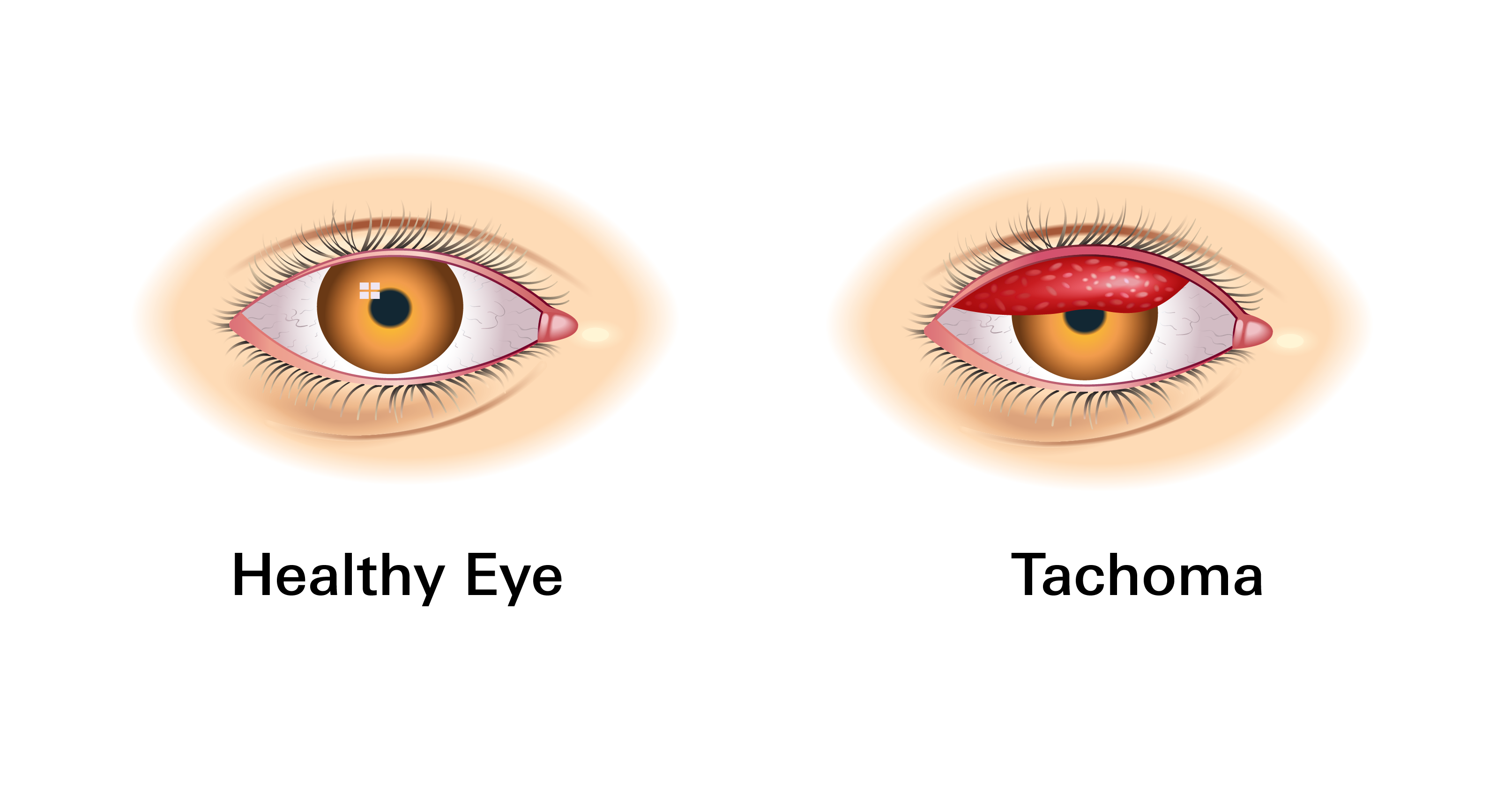
Trachoma is a highly contagious bacterial infection of the eye caused by the bacterium Chlamydia trachomatis. This infection predominantly affects the conjunctiva—the thin, clear membrane covering the white part of the eye and the inside of the eyelids. Trachoma is recognized as the leading infectious cause of blindness worldwide.
The disease progresses through several stages, starting with mild irritation and inflammation of the conjunctiva. If left untreated, repeated infections can lead to scarring of the inner eyelids. This scarring can cause the eyelashes to turn inward, a condition known as trichiasis, which can scratch the cornea and potentially lead to blindness.
Despite being rare in developed countries, trachoma remains a significant public health issue in many parts of the world, particularly in areas with poor sanitation and limited access to healthcare. Efforts to eliminate trachoma are ongoing, with significant progress being made in many regions.
Prevalence
Trachoma is rare in the United States, with cases typically limited to specific populations. The World Health Organization (WHO) and the Centers for Disease Control and Prevention (CDC) have identified that trachoma may occur among Native American communities living in impoverished conditions with limited access to healthcare.
Globally, trachoma remains a significant public health issue, particularly in regions with poor sanitation and limited access to healthcare. It is estimated that trachoma is responsible for the blindness or visual impairment of approximately 1.9 million people worldwide. Blindness caused by trachoma is irreversible, underscoring the urgency of prevention and treatment efforts. As of June 2022, around 125 million people live in areas with a high prevalence of trachoma and are at risk of developing trachoma-related blindness.
Trachoma predominantly affects low-income, rural communities in regions with limited access to clean water and sanitation facilities. The most affected areas include countries in sub-Saharan Africa, the Middle East, Asia, and parts of Latin America, with Ethiopia, Sudan, Nigeria, and Pakistan being particularly impacted.
In contrast, trachoma is not considered a significant public health concern in the United States due to improvements in sanitation, hygiene, and healthcare infrastructure.
Symptoms
Trachoma is a chronic eye infection characterized by a progression of stages, each with distinct symptoms. The World Health Organization (WHO) has defined five stages of trachoma to guide diagnosis and treatment:
Stages of Trachoma
- Trachomatous Follicular (TF)
- Presence of five or more follicles (small, raised bumps) on the inner surface of the upper eyelid.
- Indicates active infection and ongoing transmission.
- Trachomatous Inflammation (TI)
- Intense inflammation of the upper eyelid, often with redness and swelling.
- Represents a more severe stage of infection and increased risk of complications.
- Trachomatous Scarring (TS)
- Development of scar tissue on the inner surface of the eyelid.
- Results from chronic inflammation and can lead to further complications.
- Scars may appear as white lines, bands, or sheets on the inner surface of the eyelids.
- Trachomatous Trichiasis (TT)
- Inward-turning eyelashes caused by eyelid scarring.
- Can result in corneal abrasions, pain, and vision loss.
- TT is a significant complication of trachoma and requires surgical intervention to prevent further damage to the cornea and preserve vision.
- Corneal Opacity (CO)
- CO represents advanced disease with irreversible damage to the cornea.
- Prolonged inflammation, scarring, and ulceration of the cornea lead to cloudiness and reduced visual acuity.
- Leads to significant vision impairment and blindness.
Common Symptoms
In addition to the stage-specific symptoms, individuals with trachoma may experience:
- Conjunctival inflammation: Redness, irritation, and discomfort of the conjunctiva (the clear membrane covering the white part of the eye).
- Eyelid changes: Thickening, distortion, or scarring of the eyelids. Scarring can contribute to the development of trichiasis, a condition where the eyelashes turn inward and rub against the surface of the eye.
- Eye discharge: A thick, mucus-like discharge that can be yellow or green.
- Photophobia: Sensitivity to light.
- Blurred vision: Decreased vision due to corneal scarring. In severe cases, this can ultimately result in blindness.
Early detection and treatment are crucial to prevent the progression of trachoma and its devastating consequences.
Transmission
Trachoma is primarily spread through direct contact with the infected eye or nose secretions of an individual. This can occur when:
- Hand-to-eye contact: An infected person touches their eyes or nose and then touches another person's face or hands, transferring the bacteria.
- In the United States, although trachoma is rare, transmission can occur in close environments such as crowded households or institutional settings where individuals have frequent physical contact.
- Contaminated objects: Sharing items like towels, clothing, or bedding with an infected person can lead to the spread of trachoma.
- Flies: Flies can act as carriers of the bacteria, transferring it from an infected person to another through contact with their eyes or nose.
Factors contributing to the transmission of trachoma include:
- Poor hygiene: Inadequate handwashing and facial cleanliness facilitate the spread of the bacteria.
- Crowded living conditions: Close contact between individuals increases the risk of transmission.
- Lack of sanitation: Unsanitary environments promote the survival and spread of the bacteria.
Causes
Trachoma is a contagious bacterial eye infection caused by the bacterium Chlamydia trachomatis. This bacterium thrives in the moist environment of the eye and multiplies within the conjunctival cells. The resulting inflammation leads to the development of small, raised bumps called follicles on the inner surface of the eyelids. Chronic infection and inflammation can cause scarring, which ultimately leads to the severe complications of trachoma, including trichiasis (in-grown eyelashes) and corneal opacity (clouding of the cornea).
Risk Factors
Several factors increase the risk of contracting and spreading trachoma:
- Poor hygiene: Inadequate facial washing, particularly among children, facilitates the spread of the bacteria.
- Crowded living conditions: Close contact between individuals promotes the transmission of the infection.
- Fecal-oral transmission: Flies can carry the bacteria from infected feces to the eyes, contributing to the spread of the disease.
- Lack of sanitation: Poor sanitation practices create an environment conducive to the bacteria's survival and spread.
- Geographic location: Trachoma is more prevalent in regions with hot and dry climates, and in rural areas with limited resources. These conditions favor the survival and spread of the bacterium.
- Age and gender: Children, especially those aged 1 to 5 years, are most susceptible to trachoma. Children are more susceptible due to their close contact with others and their developing hygiene habits. Additionally, women are disproportionately affected by the disease, potentially due to their increased involvement in childcare and household chores.
Understanding these causes and risk factors is essential for developing effective strategies to prevent and control trachoma. Improving hygiene, enhancing sanitation, reducing fly exposure, and targeting high-risk populations can help mitigate the spread of this blinding disease.
Diagnosis
To diagnose trachoma, an eye doctor will conduct a thorough examination, which includes asking about your medical history and recent travel to areas where the disease is prevalent. The doctor will perform an eye exam to look for signs such as follicles on the inner eyelids and signs of inflammation. Additionally, the doctor may numb your eye and take a sample of any fluid present for lab testing to determine if the infection is caused by Chlamydia trachomatis.
Treatment
Treatment for trachoma focuses on controlling the infection, preventing its spread, and managing complications. Key approaches include:
- Antibiotics: The primary treatment is antibiotic medication, typically azithromycin (Zithromax), administered orally. This is effective in reducing the bacterial load and preventing transmission. In areas with limited access to azithromycin, topical tetracycline eye ointment may be used as an alternative.
- Mass drug administration (MDA): In regions with high trachoma prevalence, distributing antibiotics to entire communities is often employed to control the disease effectively.
- Surgery: Surgical interventions are necessary to correct the complications of trachoma, such as trachomatous trichiasis (in-grown eyelashes) and corneal opacity (clouding of the cornea). These procedures are performed by trained ophthalmologists.
- Hygiene promotion: Improving facial hygiene and sanitation practices is crucial in preventing the spread of trachoma and reducing the risk of reinfection.
- Environmental improvements: Addressing underlying factors like poor sanitation and lack of clean water is essential for long-term trachoma control. Efforts focus on improving water, sanitation, and hygiene (WASH) infrastructure.
These combined efforts, known as the SAFE strategy (Surgery, Antibiotics, Facial cleanliness, and Environmental improvement), are critical in preventing and controlling trachoma, thereby reducing the burden of this blinding disease. Early detection and comprehensive management are essential to prevent complications and protect vision.
Prevention
Preventing trachoma focuses on a multi-pronged approach called SAFE.
- S - Surgery
- Treating Trichiasis: Advanced trachoma can lead to trichiasis, where eyelashes turn inward and scratch the cornea, potentially causing blindness.
- Surgical Intervention: Trained healthcare professionals perform a procedure to reposition the eyelashes away from the eye, preventing further damage.
- A - Antibiotics
- Combating Infection: Antibiotics effectively treat active trachoma infections, reducing the bacterial reservoir in a community.
- Lowering Transmission Risk: By treating infections, the risk of spreading the bacteria from person to person significantly decreases.
- F - Facial Cleanliness
- Hygiene Practices: Regular face washing with clean water and soap removes the bacteria that cause trachoma.
- Reducing Transmission: This is especially critical in areas with limited sanitation. Good hygiene practices, like hand and face washing, can significantly reduce the spread of trachoma.
- E - Environmental Improvements
- Breaking the Cycle: Improving environmental hygiene, including access to clean water and sanitation facilities, helps disrupt the transmission cycle.
- Reducing Exposure: This minimizes exposure to the bacteria that cause trachoma.
By implementing the SAFE strategy, communities can effectively prevent trachoma, reduce susceptibility, and eliminate this preventable cause of blindness.
Related Topics

Timolol for Glaucoma and Ocular Hypertension
Timolol (pronunciation: tai·muh·laal) treats pressure inside the eye caused by glaucoma, ocular hypertension, hemangioma, and other eye diseases. Treating high pressure in the eye helps to prevent blindness.
Read more
What Is a Diabetic Eye Exam?
Diabetic retinopathy is a specific condition that results from damage to the blood vessels in the retina caused by prolonged high blood sugar levels. It progresses through stages from mild to severe, with increasing damage and potential vision loss as the condition advances.
Read more