Questions? Call us at 800-810-7790

Are you statin intolerant?
- Statin intolerance is reported in 5–30% of people1
- Rates are lowest in clinical trials and higher in observational studies
- Muscle pain is the #1 reason people stop taking their statin
What is Statin Intolerance?
According to a 2022 Clinical Statement from the National Lipid Association (NLA)1:
Statin intolerance is defined as one or more adverse effects associated with statin therapy, which resolves or improves with dose reduction or discontinuation, and can be classified as complete inability to tolerate any dose of a statin or partial intolerance, with inability to tolerate the dose necessary to achieve the patient-specific therapeutic objective. To classify a patient as having statin intolerance, a minimum of two statins should have been attempted, including at least one at the lowest approved daily dosage.
Explained in less complex words...
Statin intolerance is when someone cannot take their statin therapy due to side-effects or adverse events they experience.
Importance of Taking a Statin
The role of cholesterol in the development of cardiovascular disease is well established. Statins are the first-line of defense used to lower cholesterol levels, in particular bad cholesterol, or LDL-C.
Over time, if your cholesterol levels are not managed, cholesterol can build up on your artery walls and result in the formation of plaques. When these plaques become too large, or if they rupture, they can result in blockage of blood flow to your organs, such as your heart or brain, which can result in a heart attack or stroke.
See if Zypitamag is a good fit for you.
Related article
Important Cholesterol Markers You Should Know About
Excess cholesterol can interact with other blood constituents to produce plaque. Your artery walls get coated with plaque, leading to a serious disease called atherosclerosis—the buildup of fats, cholesterol and other substances in and on the artery walls.
Read more
How Statins Lower your Risk of Cardiovascular Disease
There are multiple mechanisms by which statins help to lower the risk of someone having a cardiovascular event (heart attack or stroke)1.
- Plaque stabilization—most heart attacks and strokes are caused by unstable plaques which rupture and block the flow of blood to your organs in your body like your heart and brain. Statins can help to stabilize these.
- Reduction in inflammation—high inflammation is been associated with a higher risk of developing a heart attack or stroke.
- Regression of plaques—statins have been shown to reduce plaques that have already been formed in your artery walls.
How Common is Statin Intolerance?
A 2022 analysis2 of 176 studies which included over 4 million patients aimed to determine the overall presence of statin intolerance worldwide.
Their findings: Overall prevalence = 9.1%
Who is at Risk of having Statin Intolerance?
Statin Side Effect Risk Factors2:
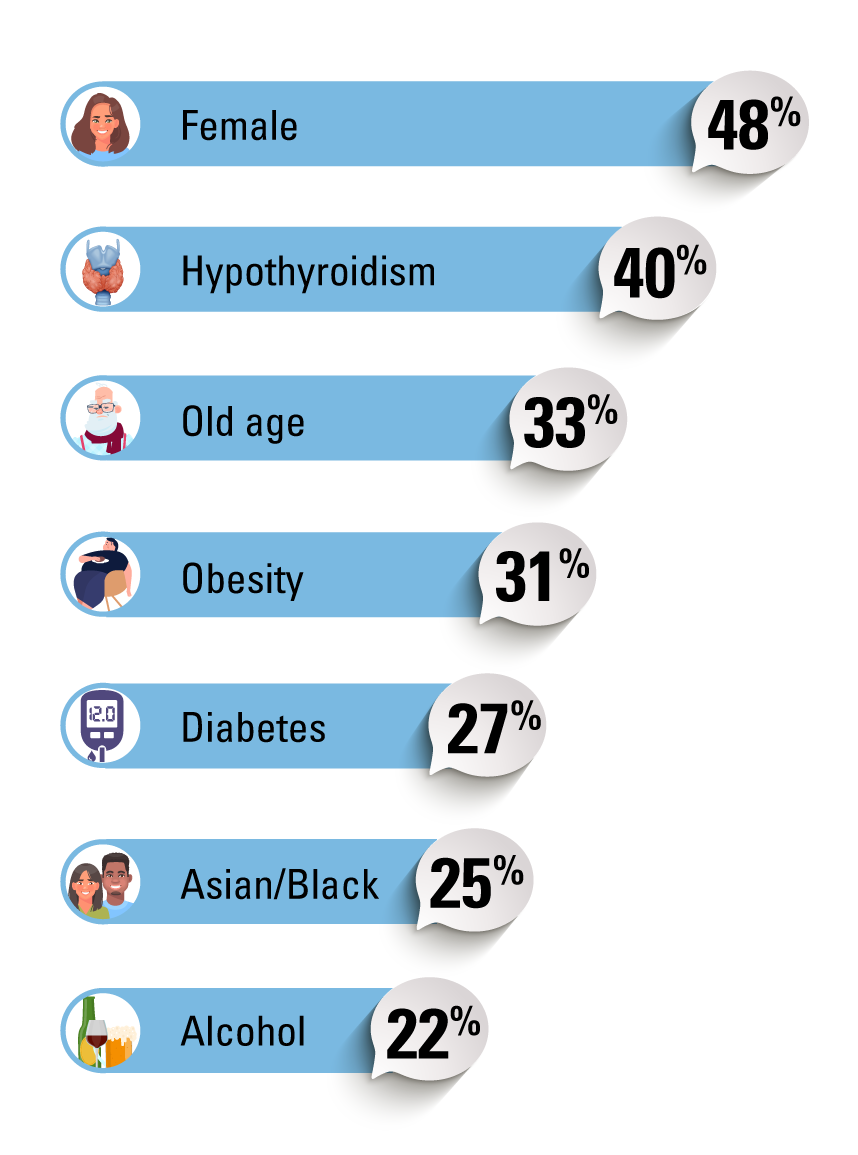
Here is the full list of risk factors that they found2:
- Being Female: 47.9% increased risk
- Increasing Age: 33.1% increased risk
- Age ≥ 65 years: 31.2% increased risk
- Asian Race: 25.4% increased risk
- Black Race: 29.3% increased risk
- Obesity: 30.6% increased risk
- Hypothyroidism: 37.6% increased risk
- Diabetes Mellitus: 26.6% increased risk
- Antiarrhythmics: 31.2% increased risk
- Alcohol Consumption: 22% increased risk
- Exercise: 23.2% increased risk
- High statin dose: 37.5% increased risk
- Use of Calcium Channel Blockers: 35.5% increased risk
- Chronic Renal Failure: 25.2% increased risk
- Chronic Liver Disease: 24.3% increased risk
Some factors that were not associated with a higher risk of statin intolerance included2:
- Smoking
- Arterial hypertension
- Duration of statin therapy
- White race
- Caucasian race
- Hispanic race
- Warfarin
- Depression: 12.2% decreased risk
Modifiable Risk Factors for Statin Intolerance
While some of the risk factors listed above are beyond your control, some of them are modifiable1. Addressing those are important, especially if you are experiencing statin intolerance. Modifiable risk factors include:
- Managing your thyroid levels (for those living with hypothyroidism)
- Limiting potential drug-drug interactions — certain statins have reduced potential for interacting certain medications than other statins
- Limiting alcohol use
- Limiting strenuous exercise
- Managing Vitamin D deficiency
- Reducing your weight
- Proper management of diabetes
Poor adherence to statin therapy has been associated with a higher risk for adverse cardiovascular outcomes such as heart attack or stroke.
Types of Statin Intolerance
When thinking about statin intolerance it's important to remember that it is a continuum. Some people experience partial intolerance, whereas other may have complete intolerance. Complete intolerance is rather uncommon (<5% of people).
- Partial Intolerance: Ability to tolerate a lower dose of statin than is required to achieve the desired therapeutic objective
- Complete Intolerance: Inability to tolerate any dose or regiment of any statin
There is also clinical evidence to suggest that some statin intolerance is a nocebo effect. A nocebo effect occurs when negative expectations of a treatment cause the treatment to have a more negative effect than it otherwise would have. While this is the case for some people, it doesn't make it any less relevant, as they are real perceived side-effects which your healthcare provider should address.
Compare Statins
Factors to Consider when Choosing a Statin
There are many important factors to consider when choosing a statin. Some things to discuss with your healthcare provider include:
- What statin intensity do I require?
- How will my body process the statin?
- What statin is the safest?
- Which statin has the fewest side effects?
What if you are Experiencing Statin Intolerance?
There are multiple strategies your healthcare provider may try if you are experience statin intolerance.
- Lowering the dose of your statin
- Switching statins
- Non-daily dosing
Most people who experience statin intolerance or statin side effects can find an acceptable treatment regimen to help manage their cholesterol and lower their risk of developing cardiovascular disease.
For some patients, a lower dose statin alone may not be enough to manage their cholesterol. In these cases combination therapy may be an option.
Speak With Your Doctor
If you are having issues with your statin be sure to talk with your healthcare provider to discuss your options. And be sure to tell them to send your prescription to Marley Drug where you can save up to 95% on your medications compared to your local pharmacy.
The information on this page was informed by the following sources:
- Cheeley MK. et al. NLA scientific statement on statin intolerance: a new definition and key considerations for ASCVD risk reduction in the statin intolerant patient. Journal of Clinical Lipidology (2022) 16(4):P361-375. https://doi.org/10.1016/j.jacl.2022.05.068
- Bytyçi I. et al. Prevalence of statin intolerance: a meta-analysis. European Heart Journal (2022) 43(34):3213-3223. doi: 10.1093/eurheartj/ehac015