
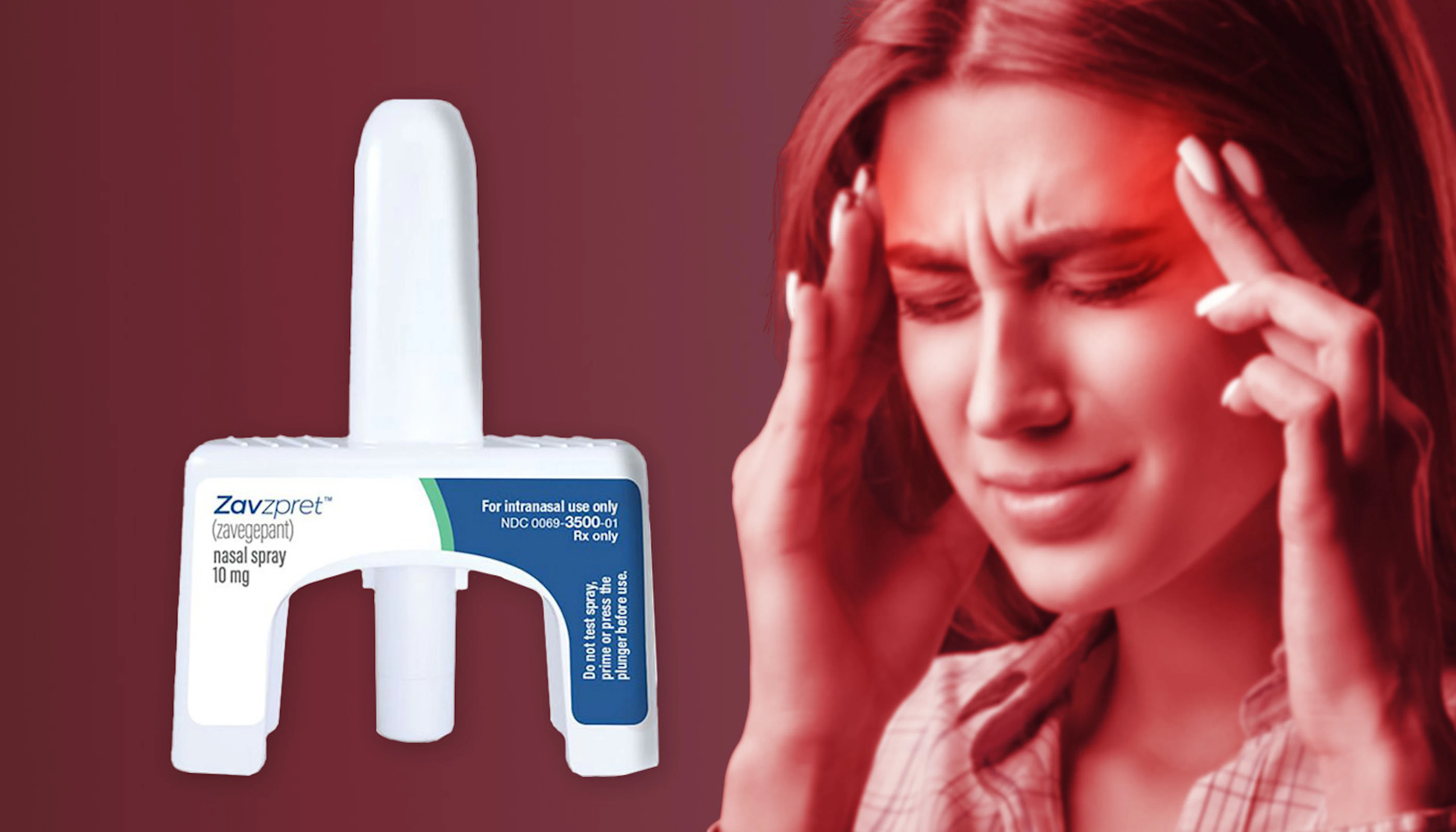


Zavzpret for Migraine Relief: What Patients Should Know About This New Nasal Spray
- Zavzpret is a nasal spray used to treat acute migraine attacks in adults, with or without aura.
- It works by blocking CGRP, a protein that triggers migraines, to reduce inflammation and pain.
- Administer one 10 mg spray into a single nostril per migraine attack, up to eight times monthly.
- Many patients experience rapid relief, some within 15 minutes, with about 60% finding significant relief in two hours.
- Common side effects include taste changes, nausea, nasal discomfort, and vomiting; serious allergic reactions are rare.
Migraines affect over 39 million people in the U.S., including both adults and children. They’re a leading cause of disabling headaches worldwide.
In March 2023, the FDA approved Zavzpret (zavegepant), a fast-acting nasal spray for treating migraines as they occur. Its unique delivery and mechanism of action distinguish it from other treatments.
What Is Zavzpret?
Zavzpret is a prescription nasal spray used to treat acute migraine attacks in adults, with or without aura.
An aura is a temporary change in brain function that may occur before or during a migraine. Symptoms can include flashing lights, blind spots, tingling sensations, or speech difficulties. While not everyone experiences an aura, it can be a warning sign of an impending migraine.
Zavzpret is not a preventative medication; it does not reduce the frequency of migraines. Rather, it is used only after a migraine has begun. The medication has not been studied in children and is currently approved for adult use only.
How Zavzpret Works
Zavzpret (zavegepant) belongs to a class of medications called CGRP receptor antagonists. CGRP, or calcitonin gene-related peptide, is a protein that increases during a migraine attack. It contributes to inflammation and dilated blood vessels, both of which intensify pain and prolong the migraine.
Zavzpret blocks CGRP from binding to its receptors. This action:
- Reduces inflammation
- Narrows widened blood vessels.
- Helps relieve migraine pain and associated symptoms like nausea and light sensitivity
How Fast Does Zavzpret Work?
Zavzpret's rapid onset of action is a key benefit.
- Some patients reported relief in as little as 15 minutes.
- About 60% experienced significant relief within 2 hours.
- Nearly 25% were completely pain-free at the 2-hour mark.
- Many resumed normal activities within 30 minutes.
Dosage and Use
Zavzpret comes as a ready-to-use nasal spray. Each device contains a single 10 mg dose and is sprayed into just one nostril—there’s no need to use both sides.
Follow these steps for proper use:
- Check the expiration date before opening.
- Open the blister pack only when you are ready to use it.
- Keep the device upright.
- Gently insert the tip into one nostril.
- Press the plunger firmly to release the dose.
- Use only one spray in a 24-hour period.
Do not press the plunger until you are ready to take the medication. Once activated, the device cannot be reused. Do not use more than eight sprays per month. If you experience migraines more often, consult your doctor about daily preventive treatments.
Store Zavzpret at room temperature (68°F to 77°F). Do not freeze it, and keep it in the blister pack until needed. Always store it out of reach of children.
Safety and Side Effects
Most people experience mild to moderate side effects. Unlike some migraine medications, Zavzpret typically does not cause drowsiness, which may be helpful for those needing to stay alert.
Talk to your doctor before using Zavzpret if you have any of the following conditions:
- High blood pressure
- Circulation issues in your hands or feet
- Kidney or liver disease
- If you are pregnant, might become pregnant, are breastfeeding, or plan to breastfeed
It's not yet known whether Zavzpret affects a developing baby or passes into breast milk. Your doctor can help you weigh the benefits and risks if you are pregnant or nursing.
Always provide your doctor with a complete list of all medications, supplements, and vitamins you take, including over-the-counter products, as some may interact with Zavzpret.
Common Side Effects
- Altered or lost sense of taste
- Nausea
- Nasal discomfort
- Vomiting
Serious but Rare Side Effects
- Allergic reactions (rash, facial swelling, difficulty breathing)
- Increased blood pressure
- Raynaud’s phenomenon (cold, pale, or discolored fingers/toes)
If you notice anything unusual after using Zavzpret, contact your healthcare provider immediately.
Who Should Avoid Zavzpret
Do not use Zavzpret if you’ve had an allergic reaction to zavegepant or any of its ingredients. Symptoms may include:
- Swelling of the face, lips, or throat
- Trouble breathing
- Skin rash
Talk to Your Doctor
While Zavzpret can quickly relieve migraine symptoms, it isn't the right choice for everyone. Your doctor can review your health history, current medications, and migraine patterns to determine if it's a suitable option for you.
Be sure to share any history of allergies, circulation concerns, blood pressure issues, or liver or kidney conditions. Also, inform your doctor if you are pregnant or breastfeeding.
Discuss what migraine treatments you've tried in the past, what worked, what didn't, and how often your migraines occur. If your migraines are becoming more frequent or harder to control, it may be time to reassess your treatment plan and explore whether Zavzpret could play a role.