
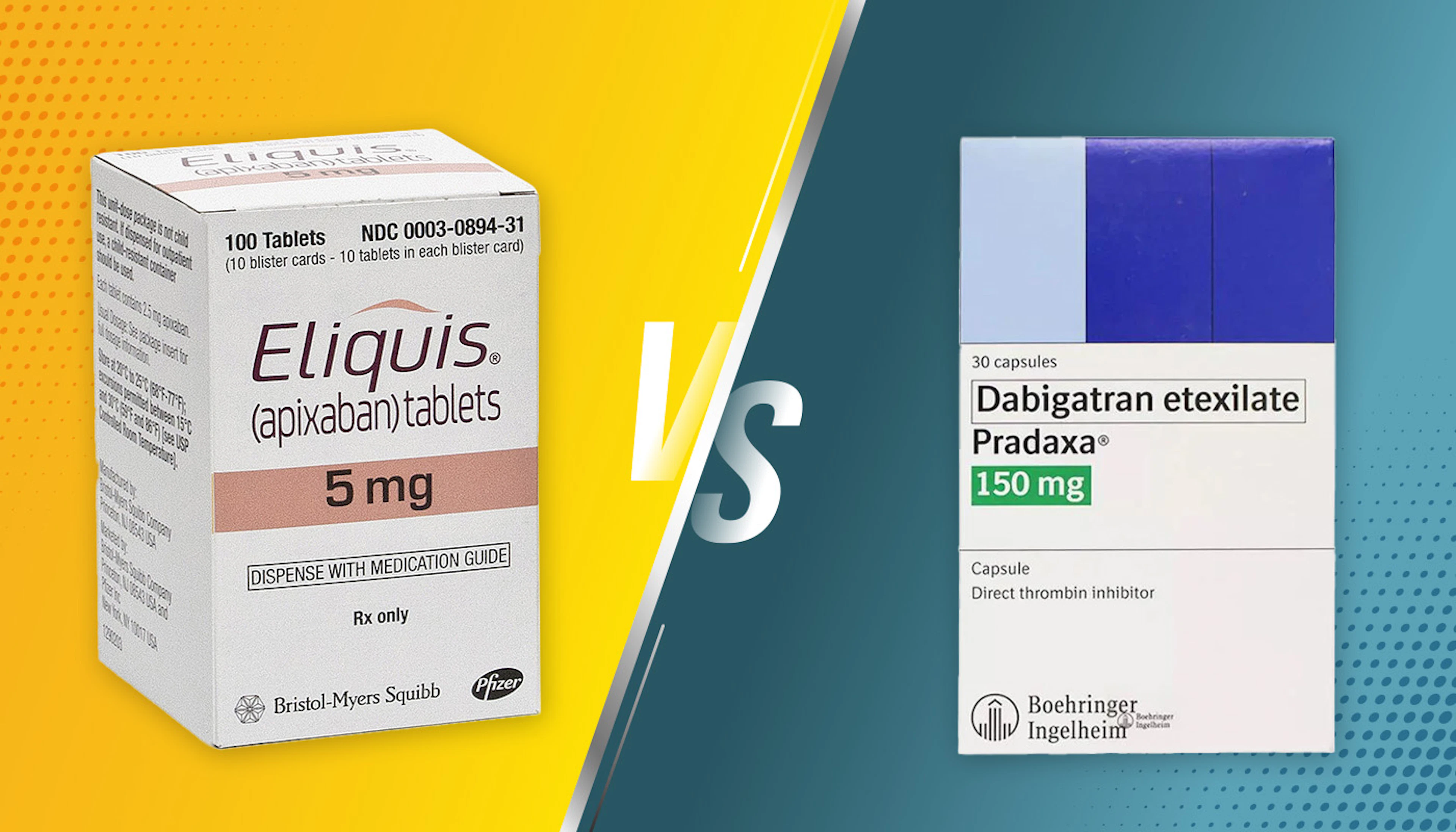


Eliquis Too Expensive? Why Some Patients Are Turning to Pradaxa
- Eliquis and Pradaxa are both direct oral anticoagulants (DOACs) used to prevent blood clots and strokes.
- Eliquis works by blocking factor Xa, while Pradaxa blocks thrombin, targeting different steps in the clotting process.
- Both are effective, but Eliquis may have a slightly lower risk of major bleeding and fewer stomach side effects than Pradaxa.
- Eliquis is brand only and costly, while Pradaxa has a more affordable generic version available ($59.95/month).
Eliquis has become a trusted option for preventing blood clots and strokes, thanks to its safety and effectiveness. However, it comes at a steep price ($500-$600/month), especially for those paying out of pocket. With no generic available until at least 2028, many patients are left searching for alternatives.
Pradaxa, which works similarly and is available as a generic, can cost as little as $59.95 per month. In this article, we’ll explore how Pradaxa stacks up against Eliquis and whether it might be a better fit for your budget and health needs.
Download the info sheet to take to your doctor's appointment
What Are They?
Eliquis and Pradaxa both belong to a group called direct oral anticoagulants (DOACs). These medicines help prevent harmful blood clots that can cause strokes, deep vein thrombosis (DVT), or pulmonary embolism (PE).
DOACs are preferred over older blood thinners like warfarin, because they do not require frequent blood tests or strict dietary restrictions. This makes them easier for most patients to manage.
How Do They Work?
Although both Eliquis and Pradaxa are in the same class of blood thinners, they work by targeting different parts of the clotting system to stop clots from forming:
- Eliquis (Apixaban) works by blocking a specific protein known as Factor Xa. By limiting this protein's activity, it stops the clot formation process early on.
- Pradaxa (Dabigatran) works by directly blocking a key enzyme called thrombin. Thrombin is the final key step in creating a blood clot, so blocking it effectively reduces clot activity.
What Do They Treat?
Both medications are similar in treating and preventing clots, but Eliquis has broader approvals, including for younger children.
| Use | Eliquis | Pradaxa |
|---|---|---|
| Reduce stroke risk in non-valvular atrial fibrillation (AFib) | ✓ | ✓ |
| Treat DVT or pulmonary embolism (PE) | ✓ | ✓ (after 5–10 days of another anticoagulant) |
| Prevent DVT/PE after hip/knee replacement | ✓ | ✓ (hip only) |
| Prevent DVT/PE recurrence | ✓ | ✓ |
| Treat/prevent VTE in children (after initial therapy) | ✓ (from birth) | ✓ (ages 8–18) |
How to Take Them
Both are taken twice daily, depending on the dose and condition.
Eliquis
- Tablets (2.5 mg or 5 mg); twice daily, with/without food.
- Can crush and mix with water, juice, or applesauce. Also available as liquid/suspension for kids.
Pradaxa
- Capsules (75 mg, 110 mg, or 150 mg); twice daily, with/without food.
- Swallow whole (don't crush/chew/open). Store in original bottle; use within 4 months once opened.
Eliquis is more flexible for swallowing issues or kids, while Pradaxa's capsules require careful handling to maintain effectiveness.
Side Effects
All DOACs increase bleeding risk. Eliquis tends to have fewer gastrointestinal issues.
| Side Effect | Eliquis | Pradaxa |
|---|---|---|
| Bleeding/bruising | Common | Common |
| Nosebleeds | Common | Common |
| Fatigue/weakness (from anemia) | Possible | Possible |
| Nausea | Possible | Possible |
| Stomach pain/indigestion | Less common | More common |
| Headache/dizziness | Possible | Possible |
Safety and Bleeding Risk
Studies confirm both protect against clots and strokes effectively, but they differ in safety profiles. A 2025 review notes Eliquis has a lower risk of major bleeding (e.g., 2–3% less in large cohorts) and fewer stomach problems compared to Pradaxa. Pradaxa may pose higher risks for bleeding or irritation, especially in older adults or those with kidney issues.
- Eliquis is often safer for kidney disease (less reliant on kidneys for clearance). Pradaxa may be better for liver concerns (not processed by liver enzymes).
- Reversal in emergencies: In rare cases of severe or uncontrolled bleeding, Pradaxa has a specific reversal medication called idarucizumab (Praxbind).
It binds directly to dabigatran and reverses its anticoagulant effect within minutes. It is used during life-threatening bleeding or when urgent surgery is required. Once given, normal blood clotting returns quickly.
Eliquis does not have a medication that directly reverses its effect.
Drug Interactions
Both can interact with other meds, raising bleeding risks or reducing effectiveness. Always check with a pharmacist.
- Eliquis: processed through both CYP3A4 and P-gp. Certain medications can make these systems work faster or slower. If these systems are sped up, Eliquis may clear too quickly and become less effective. If they are slowed down, too much medication may stay in your system, increasing the risk of bleeding.
Avoid:- Ketoconazole
- Itraconazole
- Ritonavir
- Rifampin
- Carbamazepine
- Phenytoin
- St. John’s wort
- Pradaxa: relies mainly on the P-gp transport system for removal from the body. Certain medications can interfere with this process and can cause Pradaxa levels to rise or fall too much. If Pradaxa builds up, the bleeding risk increases. If it clears too quickly, it may not prevent clots as well.
Avoid:- Dronedarone
- Ketoconazole
- Verapamil
- Rifampin
Side by Side Comparison
| Eliquis Advantages | Pradaxa Advantages |
|---|---|
|
|
| Eliquis Disadvantages | Pradaxa Disadvantages |
|
|
Which One Is Good for Whom?
Choose Eliquis if: You have kidney problems, want lower bleeding/stomach risks, or need flexibility for kids/swallowing. It's often the first choice for AFib stroke prevention due to safety data. Ideal for those who can afford it or have good insurance.
Choose Pradaxa if: Cost is a barrier, you need a reversal option, or have liver concerns. It's a practical swap for long-term use.
Recent 2024–2025 studies reinforce Eliquis's edge in safety for most, but both are comparable in effectiveness.
Talk to Your Doctor
Before making any changes or choosing between these medications, talk to your doctor. They can best consider your health status, kidney and liver function, and possible drug interactions. Never stop or adjust your medicine on your own. Watch for signs of unusual bleeding or bruising and seek medical advice if they occur.
Download the info sheet to take to your doctor's appointment

