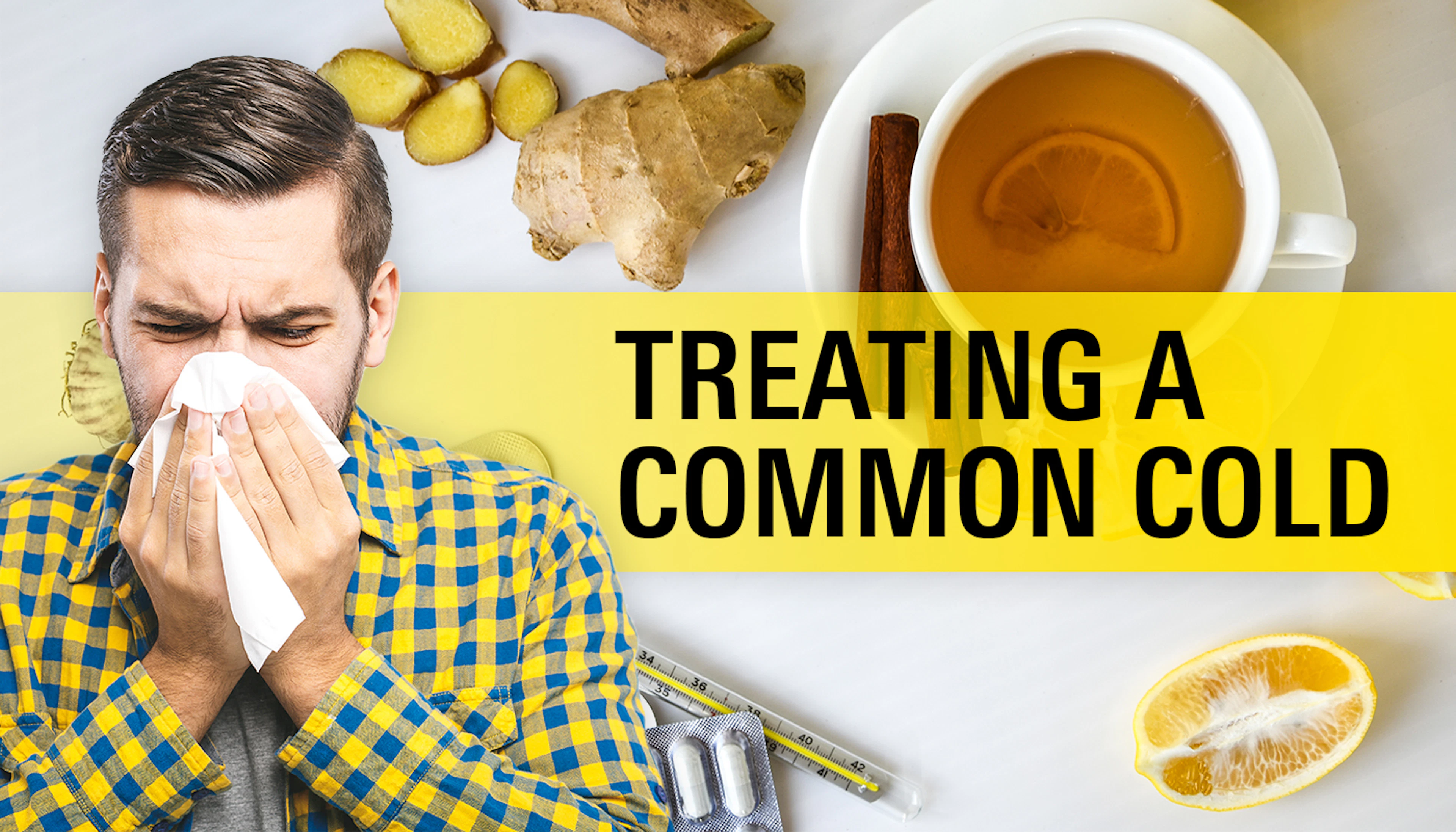



Top OTC Medications for Sore Throat Relief
A sore throat is an uncomfortable sensation that can feel painful, dry, or scratchy. Symptoms can range from mild irritation to severe pain, often making it difficult to swallow or speak.
Common symptoms include:
- Pain or discomfort when swallowing or talking
- Redness and swelling in the throat, sometimes with white patches or pus (especially in bacterial infections)
- Hoarseness or a muffled voice
- Dryness and irritation
- Tender or swollen lymph nodes
- Swallow whole (don't crush/chew/open). Store in original bottle; use within 4 months once opened.
- Cough (often linked to postnasal drip or respiratory infections)
- Fever (typically present in infections)
What Causes a Sore Throat?
Before choosing a treatment, it’s important to understand what’s causing your sore throat. Identifying the root cause helps you select the right remedy.
Possible causes include:
- Viral infections – The most common cause, including colds, flu, COVID-19, and mononucleosis
- Bacterial infections – Such as strep throat and tonsillitis
- Allergies – Reactions to pollen, dust, or pet dander can lead to throat irritation
- Environmental factors – Dry air, smoke, pollution, and chemical fumes can also irritate the throat
OTC medications for a sore throat
While some sore throats require a doctor's attention, many can be managed with OTC medications that are readily available at your local pharmacy.
Pain Relievers
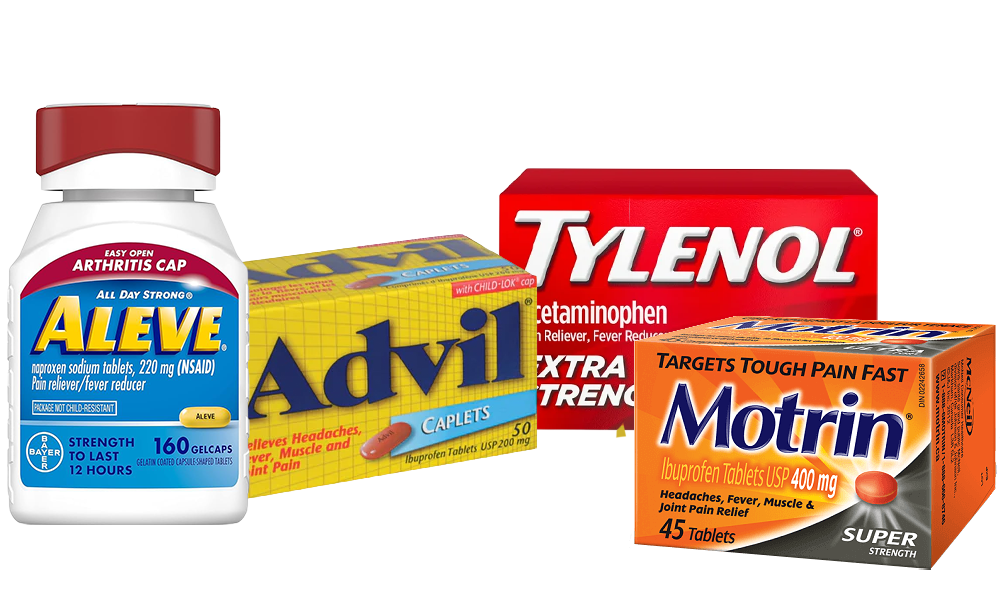
- Acetaminophen (Tylenol): Effective for mild to moderate pain, including sore throat discomfort.
- Nonsteroidal Anti-Inflammatory Drugs (NSAIDs): Ibuprofen (Advil, Motrin) and naproxen (Aleve) reduce inflammation and pain.
While both NSAIDs and acetaminophen are generally effective and well-tolerated, it’s important to consider any pre-existing health conditions when selecting the most appropriate medication.
Numbing Products
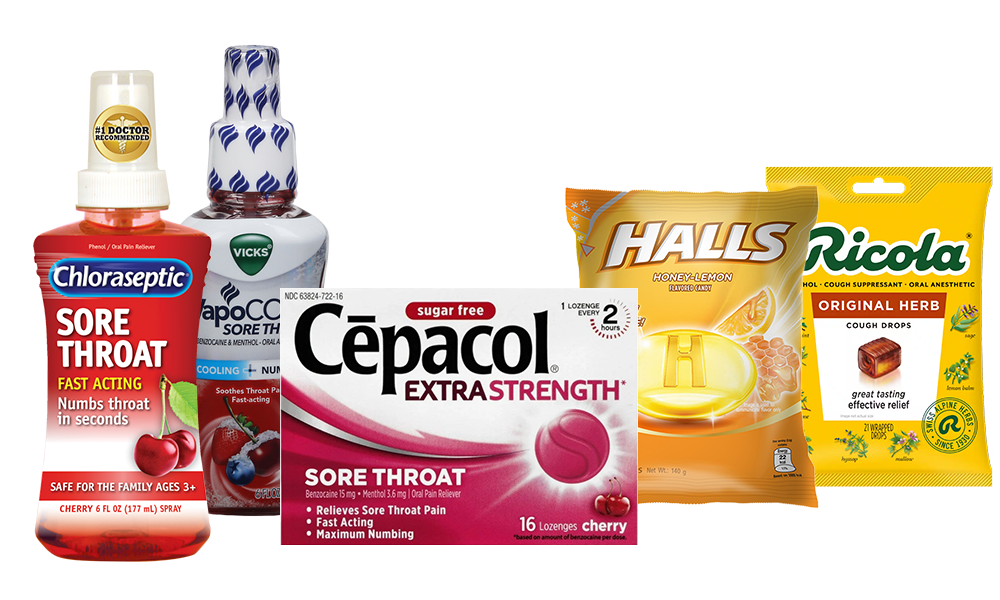
These OTC medications work by numbing the throat, which helps reduce pain. Commonly found in forms such as throat sprays and lozenges, these products often contain active ingredients such as benzocaine, menthol, or phenol. While they can effectively ease a sore throat, they may also temporarily numb other parts of the mouth, like the tongue or cheeks.
- Chloraseptic Cherry Throat Spray
- Chloraseptic Sore Throat Spray Citrus
- Cepacol Max Numbing Cherry
- Halls Mentho-Lyptus
- Halls Honey Lemon
- Vicks VapoCOOL Sore Throat Spray Berry
Demulcents
Demulcents contain ingredients such as honey or glycerin that coat the throat, providing soothing relief, reducing the urge to cough, and helping with redness and pain.
Examples include: Ricola Cough Drop Natural Herb
Antihistamines
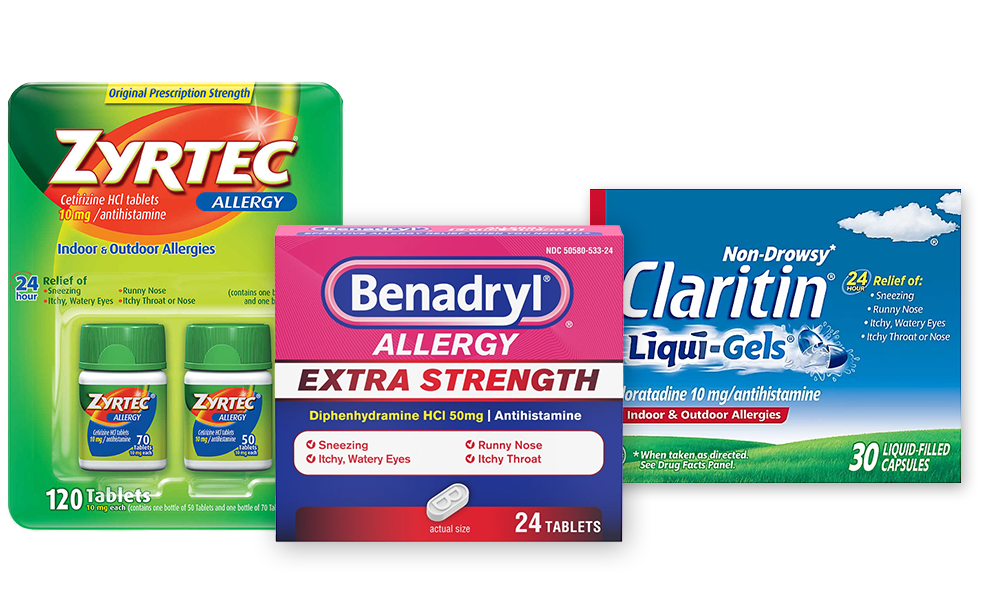
These medications work by inhibiting the release of histamine, a substance in the body that triggers allergic symptoms and reactions. By blocking histamine, antihistamines help to reduce the body’s allergic response, making them a valuable option for managing sore throats associated with seasonal allergies.
- Diphenhydramine (Benadryl)
- Fexofenadine (Allegra)
- Loratadine (Claritin)
- Cetirizine (Zyrtec)
Home Remedies
In addition to OTC medications, several home remedies can help soothe a sore throat, including:
- Staying hydrated and drinking plenty of fluids to keep the throat moist and help flush out irritants.
- Gargling with salt water.
- Drinking warm tea with honey.
When to see a doctor
Click on the question below to see the answer
You should see a doctor about your sore throat if it persists for more than a week, and is accompanied by high fever, difficulty breathing or swallowing, or severe pain. Get medical attention if you notice swollen lymph nodes, a rash, or white patches in your throat, as these could indicate a bacterial infection that may require antibiotics. Additionally, if your sore throat is recurrent or associated with other symptoms such as weight loss or persistent hoarseness, it's important to speak with a healthcare professional for further evaluation.
Commonly Asked Questions about Sore Throat
What’s the best over-the-counter medicine for a sore throat?
Pain relievers like acetaminophen (Tylenol) or ibuprofen (Advil, Motrin) can reduce discomfort and inflammation. For added relief, try a numbing spray or lozenge such as Chloraseptic Throat Spray or Vicks Vapocool Throat Spray.
What can provide the quickest relief for a sore throat?
Throat lozenges or sprays containing numbing agents like benzocaine, menthol, or phenol can provide fast relief. These ingredients temporarily numb the throat to ease pain when swallowing and can start working within minutes. Try a numbing spray such as href="https://www.marleydrug.com/checkout/chloraseptic~max~berry~throat~spray"> Chloraseptic Throat Spray or Vicks Vapocool Throat Spray or Cepacol lozenges
When should I see a doctor about my sore throat?
If your sore throat lasts more than a week, comes with a high fever, trouble swallowing or breathing, or white patches on your tonsils, you should see a doctor. These may indicate strep throat or another infection that requires antibiotics.
Do sore throat sprays and lozenges actually work?
Yes. Products containing benzocaine, menthol, or phenol temporarily numb throat tissues, helping relieve pain. They may also briefly numb your tongue or cheeks — that’s normal and goes away quickly.
Can allergies cause a sore throat?
Yes. Allergies to pollen, dust, or pet dander can trigger throat irritation from post-nasal drip. Taking an antihistamine like Claritin or Allegra can help reduce that inflammation.
Are there natural or home remedies that help?
Absolutely. Warm tea with honey, saltwater gargles, and staying hydrated can soothe irritation and keep your throat moist. Using a humidifier also helps if the air is dry.
What should I avoid when my throat is sore?
Avoid smoke, alcohol, spicy, or acidic foods, which can worsen irritation. Rest your voice and choose soft, soothing foods like soups and warm broths.
Can I prevent sore throats?
You can lower your risk by washing your hands often, avoiding close contact with people who are sick, and keeping your immune system strong with good sleep, hydration, and nutrition.
How can I tell if my sore throat is viral or bacterial?
Most sore throats are viral, but some are caused by bacteria like Streptococcus ( strep throat ). Viral sore throats usually are associated with symptoms like a runny nose, cough, congestion, or hoarse voice. This usually gets better within a few days without antibiotics.
On the other hand, bacterial sore throats symptoms are often sudden and severe with pain when swallowing, fever, swollen lymph nodes, and white patches or pus on the tonsils — typically without a cough or runny nose.
Because symptoms can overlap, the most reliable way to know is to get a strep test or throat culture from your healthcare provider.